



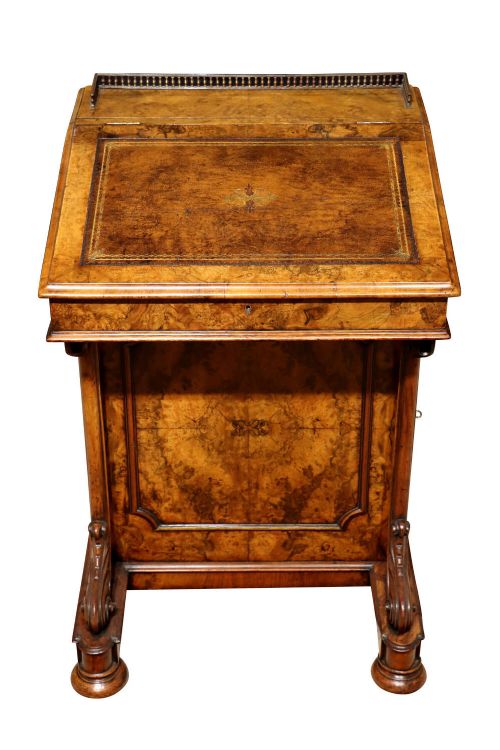
Victorian Satinwood Desk
When you search for a victorian satinwood desk, you find pale, highly figured writing furniture defined by nineteenth-century craftsmanship.
Victorian Satinwood Desk
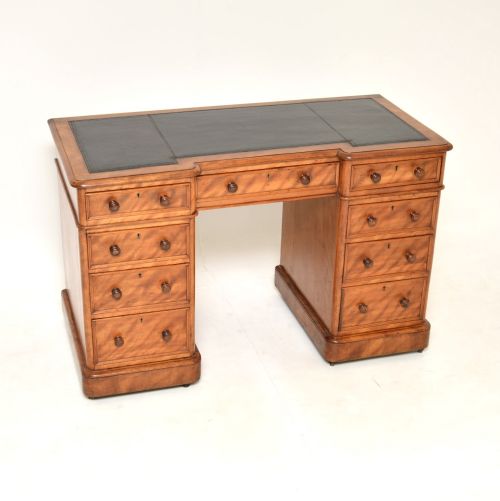
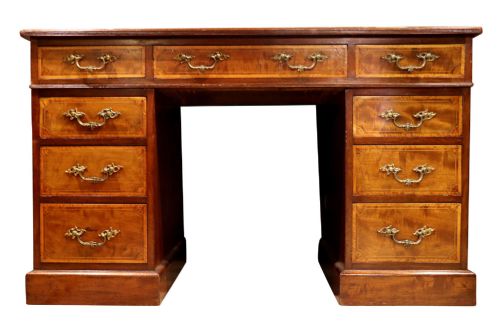
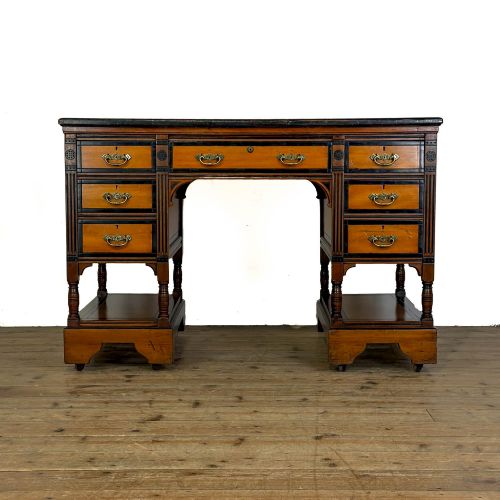
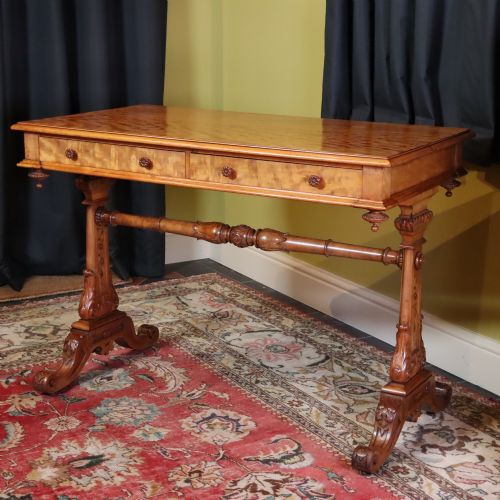
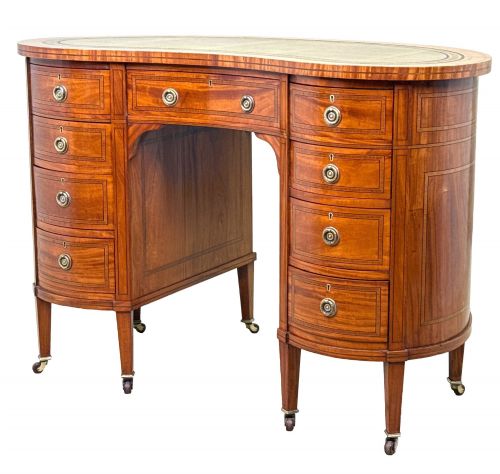
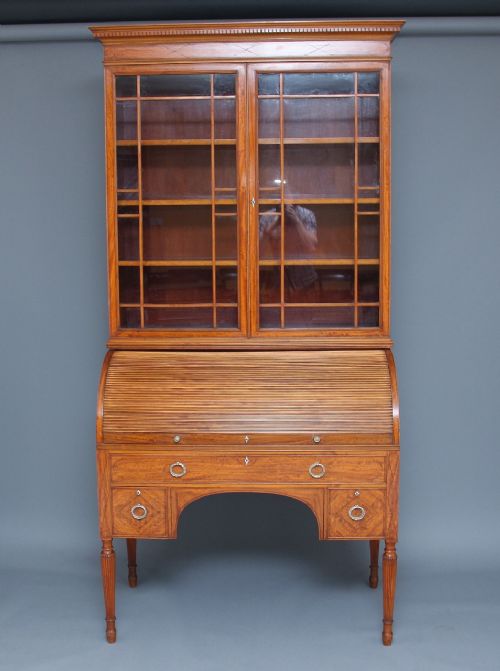
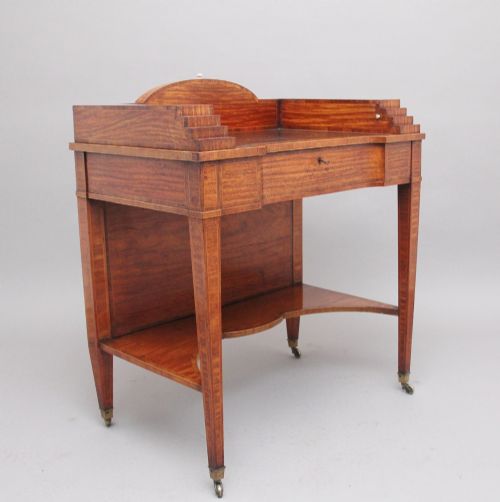
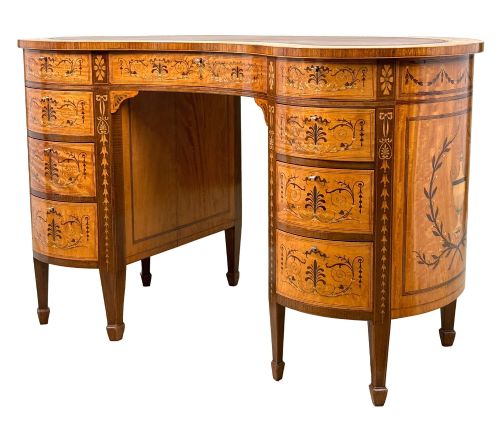
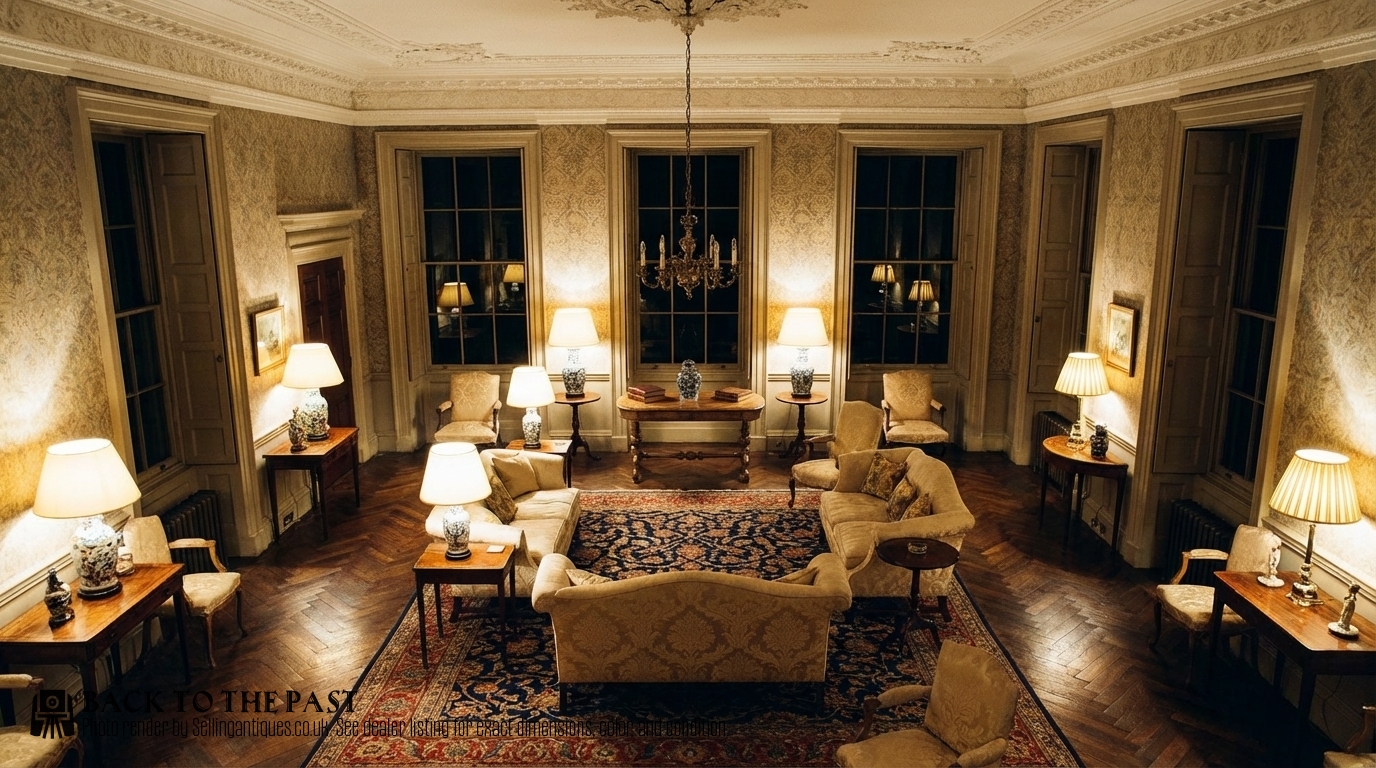
A victorian satinwood desk brings luminous timber and refined writing surfaces into a room, originating mostly from the latter half of the nineteenth century. Buyers encounter pedestal formats, kneehole variants, and elegant kidney shapes alongside elaborate Carlton House desks.
The selection ranges from compact ladies writing tables to double-sided partners desks designed for central room placement. Makers of the period drew heavily on Sheraton Revival motifs and marquetry inlay to embellish the natural grain of the wood.
These pieces served professional and domestic writing needs, combining drawers, pigeonholes, and leather inserts. The surviving examples demonstrate how nineteenth-century cabinet makers elevated utilitarian workspace into decorative art.
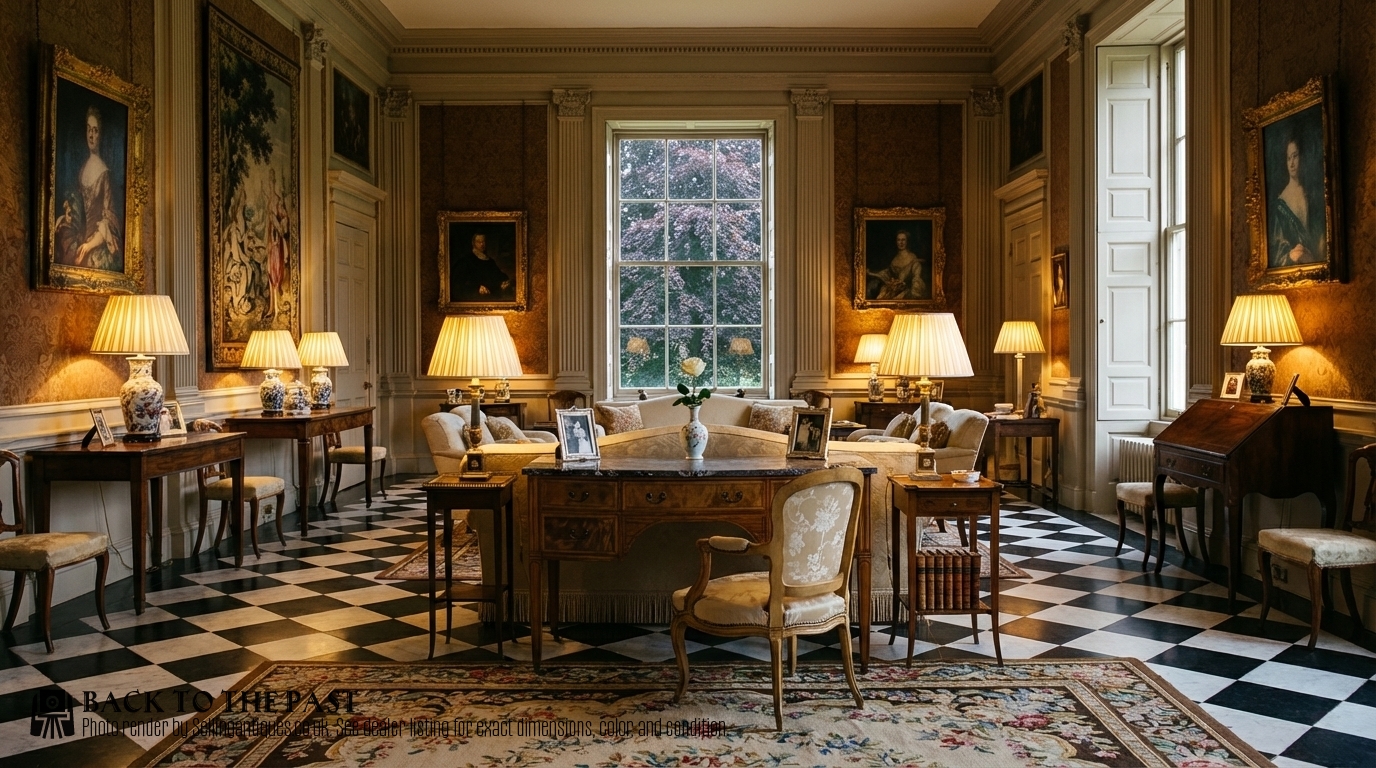
Materials and construction
Cabinet makers utilised dense exotic timbers, pairing glowing satinwood veneers with contrasting banding in mahogany, rosewood, or walnut. Marquetry and parquetry patterns were meticulously hand-cut and inlaid into the writing surfaces and friezes.
Internal drawer carcases typically employ secondary woods like oak or pine, joined with traditional hand-cut dovetails. Ormolu mounts, brass handles, and tooled leather skivers complete the structural composition of the finest writing tables.
Distinguishing quality in nineteenth-century writing furniture
Quality rests upon the selection of the satinwood veneer, where tight figuring and book-matched grain patterns separate standard items from exhibition pieces. The precision of the marquetry inlay and the retention of original brass hardware indicate the level of workshop care.
Structural integrity reveals itself in the smooth operation of drawers and the preservation of original secondary timbers beneath the polish. Pieces bearing documented maker signatures often display superior hand-finishing in hidden areas.
Edwards & Roberts·J Shoolbred·Howard & Sons·Donald Ross·Sir John Bennett·Maple & Co
The Victorian Satinwood Desk Glossary
- Satinwood
- A hard, yellow-tinted tropical timber prized for its lustrous, reflective grain that catches light like satin. It was frequently used as a veneer for high-status nineteenth-century cabinet work.
- Carlton House desk
- A form of writing table featuring a curved superstructure of small drawers and pigeonholes wrapping around the back and sides of the leather-inset writing surface. It originated in the late eighteenth century and was widely revived during the Victorian era.
- Marquetry
- The art of creating decorative patterns on furniture by fitting together thin veneers of different coloured woods, shells, or ivory. Victorian makers used this technique to depict floral motifs and classical ribbons.
- Partners desk
- A large pedestal desk designed with drawers and cupboards on both opposing sides, allowing two people to work opposite one another. These pieces often feature generous leather writing surfaces.
- Kidney shaped desk
- A curved writing table resembling a bean or kidney, popular during the late nineteenth century for boudoir and drawing room use. The concave front allowed the user to sit close to the central drawer.
Victorian Satinwood Desk: Frequently Asked Questions
What is a Carlton House desk used for?
A Carlton House desk provides compartmentalised storage for correspondence, stationery, and writing implements within an integrated superstructure of small drawers. The raised back keeps paperwork organised while leaving the central leather writing area clear for daily tasks.
Victorian owners used these refined tables in private libraries and withdrawing rooms for letter writing and estate management. Their finished backs allowed them to stand away from the wall in the centre of a room.
How do I identify a Victorian piece?
Examine the construction methods visible inside the drawers, looking for hand-cut dovetails and secondary woods like oak or mahogany. Victorian cabinet work frequently incorporates machine-sawn elements alongside traditional hand-finishing as the nineteenth century progressed.
Check for period-appropriate styling cues such as Sheraton Revival marquetry, ormolu mounts, and brass hardware fixed with slotted screws. Stamped maker marks or paper trade labels can also confirm the manufacturing era.
Can I use a partners desk in a modern study?
A partners desk functions exceptionally well as a freestanding centrepiece in a spacious home office or library. The double-sided configuration offers generous surface area and extensive drawer storage accessible from both faces.
Ensure the room dimensions accommodate the substantial footprint of a partners desk before placement. Positioning the piece away from walls allows the decorative timber work and brass handles to be viewed from all angles.