

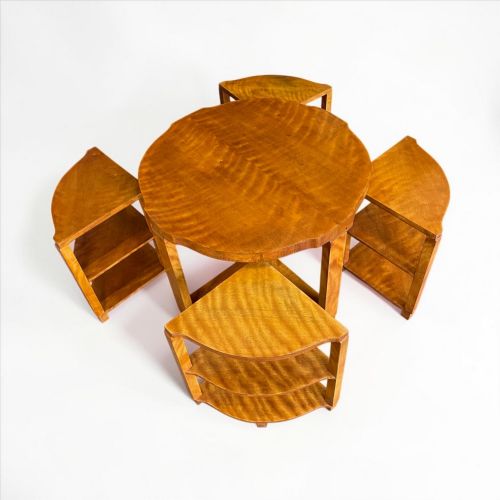


Satin Walnut Table
Satin walnut table pieces offer a warm, golden-grained timber surface suited to Edwardian and Victorian interiors.
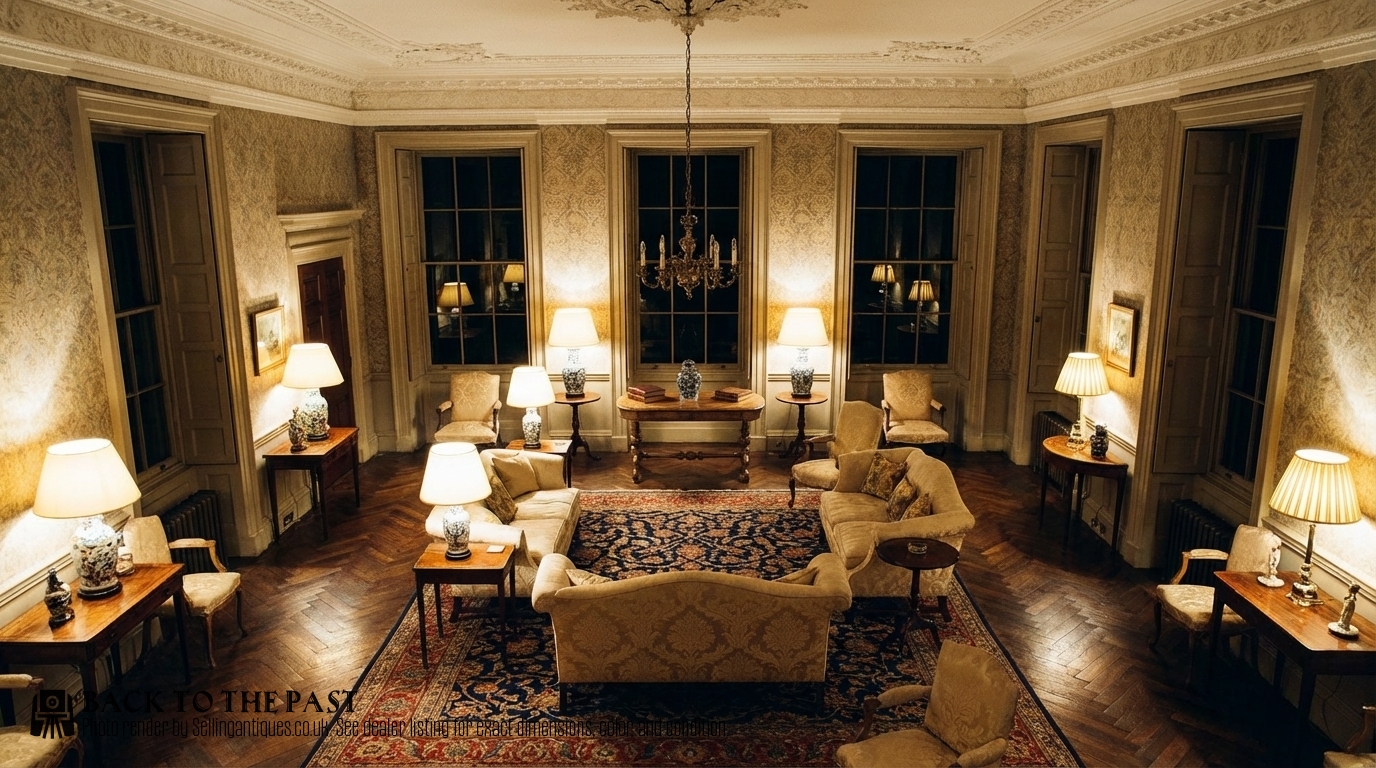
Satin Walnut Table
A satin walnut table brings a distinctive light amber tone and figured grain to domestic furniture, spanning periods from the mid-nineteenth century through the Edwardian era and into the Art Deco period. These pieces encompass practical forms such as writing desks, library tables, occasional stands, sewing work tables, and bedside cabinets.
The version most commonly met on this page is the Edwardian or Victorian side or dressing table, often featuring modest inlay or turned supports. Larger library tables and pedestals also appear, showing how the timber served both formal rooms and private chambers.
How they were made
Cabinetmakers utilised solid satin walnut and applied veneers over secondary woods, often combining the timber with contrasting brass hardware or marquetry details. Figured wood selections highlight natural grain patterns, while inlay work introduces geometric or floral motifs.
Construction methods span traditional dovetailing for drawers and turned or tapering legs characteristic of Victorian and Edwardian joinery. Finishing techniques preserve the natural golden lustre of the wood without heavy staining.
Listings feature satin walnut alongside brass, glass, and figured wood veneers across Victorian and Edwardian forms.
What varies in quality
Quality rests in the selection of the timber figure and the crispness of any inlaid decoration, where finer examples display balanced grain patterns across large surfaces. The integrity of the secondary woods and the refinement of turned supports or brass fittings further distinguish standard utility pieces from workshop productions.
Proportion and structural balance dictate the standing of a piece, with well-proportioned legs and solid drawer construction separating superior library or writing tables from simpler items.
Wylie and Lochhead·Wadman Brothers of Bath
The Satin Walnut Table Glossary
- Satin walnut
- A timber derived from the heartwood of American red gum, prized for its golden, satin-like sheen and varied grain. It gained popularity in late nineteenth and early twentieth-century cabinetmaking.
- Inlay
- A technique where pieces of contrasting wood, brass, or shell are fitted into depressions within the primary timber surface to create decorative patterns.
- Occasional table
- A small, movable table designed for specific, intermittent use in a room, such as holding a lamp, books, or sewing implements.
- Pedestal desk
- A heavy writing table supported by two vertical columns of drawers on either side of a central opening.
- Marquetry
- The art of applying pieces of veneer to a structure to form decorative pictorial designs or geometric ornamentation.
Satin Walnut Table: Frequently Asked Questions
What is a satin walnut table?
A satin walnut table is a piece of furniture fashioned from timber with a distinctive golden sheen, appearing frequently in Victorian and Edwardian domestic forms.
These items range from compact occasional stands and sewing tables to large library desks and dressing surfaces.
How do I date a satin walnut table?
Dating relies on observing structural characteristics, handle styles, and prevailing design motifs associated with periods from the mid-nineteenth century onwards.
Victorian examples often display heavier turned supports and richer patination, whereas Edwardian pieces tend to show lighter frames and delicate inlay work.
Where were these tables used?
These tables served various domestic functions in drawing rooms, studies, libraries, and bedrooms across the Victorian and Edwardian periods.
Smaller occasional and sewing tables moved easily around living spaces, while library and writing desks remained stationary in study areas.
How should I care for satin walnut?
Care involves keeping the wood away from direct heat sources and excessive moisture to prevent veneer lifting or timber splitting.
Routine dusting with a soft, dry cloth preserves the natural lustre of the golden grain without heavy chemical polishes.