



Victorian Ruby Brooch
A victorian ruby brooch is a pinned jewel combining red corundum with gold or silver, sought after for wearable period sentiment.
Victorian Ruby Brooch
A victorian ruby brooch is a pinned ornament originating from the nineteenth century, encompassing styles from the Victorian and Edwardian periods through to nineteen-ten.
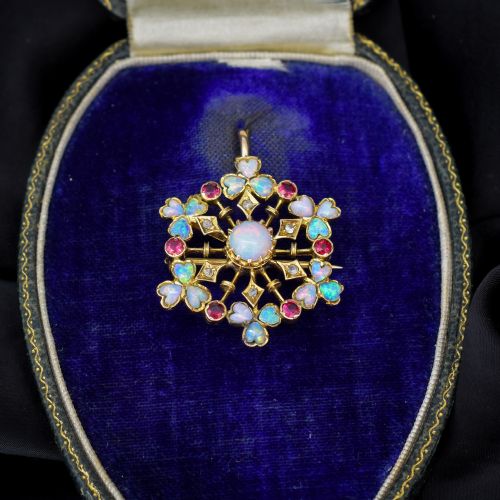
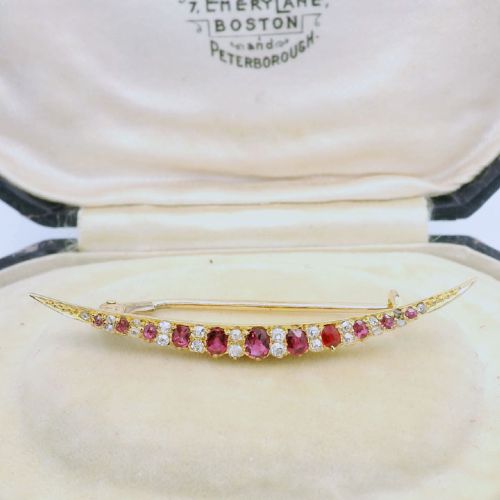
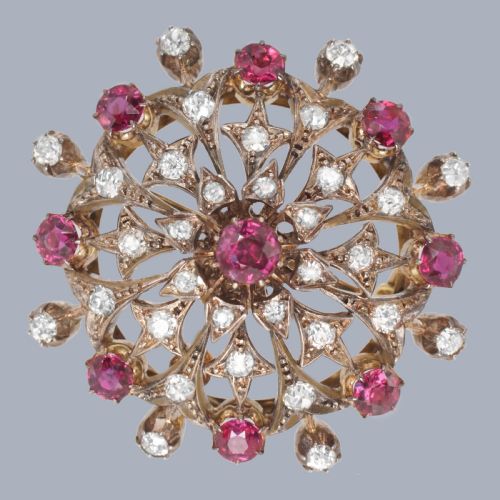
Buyers encounter numerous crescent designs alongside floral clusters, insect motifs including bees, butterflies, and cockerels, and versatile pendant brooches.
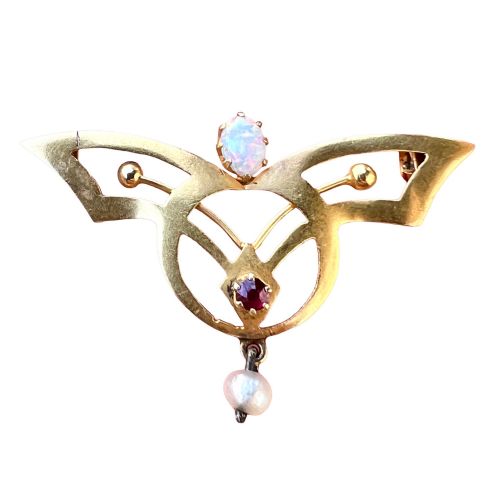
The pieces on this page span the Victorian era, late Victorian period, and early twentieth century, reflecting romantic and naturalistic themes.
Materials and Technique
Goldsmiths worked with varying purities of yellow gold, including nine carat, fifteen carat, eighteen carat, and twenty-one carat, alongside silver and platinum settings.
Rubies are frequently paired with diamonds, pearls, opals, and emeralds, utilising claw settings and cluster arrangements to showcase the stones.
Current listings feature nine carat, fifteen carat, and eighteen carat yellow gold alongside platinum and silver.
Judging Quality
Quality separates through the origin and treatment of the gemstones, where natural untreated stones and specific geographical origins distinguish finer examples.
The complexity of the metalwork, such as detailed feather work on bird motifs or integrated pendant bails, marks the skill of the original maker.
The Victorian Ruby Brooch Glossary
- Crescent brooch
- A curved, moon-shaped pin often set with graduating stones. This motif was immensely popular during the late nineteenth century.
- Pendant brooch
- A convertible jewel featuring a hidden loop or bail, allowing it to be worn on a chain or pinned to a garment.
- Old cut diamond
- A hand-faceted diamond shape typical of the period, possessing a smaller table and wider culet than modern stones.
- Bar brooch
- A slender horizontal metal rod with a central decorative cluster. They fasten securely with a pin and C-clasp mechanism.
Victorian Ruby Brooch: Frequently Asked Questions
How do I wear a antique brooch?
These pieces attach securely to lapels, scarves, or heavy fabrics using traditional pin and catch fastenings. Many convert into necklaces by threading a chain through a hidden loop.
Heavier pendant pieces require substantial fabric support to hang correctly without pulling delicate textiles.
Are these rubies natural?
Many examples feature natural corundum, occasionally accompanied by gemological reports confirming their origin. Stones vary from untreated varieties to those showing traditional heat treatments.
Documentation provided with specific pieces details whether stones are certified natural.
What metals were used?
Jewellers utilised various grades of yellow gold, ranging from nine carat up to twenty-one carat, alongside silver and platinum. Combinations of gold and silver are typical for earlier nineteenth-century pieces.
Markings on the reverse often indicate the metal purity, though many older pieces rely on testing rather than formal hallmarks.
How do I date my brooch?
Dating relies on stylistic motifs, such as naturalistic insect and floral designs, combined with construction methods like pin hinges and clasp types. Edwardian pieces often display lighter platinum and diamond work, whilst mid-Victorian items favour heavier yellow gold.
Comparative examples from the archive help narrow down the manufacturing decade.