


Gold Bird Brooch
A gold bird brooch brings together fine metalwork and avian charm, offering a wearable piece of history from the Victorian and Edwardian eras.
Gold Bird Brooch
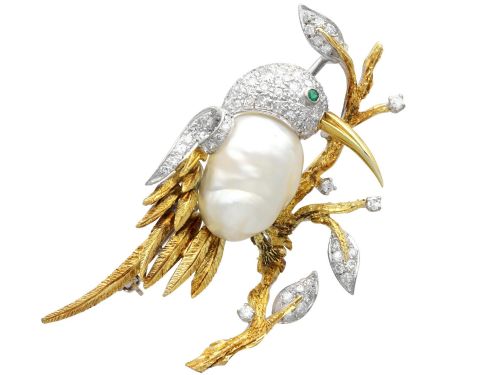
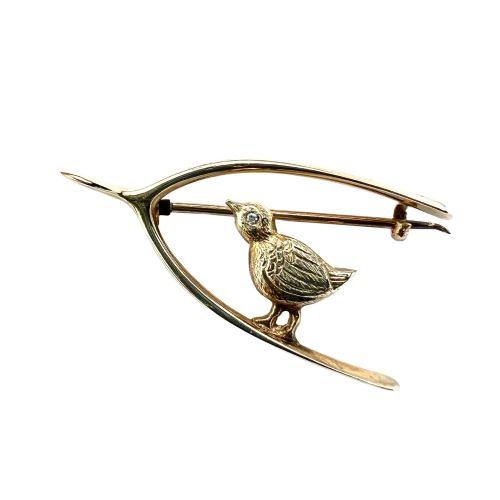
The most common versions on this page are Edwardian swallow and chick bar brooches fashioned from nine-carat or fifteen-carat gold. They frequently incorporate pearls, diamonds, or enamel details to add colour and texture to the plumage.
Earlier Victorian examples often pair gold with silver settings, while later mid-century pieces lean towards whimsical novelty designs featuring ducks and nesting birds. Each iteration reflects the prevailing decorative tastes of its decade.
How they were made
Goldsmiths shaped these pieces using solid yellow gold, typically ranging from nine to eighteen carats, alongside occasional combinations of gold and silver. Metal was cast, drawn into wire, or beaten into hollow bar forms to create lightweight structures suitable for fastening to garments.
Gemstones including rose-cut diamonds, rubies, turquoises, and seed pearls were flush-set, claw-set, or pinned directly into the metalwork. Enamel work was applied by fusing powdered glass to the surface under high heat, providing vibrant blues, greens, and reds for wings and feathers.
Listings feature items from the Victorian, Edwardian, and 1960s periods, executed in gold, silver, diamond, ruby, pearl, and enamel.
What varies in quality
The selection of materials also dictates the tier of the piece, with well-matched natural pearls, clean rose-cut diamonds, and undamaged polychrome enamel elevating the overall standard of the jewellery.
Ben Rosenfeld
The Gold Bird Brooch Glossary
- Bar brooch
- A slender horizontal metal pin designed to secure fabric while displaying a central decorative motif. They were especially popular during the late nineteenth and early twentieth centuries.
- Rose-cut diamond
- A vintage diamond cut featuring a domed top with triangular facets and a flat base. This cut produces a softer shimmer than modern brilliant cuts.
- Enamel
- A glassy substance melted onto metal surfaces for decoration. It provides durable colour that mimics natural plumage.
- Seed pearl
- A very small natural or cultured pearl, often threaded or pegged into clusters. They were widely used in Edwardian floral and avian jewellery.
Gold Bird Brooch: Frequently Asked Questions
How do I date a gold bird brooch?
Dating relies on identifying material compositions, such as fifteen-carat gold and platinum combinations typical of the Edwardian era, alongside distinct pin mechanisms. Stylistic cues like the whimsical novelty shapes of the 1960s also help pinpoint the decade of manufacture.
Examining hallmarks and the specific cut of any set gemstones provides further chronological markers. Victorian pieces frequently utilise silver-topped gold settings, whereas mid-century examples often display French or designer stamps.
How were these brooches worn originally?
Victorian and Edwardian wearers pinned these ornaments near the neckline of blouses, upon lapels of tailored jackets, or to secure heavy scarves and cravats. They functioned primarily as decorative focal points for formal and daily attire.
Later twentieth-century versions appeared on coat collars and hats as playful accents. The sturdy pin mechanisms ensured the small gold birds remained secure on various textiles.
Are pearls on antique brooches natural?
Many pearls found on pieces from the Victorian and Edwardian periods are natural saltwater or freshwater pearls. Cultured pearls became more widespread by the mid-twentieth century.
Close inspection under magnification often reveals the subtle irregularities characteristic of period pearls. Jewelers set them securely using fine pins or adhesives appropriate to the era.
How do I care for an enamel bird brooch?
Enamel requires gentle handling because the glass surface can chip or crack if struck hard against a hard surface. Cleaning should involve only a soft dry cloth, avoiding harsh chemical dips or ultrasonic cleaners.
Storage in a dedicated jewellery box prevents the metal pin from scratching the fragile enamel wings of neighbouring pieces. Regular checks by a professional jeweller ensure the stones and pin stem remain secure.