


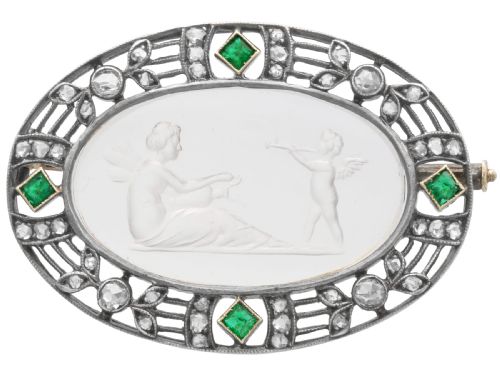


14ct Gold Brooch
A 14ct gold brooch brings together enduring precious metal and gemstones like diamond, ruby, and peridot to pin to a lapel or fasten a scarf.
14ct Gold Brooch
When you search for a 14ct gold brooch, you encounter pieces spanning the Victorian, Edwardian, Art Nouveau, Art Deco, Retro, and Mid-Century eras. These designs include floral motifs, geometric patterns, bar brooches, and convertible pendant pins.
The yellow gold variant dominates the selection, paired frequently with diamonds, pearls, and coloured stones such as citrine, topaz, and emerald. You also find white gold and rose gold settings appearing across the periods.
Many items incorporate specific subjects like insects, animals, birds, hearts, crescents, and portraits. These range from delicate Edwardian ribbon work to bold Mid-Century cocktail statements.
Materials and construction
Jewellers shaped 14ct yellow, white, and rose gold into intricate wirework, solid castings, and channel settings to hold central gems. Platinum frequently accompanies gold in Edwardian and Art Deco pieces to secure diamonds.
Gemstones including rubies, sapphires, peridots, and tourmalines were hand-cut and collet-set or bezel-set by artisans. Enamel work, Essex crystal, and Meissen porcelain add colour and painted detail to select historical designs.
Listings feature 14ct yellow gold, white gold, and rose gold paired with diamonds, rubies, peridots, citrines, and rock crystal.
Assessing craftsmanship and design
The standard of a 14ct gold brooch rests on the precision of the stone setting and the crispness of the metalwork. Master jewellers ensured flush prongs and secure hinges that hold up through decades of wear.
Compositional balance separates standard production items from exceptional artist-made pieces. A harmonious arrangement of diamonds and coloured gems elevates the artistic merit of the jewel.
The 14ct Gold Brooch Glossary
- Bar brooch
- A narrow horizontal pin often set with gems or central motifs. This form was especially popular during the Victorian and Edwardian periods.
- Essex crystal
- Reverse-carved and painted rock crystal that creates a three-dimensional miniature image. Subjects often include animals or insects.
- Pendant brooch
- A dual-purpose piece equipped with both a pin mechanism and a hidden loop. This allows the wearer to use it on clothing or suspend it from a chain.
14ct Gold Brooch: Frequently Asked Questions
Are these brooches suitable for daily wear?
Fourteen-carat gold provides a durable alloy that resists everyday knocks better than higher karat purity levels. This makes the metal practical for regular pinning to garments.
Care must still be taken with softer stones like pearls, opals, or mounted crystals. Remove the jewellery before heavy physical activity or laundering.
How can I tell an Edwardian piece from Art Deco?
Edwardian designs rely on platinum-topped gold, delicate filigree, and flowing garland motifs featuring pearls and diamonds. The overall aesthetic leans toward romantic lightness and lace-like openwork.
Art Deco transitions into geometric symmetry, strong lines, and calibrated gemstones. The metalwork becomes bolder, utilising sharp angles and stylized floral or abstract patterns.
Can a brooch be converted into a necklace?
Many historical examples function as both brooches and pendants through a hinged loop on the reverse. If a piece lacks a loop, a jeweller can sometimes add a removable converter.
Ensure any conversion method preserves the original pin mechanism so the item retains its historical integrity and versatility.