


Victorian Royal Worcester Vase
A victorian royal worcester vase brings hand-painted British porcelain and intricate gilding into a room, offering collectors delicate floral and avian motifs from the factory's finest decades.
Victorian Royal Worcester Vase
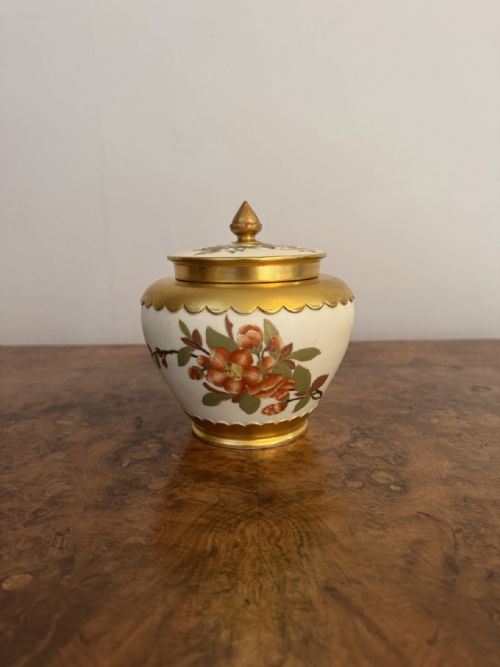
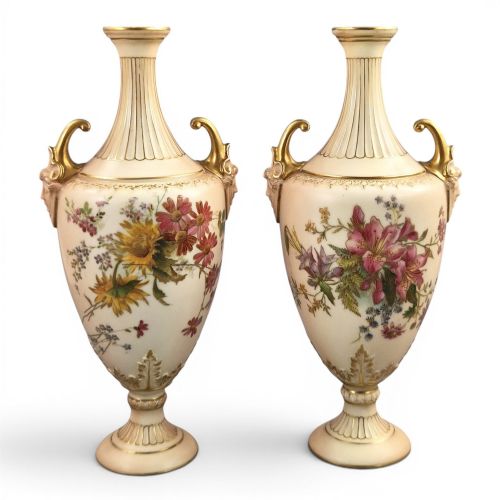
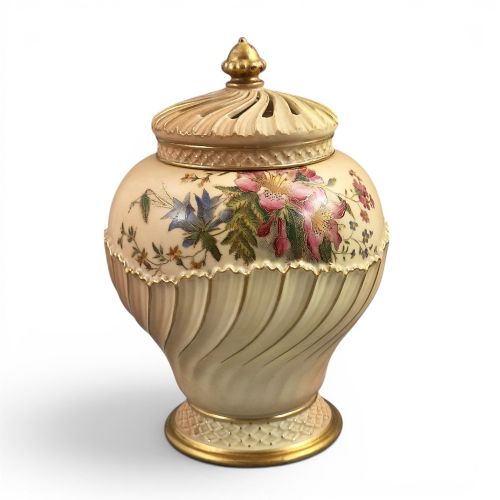
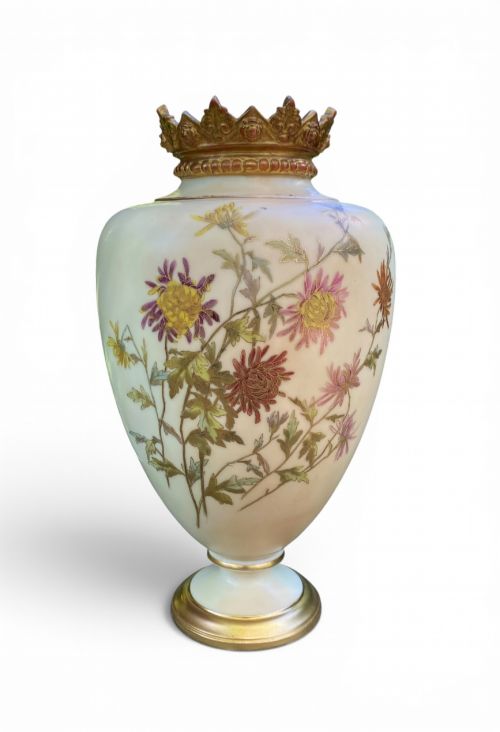
A victorian royal worcester vase represents the pinnacle of late nineteenth and early twentieth-century British ceramic art, spanning periods from the Victorian era into the Edwardian years. When exploring this selection, buyers frequently encounter delicate blush ivory ground vessels, lidded potpourri jars, and grand decorative ewers.
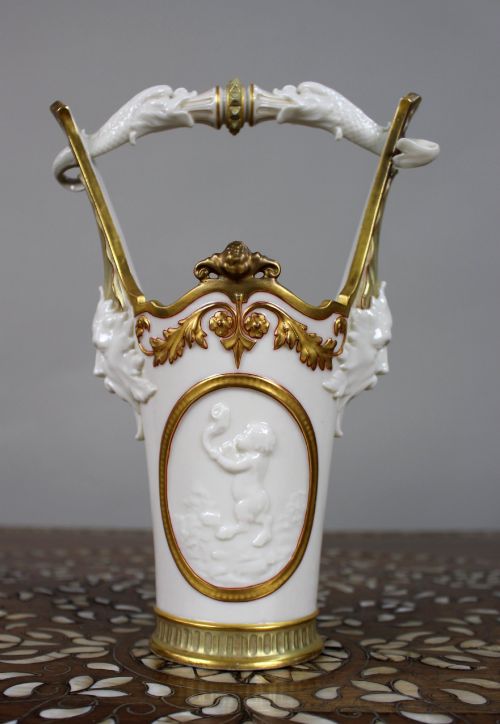
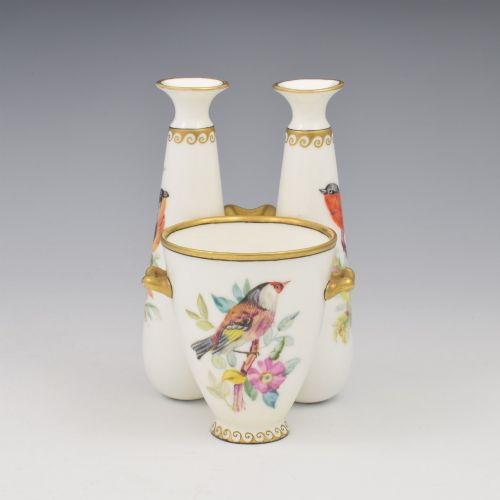
The objects take diverse forms, including ovoid vases, pedestal vessels, and figural pieces featuring birds, swans, and hand-painted chrysanthemums. These ceramic works capture the shifting tastes of the period, moving from classical shapes towards intricate aesthetic movement and naturalist designs.
Materials and Techniques
The pieces rely on fine porcelain and ceramic bodies finished with specialist glazes, frequently utilising the characteristic soft blush ivory ground. Artisans applied rich gilding, gold leaf, and ceramic enamel to accent the porcelain surface.
Decoration involved skilled hand-painting of floral sprays and ornithological subjects, alongside complex techniques such as reticulation and pierced gilt handles executed by master craftsmen.
Swans and pheasants frequently appear hand-painted across these porcelain surfaces, proving that Victorian decorators loved birds as much as teacups.
What Varies in Quality
The standard of a piece rests upon the ambition of its form and the skill of its decoration, distinguishing factory output from ordinary ceramics. Hand-painted naturalistic scenes by named artists command greater attention than standard transfer-printed patterns.
The intricacy of the execution dictates desirability, particularly where specialised techniques like reticulation or meticulous gilding elevate the porcelain body into a sculptural work of art.
A.B. Daniell And Son·John Hopewell·Chivers·C Baldwyn·George Owen·Walter Sedgley·Edward Raby
The Victorian Royal Worcester Vase Glossary
- Blush ivory
- A soft, creamy matte glaze developed by Royal Worcester that mimics the warmth of ivory. It served as a popular background for hand-painted floral decoration.
- Reticulation
- An openwork ceramic technique where clay is carefully pierced before firing to create intricate lattice patterns. George Owen mastered this method at the Worcester factory.
- Ewer
- A large jug with a wide spout and scroll handle, often produced for decorative display rather than utility. These vessels frequently feature elaborate pedestal bases and moulded handles.
- Potpourri jar
- A lidded ceramic vessel pierced to allow scented dried petals to fragrance a room. They often feature inner covers and ornamental crown tops.
Victorian Royal Worcester Vase: Frequently Asked Questions
How do I identify a blush ivory piece?
Blush ivory pieces feature a distinctive warm, matte cream glaze that differs from standard white porcelain. This finish typically provides a soft background for hand-painted floral motifs.
Makers often applied gilt highlights directly onto this matte surface, creating a subtle contrast characteristic of the late nineteenth-century factory output.
Were these ewers used for water?
Decorative ewers served primarily as ornamental display pieces rather than functional ewers for water. Their elaborate handles, delicate spouts, and hand-painted surfaces made them centerpiece items for Victorian drawing rooms.
Many retain matching pedestals or forms too ornate for everyday domestic utility.
How do I display a potpourri jar?
Potpourri jars look best placed on sturdy side tables or mantelpieces where their pierced covers can be appreciated. The lidded design allows them to function as sculptural ornaments when not holding scented petals.
Pairing matching vases or ewers nearby creates a balanced display reflective of period interior arrangements.