

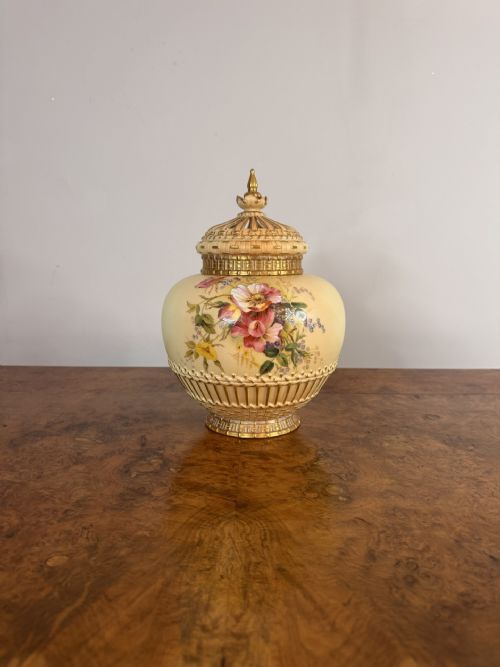
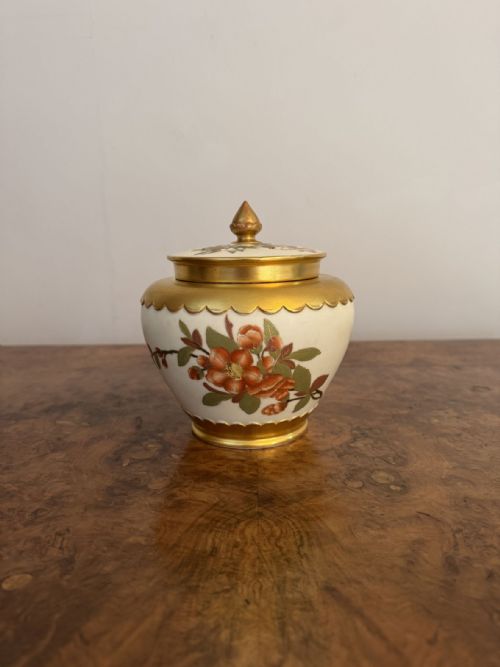


Antique Ceramic Potpourri Jar
These antique ceramic potpourri jar vessels bring dried aromatic botanicals into rooms with pierced lids and decorated porcelain bodies.
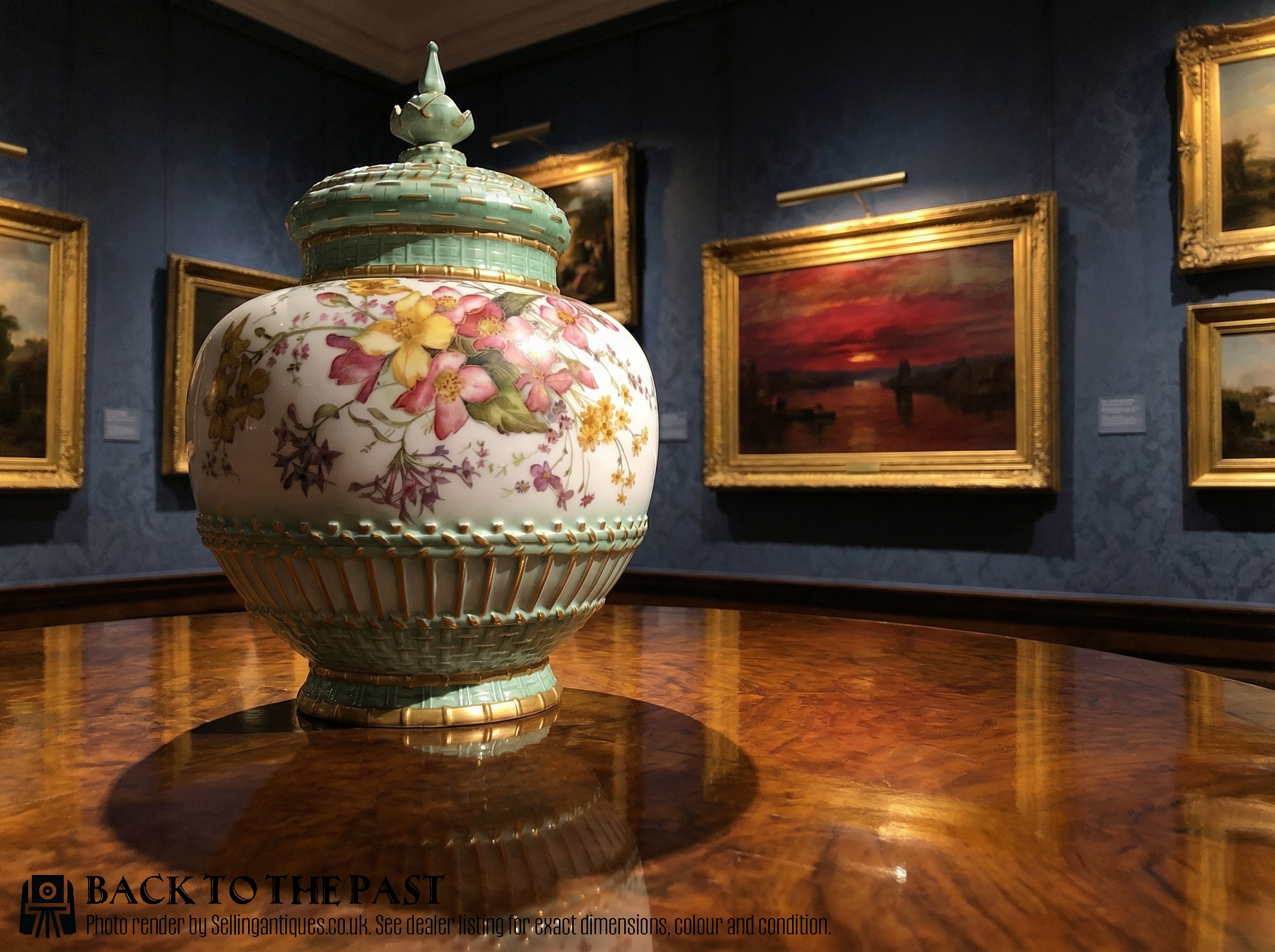
Antique Ceramic Potpourri Jar
When you search for an antique ceramic potpourri jar, you encounter lidded vessels, bowls, and urns created to hold fragrant dried plant material and release scent through pierced covers. These pieces range from eighteenth-century English manufactory productions to nineteenth-century continental works and later Victorian creations.
The most common examples on this page are nineteenth-century creations, particularly from English makers like Royal Worcester and Mason's Ironstone, alongside continental porcelain pieces in the Dresden and Meissen styles. Forms include crown-covered urns, ginger jars, and twin-handled vases designed specifically for scent diffusion or decorative display.
Makers utilised various terminology in period titles, referring to these objects as pommanders, rose jars, or lidded bowls, yet all share the functional requirement of a perforated lid. The forms bridge utility and ornamentation, reflecting changing domestic interiors across the Georgian, Victorian, and Edwardian eras.
How they were made
Potters shaped these vessels using traditional ceramic pastes and porcelain bodies, frequently mounting them with gilt bronze fixtures or enriching the surfaces with hand-painted enamel and gold leaf gilding. Ironstone variants provided a robust, dense body suitable for heavy enamel palettes like English Imari designs.
Glazing and firing techniques varied between English earthenware potteries and fine paste porcelain houses in Dresden and Worcester. Pierced covers required precise cutting before firing to ensure the ventilation holes remained clean and functional for releasing fragrance.
Antique Ceramic Potpourri Jar Retail Price Guide 2026
Typical asking prices for ceramic potpourri jar among the pieces listed under this phrase on Sellingantiques today, from the lower quarter to the upper quarter. They describe what is for sale here now, not the wider market.
The selection includes porcelain, ironstone, and enamel materials paired with gilt bronze mounts and gold leaf highlights.
What varies in quality
Quality rests in the crispness of the porcelain modelling, the precision of the pierced lid work, and the finesse of the hand-applied enamel painting or gilding. Superior pieces display finely articulated botanical or figurative details that remain crisp and well-defined across the body and cover.
The integration of metal mounts, such as gilt bronze bases or collars, distinguishes higher-tier continental and English decorative vessels from standard factory output. Matching covers and original matched pairs represent the upper echelon of survivals in this field.
Royal Worcester·Mason's Ironstone·Dresden Porcelain·Wolfsohn Dresden·Sitzendorf Porcelain
The Antique Ceramic Potpourri Jar Glossary
- Ironstone
- A patented ceramic body invented in the nineteenth century that combines durability with a fine white surface, often decorated in Imari patterns.
- Gilding
- The application of gold leaf or powdered gold to ceramic surfaces or bronze mounts to highlight decorative motifs and borders.
- Imari
- A decorative style inspired by Japanese export porcelain featuring deep cobalt blue, iron red, and gilt highlights on a white ceramic ground.
- Pomander
- An early term for a container holding aromatic substances, sometimes used interchangeably with potpourri jars in eighteenth-century inventories.
Antique Ceramic Potpourri Jar: Frequently Asked Questions
How do I use an antique potpourri jar?
You fill the interior body with dried scented botanicals, allowing the natural oils to release fragrance through the pierced lid into your living space.
Over time, you can refresh the contents with essential oils or replace the dried mixture entirely without harming the ceramic vessel.
How can I date an antique ceramic potpourri jar?
You examine the bottom of the piece for factory marks, registration numbers, or painted ciphers that correspond to nineteenth and eighteenth-century production records.
The style of the gilding, the weight of the paste, and the painting technique also offer clear indicators of whether a piece originates from the Georgian or Victorian period.
Are these jars fragile?
These ceramic and porcelain vessels require careful handling, particularly around the delicate pierced work of the covers and any applied handles or floral details.
Placing them on stable surfaces away from high-traffic edges ensures they remain secure during everyday display.