


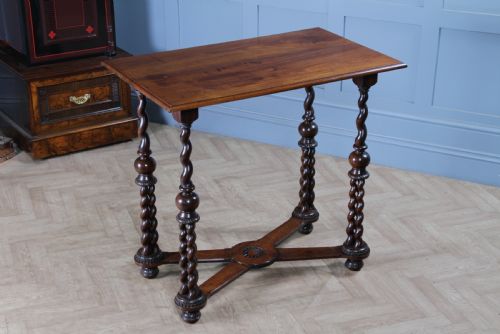


Victorian Rosewood Console
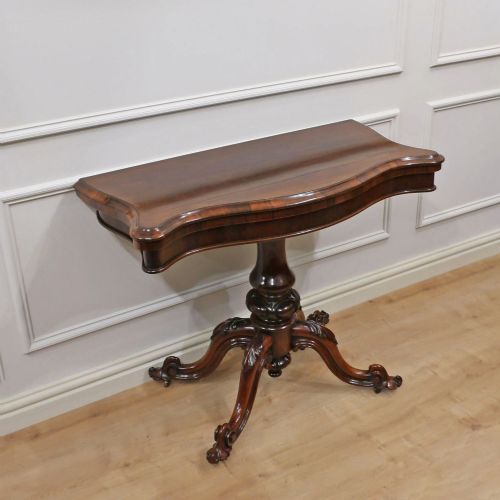
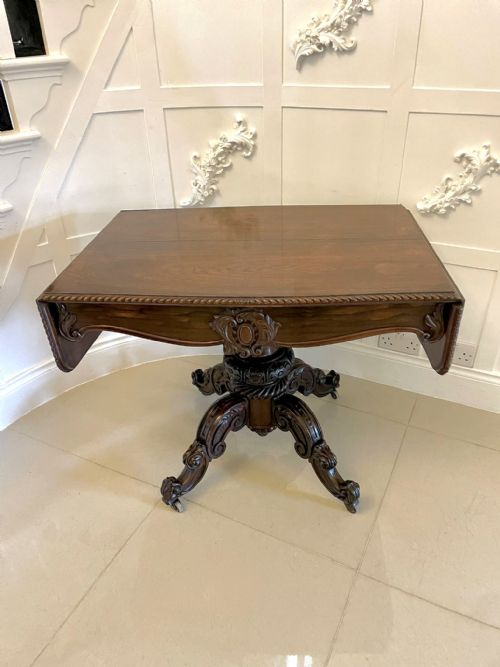
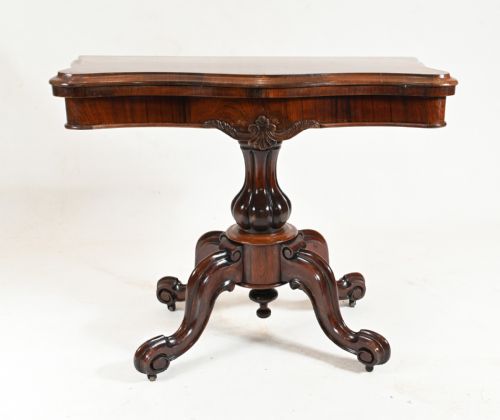
A victorian rosewood console brings dense grain and architectural presence to a hallway, often taking the form of a fold-over table.
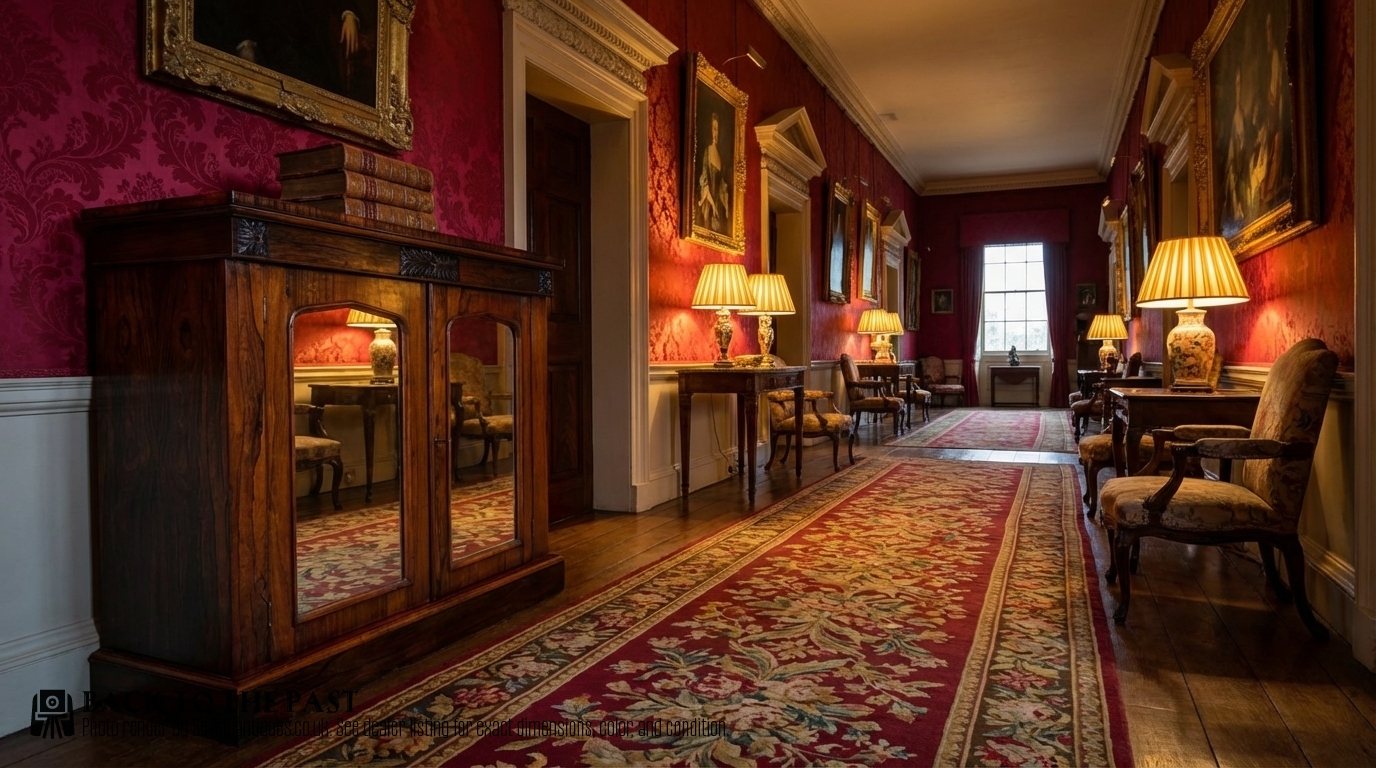
Victorian Rosewood Console
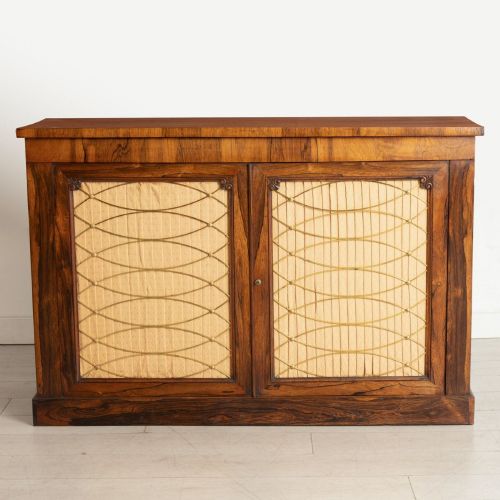
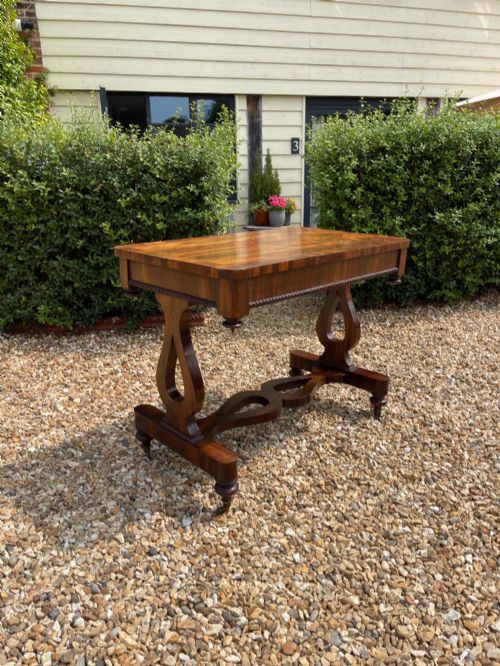
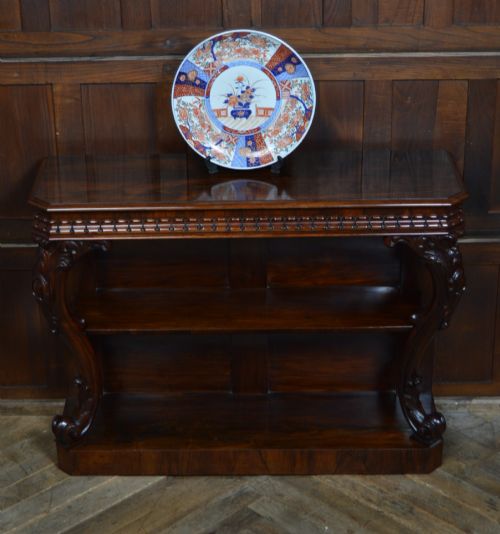
A victorian rosewood console is a sturdy side table designed to stand against a wall, frequently appearing as a fold-over card table or a pier table in nineteenth-century interiors.
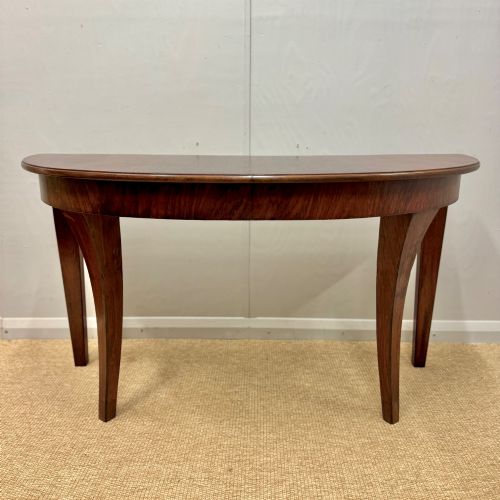
The pieces listed span the Victorian, William IV, and Regency periods, utilising forms such as demi-lune, concave, and pedestal bases.
Buyers meet variations that include card tables, tea tables, and console tables with marble or mirror additions.
Materials and Construction
Construction relies heavily on solid rosewood and rosewood veneers laid over secondary timbers like mahogany, enhanced with marquetry inlay, brass, or ormolu mounts.
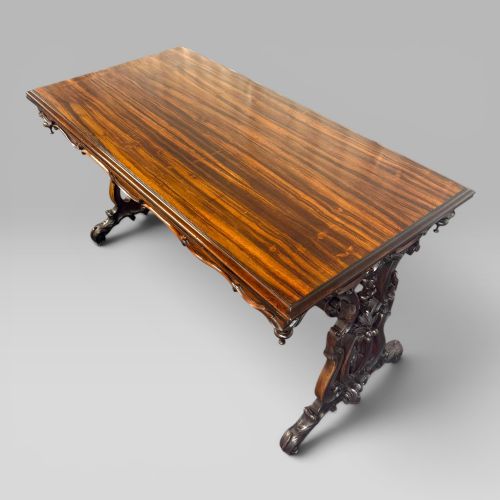
Carving appears on structural supports such as barley twist legs and pedestals, alongside polished glass mirror backs.
Listings feature rosewood alongside brass, marble, mirror glass, and marquetry inlay across various nineteenth-century periods.
Judging Quality
Quality rests in the depth of the rosewood grain and the crispness of the carved details, distinguishing mass production from superior cabinet-making.
The integrity of the fold-over mechanisms and the alignment of matched veneers separate standard pieces from finer examples.
Robert Strahan·Gillows·Donald Ross
The Victorian Rosewood Console Glossary
- Console table
- A table designed to be fixed against a wall, often supported by brackets or console legs. They served decorative and functional roles in formal nineteenth-century reception rooms.
- Fold-over card table
- A table with a hinged top that doubles the surface area when opened for games. It typically conceals a well for storage underneath.
- Marquetry inlay
- Decorative patterns formed by fitting contrasting pieces of wood veneer into a background. This technique created intricate floral or geometric designs on the surface.
- Ormolu
- Gilded bronze mounts applied to furniture for decoration. It provided a bright metallic contrast to dark rosewood timbers.
- Demi-lune
- Half-moon shape in furniture design. Tables of this form fit snugly against flat walls.
Victorian Rosewood Console: Frequently Asked Questions
How do I use a console table at home?
Place a victorian rosewood console in an entrance hall or against a living room wall to hold lamps, mirrors, or small decorative items.
Fold-over variants can also function as occasional dining or writing surfaces when opened against the wall.
Were these tables used for card games?
Many console tables incorporate a fold-over top specifically designed for card and board games during the nineteenth century.
When closed, they functioned as standard side tables to save space in the drawing room.
How do I distinguish a Victorian table from a Regency one?
Regency pieces lean towards classical lines and proportions dating from around eighteen hundred, while Victorian examples often feature heavier carving and revival styles.
Timber selection and structural joinery also offer clues to the specific decade of manufacture.
What maintenance does rosewood require?
Keep rosewood furniture away from direct sunlight and strong heat sources to prevent the wood from drying out and the veneer from lifting.
Dust regularly with a dry cloth and occasionally apply a suitable wax to nourish the polished surface.