
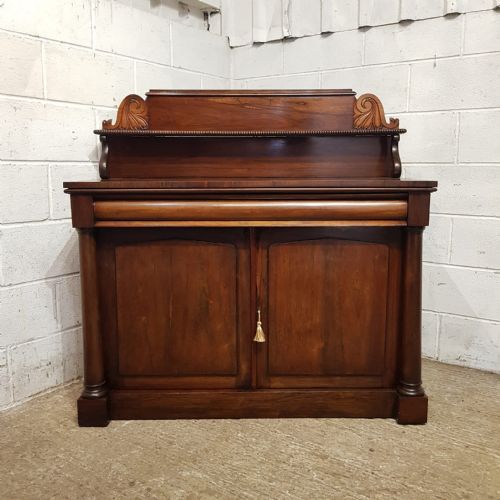
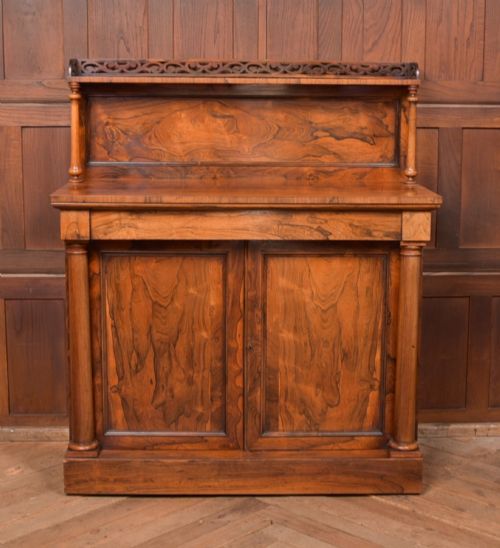


Carved Rosewood Buffet
A carved rosewood buffet brings solid timber and architectural presence to a dining room, offering both display surface and enclosed storage.
Carved Rosewood Buffet
A carved rosewood buffet covers a broad group of heavy timber furniture designed for storage and display, appearing primarily in Victorian and Regency formats. Buyers exploring this search phrase will encounter sideboards, chiffoniers, side cabinets, and credenzas.
The selection ranges from early nineteenth century William IV pieces to later Victorian and Anglo-Indian variants. Most examples function as lower storage units, sometimes topped with shelving tiers, mirrored backs, or glass panels.
Makers utilise dense tropical hardwoods, frequently pairing the main rosewood structure with boxwood inlay, brass fittings, and marble tops. These items serve equally well in traditional dining spaces or contemporary rooms needing deep grain and dark timber tones.
How they were made
Cabinet makers constructed these buffets using solid rosewood and palisander timbers over sturdy carcases, often applying figured veneers to door panels and drawer fronts. Carving was executed by hand, yielding deep relief work around pilasters, plinths, and door frames.
Secondary materials included brass for handles and grilles, glass for display doors, and occasionally mirrored glass within back panels. Inlay work incorporated lighter woods such as boxwood to create contrasting geometric or floral motifs across the facade.
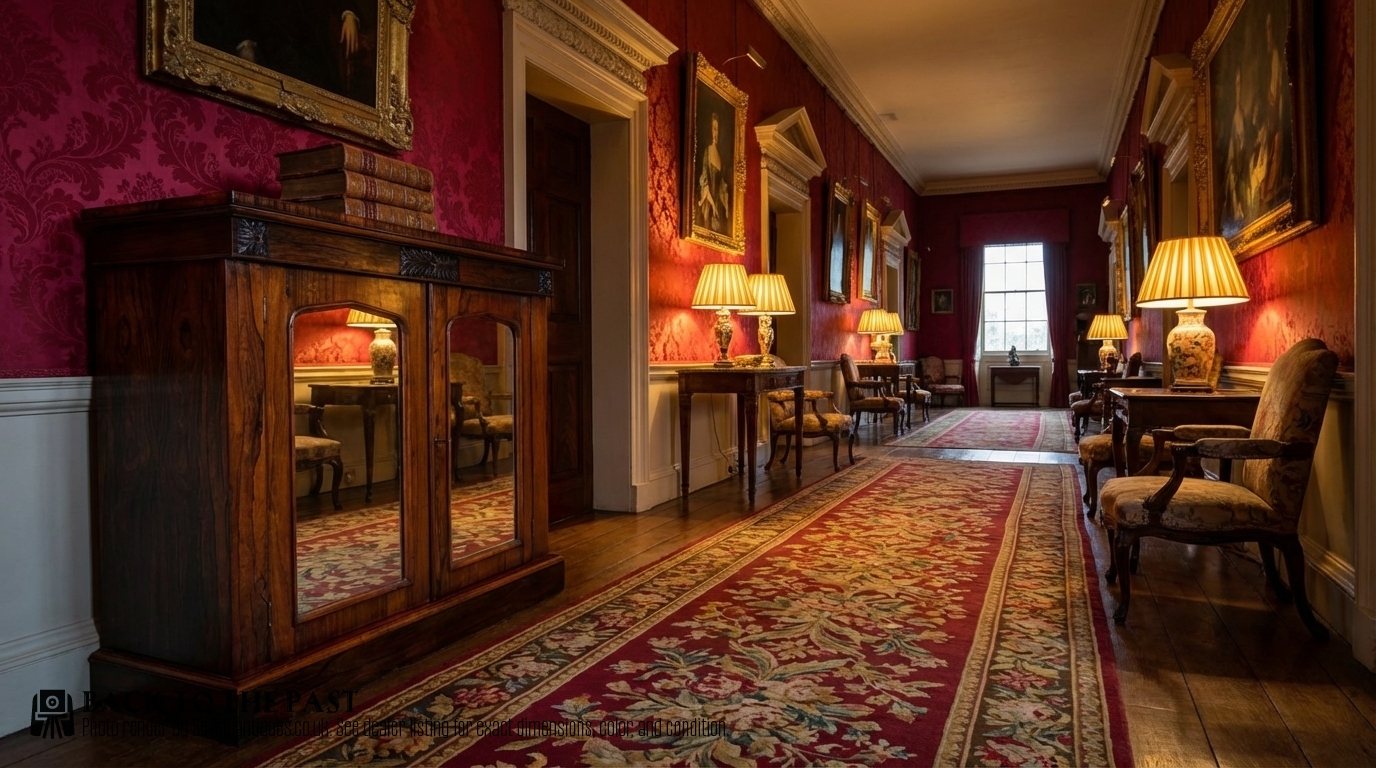
Some cabinets hide their contents behind heavy mirrored doors designed to bounce candlelight around a dimly lit Victorian dining room.
What varies in quality
Quality rests primarily in the crispness of the hand carving and the selection of figured timber grain across large surfaces. Superior examples demonstrate careful matching of rosewood veneers and robust construction joints that withstand heavy daily use.
Design complexity also separates standard utility pieces from high Victorian or Regency works, particularly those incorporating specialised maker stamps, brass grilles, mirrored superstructures, or integrated marble tops.
Sigmund Jaray Wien·James Plunckett Art Furniture·Howard and Sons
The Carved Rosewood Buffet Glossary
- Chiffonier
- A low sideboard or cabinet featuring enclosed lower cupboards, frequently topped with a raised shelf tier or mirrored back. This form became popular during the Regency and Victorian periods.
- Credenza
- A low dining room cabinet or sideboard without legs, standing directly on a plinth base. These pieces often display serpentine fronts and fine boxwood inlay.
- Palisander
- A dense, heavily figured tropical timber belonging to the rosewood family. It yields rich dark brown colouration with distinct black grain markings.
- Breakfront
- A piece of furniture whose central section projects forward from the flanking outer wings. This architectural arrangement creates depth and visual rhythm on large sideboards.
- Dumb waiter
- A tiered shelving unit or small sideboard used for holding dishes and serving items during meals. These items often feature graduated circular or rectangular shelves supported on central columns.
Carved Rosewood Buffet: Frequently Asked Questions
Where should I place a rosewood buffet?
These heavy timber pieces find a natural home in dining rooms, large hallways, or spacious living areas where their dark grain and carved details can anchor the room.
Ensure the floor space accommodates the substantial depth of the cabinet, and keep the piece away from direct heat sources to protect the polished wood surface.
How do I care for rosewood furniture?
Maintain the timber by dusting regularly with a dry cloth and occasionally applying a traditional beeswax to nourish the polished surface.
Avoid using modern chemical sprays or placing wet items directly onto the unshielded wood to prevent ring marks and finish degradation.
What is the difference between a chiffonier and a sideboard?
A chiffonier typically includes a smaller, lower storage base often topped by a small back shelf or mirror, suited for compact spaces.
Sideboards generally offer a longer surface spanning the wall, designed primarily for serving food and storing dining china within deeper cupboards.
How do I date a Victorian rosewood cabinet?
Examine the construction methods, such as hand-cut dovetails in the drawer boxes and the type of secondary framing timbers used inside the carcase.
Stylistic clues like heavy scrolling typical of the 1850s or crisper geometric aesthetic movement lines from later decades also help narrow the production era.