
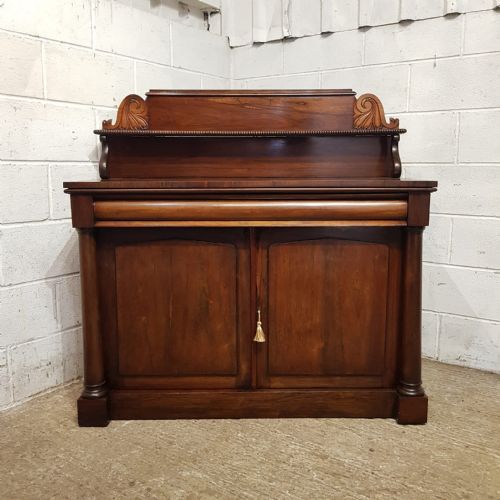


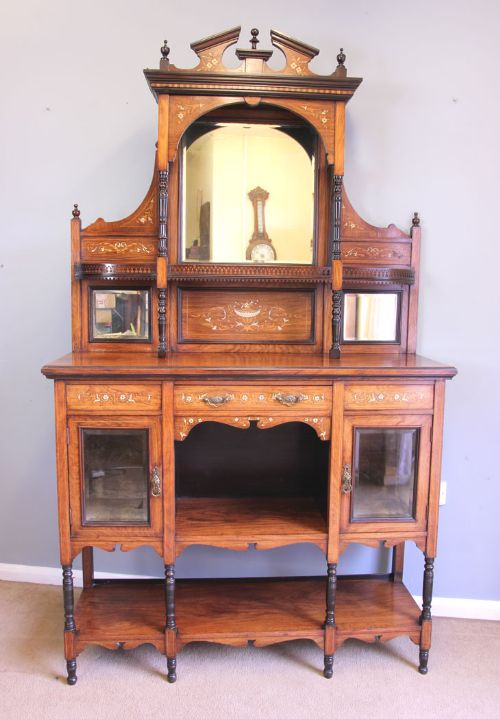


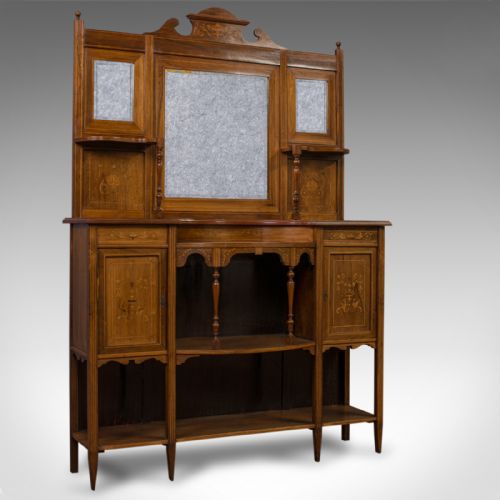

Rosewood Dining Room Sideboard
A rosewood dining room sideboard anchors a room with deep timber and brass detail, offering enduring utility for storage and display.
Rosewood Dining Room Sideboard
When you search for a rosewood dining room sideboard, you encounter substantial timber furniture designed to store dining accessories and display decorative objects. The pieces listed on this page span the Regency, Victorian, and early twentieth century periods, showing how formal dining rooms evolved over generations.
You are most likely to meet chiffoniers and credenzas alongside traditional sideboards within these listings. These forms originate from distinct eras, moving from the clean lines of the Regency period through to the elaborate inlays of the late nineteenth century.
Makers such as Gillows, Edwards and Roberts, and Howard and Sons appear in the evidence, marking the upper tier of cabinet making. Their work demonstrates how different workshops interpreted the form using figured timbers and delicate boxwood stringing.
Materials and construction
Makers utilised solid rosewood and palisander, often selecting figured veneers to create striking grain patterns across the primary surfaces. These dense timbers provide the dark, rich foundation characteristic of the style.
Brass inlay and boxwood stringing punctuate the dark timber, whilst glass doors and mirror glass panels appear on display cabinets and credenzas. Fabric backs occasionally line the interior of glazed compartments to soften the display space.
Victorian dining rooms required heavy timber so the furniture would not slide about when the butler leaned against it.
What separates the best examples
The selection of timber grain largely determines the visual impact of a piece, with highly figured rosewood commanding greater presence than plain stock. Workshops that carefully matched veneer across doors and drawers achieved a harmonious surface rhythm.
The precision of inlay work and the integration of secondary timbers such as satinwood indicate the level of craftsmanship invested in the piece. Well executed brass detailing and robust internal construction separate standard utility furniture from maker-attributed items.
Gillows·Edwards and Roberts·Howard and Sons
The Rosewood Dining Room Sideboard Glossary
- Chiffonier
- A low cabinet featuring enclosed shelving below, frequently topped with a raised back or mirrored superstructure. This form became popular during the Regency and Victorian periods for dining and drawing rooms.
- Credenza
- A sideboard or display piece often lacking the raised back of a chiffonier, frequently fitted with glass doors. The term relates to nineteenth century forms designed for formal display.
- Palisander
- A dense tropical timber synonymous with rosewood varieties used in high quality cabinet making. Its dark colour and distinct grain made it a favoured choice for nineteenth century makers.
- Boxwood inlay
- Narrow lines or decorative motifs of pale wood set flush into a darker ground. This technique creates contrast against rosewood surfaces.
- Breakfront
- A cabinet design where the central section projects forward from the flanking cupboards. This architectural arrangement adds depth and visual interest to large sideboards.
Rosewood Dining Room Sideboard: Frequently Asked Questions
What is the difference between a sideboard and a chiffonier?
A sideboard generally provides long storage surfaces and cupboards intended for dining rooms. A chiffonier is typically more compact and frequently incorporates a raised shelf or mirror at the back.
Both forms served storage and display functions in nineteenth century interiors. The evidence shows these terms used across similar periods.
How do I identify a Regency period piece?
Regency pieces often display classical proportions and restrained brass inlay. They date from the early nineteenth century and favour structural clarity over heavy ornamentation.
Makers from this era utilised dense rosewood and palisander timbers. The lines remain clean and architectural compared to later Victorian designs.
Where were these sideboards used?
These pieces belonged in formal dining rooms to store linen, silver, and ceramics. They provided a surface for serving food or displaying decorative tableware.
Larger versions with mirror glass and display shelving also transitioned into drawing rooms. Their storage capacity made them central items in nineteenth century homes.
What timber features on these sideboards?
Rosewood and palisander form the primary body of these pieces, selected for their deep colour and prominent grain. Makers used solid sections alongside figured veneers.
Secondary materials such as boxwood and satinwood provide contrast through inlay work. Brass details also appear across multiple periods.