



Nineteenth Century Rosewood Credenza
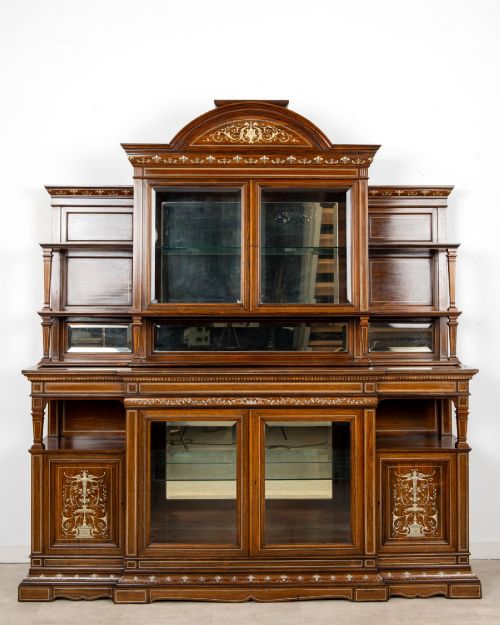
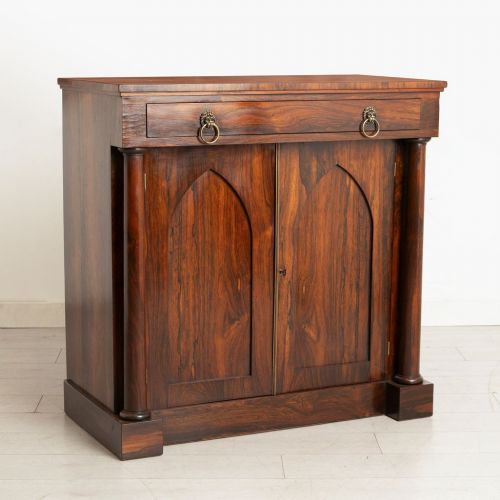
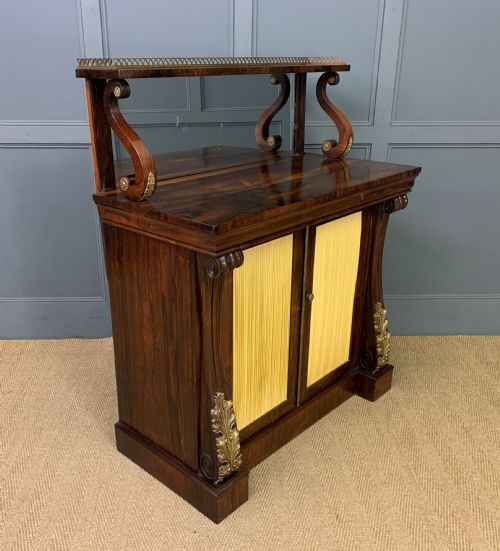
A nineteenth century rosewood credenza brings striking timber figures and polished brass mounts to a formal room.
Nineteenth Century Rosewood Credenza
A nineteenth century rosewood credenza encompasses low display cabinets, chiffoniers, and sideboards designed for sophisticated storage and display. These pieces originate predominantly from the Regency and Victorian eras, alongside mid nineteenth century interpretations.
Materials and construction
Craftsmen built these cabinets primarily using dense rosewood veneers, occasionally utilising Goncalo Alves or boxwood for contrasting inlay work. Secondary framing incorporates solid timbers to support the substantial weight of marble tops and glass panels.
Detailing relies on precision brass mounting, brass inlay, and parcel gilding to accentuate architectural mouldings. Glass doors, mirror glass backs, and fabric-lined interiors complete the construction of these refined storage pieces.
One clever Regency cabinet hides leather dummy books, keeping secret storage disguised as a scholar's library.
Defining quality
Quality rests upon the depth of the rosewood figuring and the crispness of brass inlay or marquetry work. Finer examples display meticulous attention to timber selection and structural joinery that maintains rigidity across wide cabinet spans.
The sophistication of secondary materials, such as heavy marble tops or original mirror glass, distinguishes standard production from exceptional pieces. Attribution to recognised makers also elevates the standing of a cabinet.
Collinson and Lock·John McClean·Stephen Webb
The Nineteenth Century Rosewood Credenza Glossary
- Credenza
- A low cabinet or sideboard designed for display and storage, often featuring glass-fronted doors and mirrored backs. The form gained popularity in formal reception rooms during the Victorian era.
- Chiffonier
- A compact sideboard or cabinet equipped with shelving and enclosed lower cupboards. Regency examples frequently incorporate a raised shelf backed by a mirror.
- Marquetry
- Decorative veneer patterns formed by fitting together small pieces of various woods and other materials. This technique creates complex pictorial or geometric designs on cabinet doors.
- Goncalo Alves
- A dense exotic timber prized for its dramatic figuring, occasionally utilised in place of rosewood during the Regency period.
- Parcel Gilt
- Partial gilding applied to specific carved details or mouldings to highlight architectural elements against the dark rosewood grain.
Nineteenth Century Rosewood Credenza: Frequently Asked Questions
How do I clean rosewood?
Dust surfaces regularly with a soft, dry cloth to prevent particulate accumulation. Avoid silicone sprays and excessive moisture which can damage polished nineteenth century finishes.
Apply high quality beeswax sparingly when the timber appears dry, buffing gently to maintain the natural lustre of the grain.
Can these cabinets hold books?
Many open bookcases and chiffoniers from the Regency period were specifically constructed to house household libraries. Adjustable internal shelving accommodates volumes of varying heights.
Ensure shelf loads remain balanced to prevent bowing across wider nineteenth century timber spans.
Where should I place a credenza?
Position these low cabinets against principle living room or dining room walls where their reflective glass and brass mounts catch natural light. Keep them away from direct sunlight to protect sensitive rosewood veneers from fading.
Maintain distance from active heat sources to prevent timber shrinkage and veneer lifting.
How do I date a piece?
Examine construction methods, hardware types, and timber preparations for clues regarding period manufacture. Regency examples display characteristic brass inlay and rectilinear proportions, while Victorian pieces often incorporate serpentine fronts and heavier carved details.
Maker signatures or attribution labels provide definitive chronological reference points when present.