


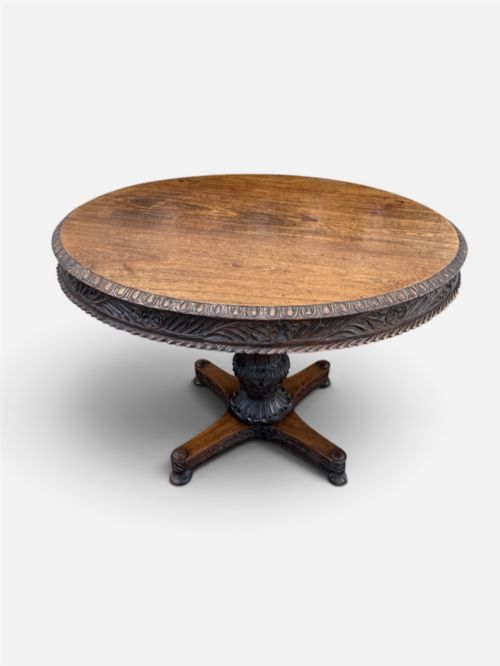
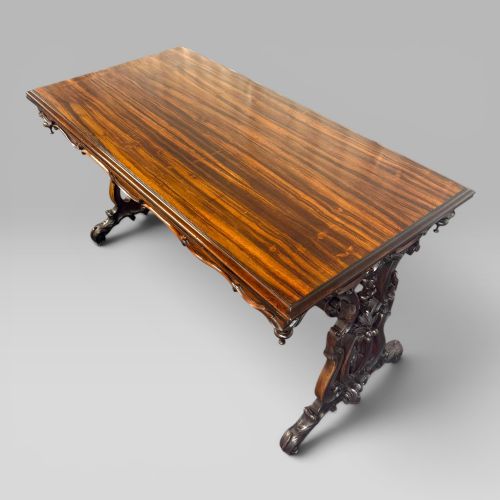
Victorian Rosewood Centre Table
A victorian rosewood centre table brings rich timber grain and sculptural nineteenth-century design directly to the middle of a room.
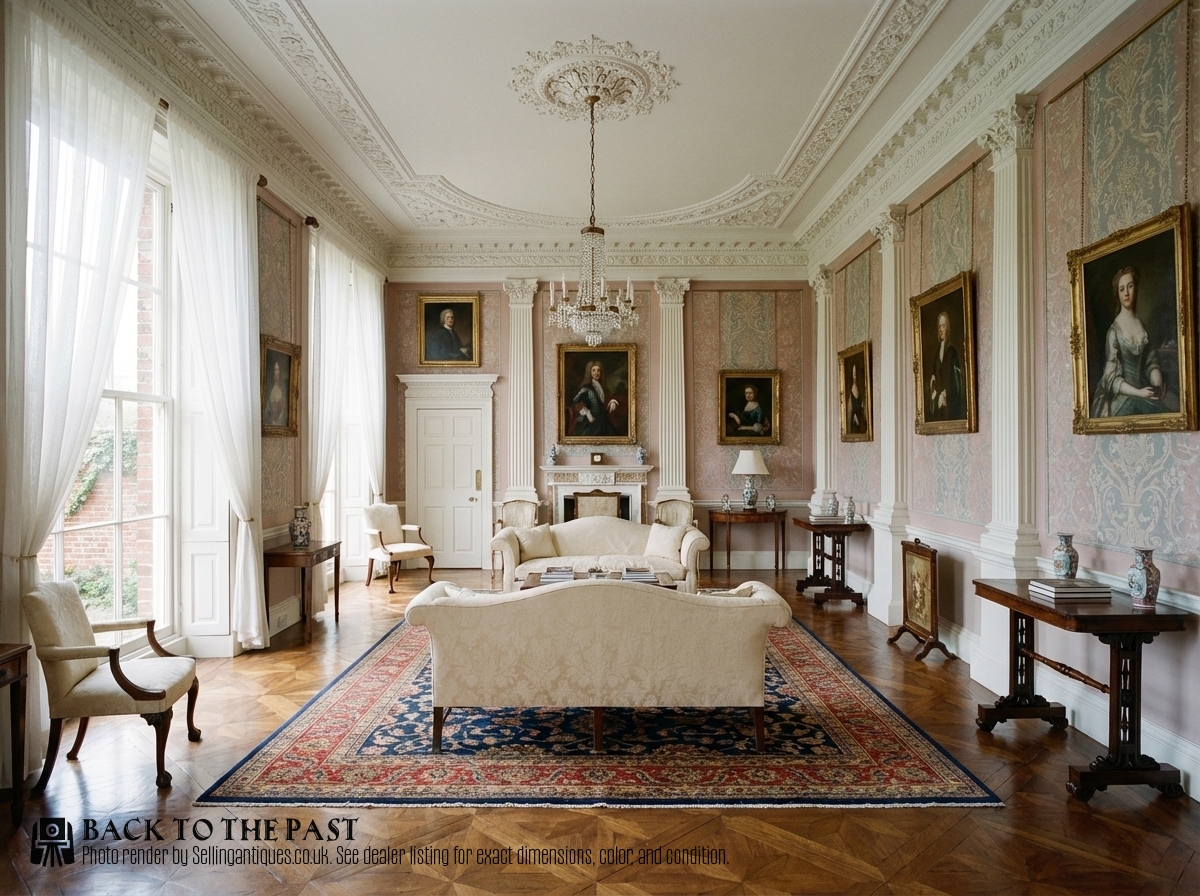
Victorian Rosewood Centre Table
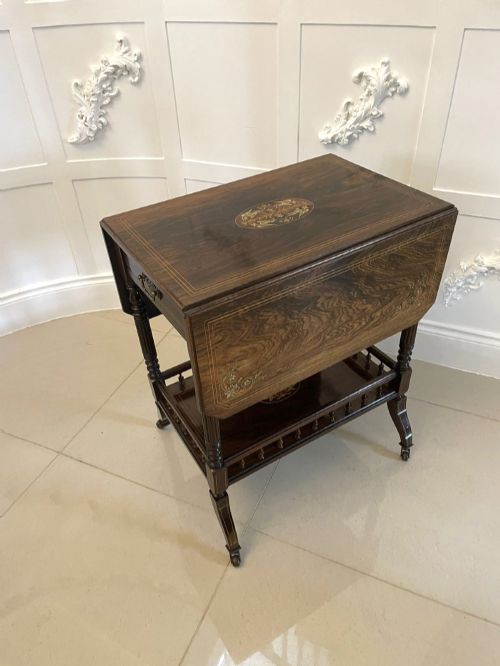
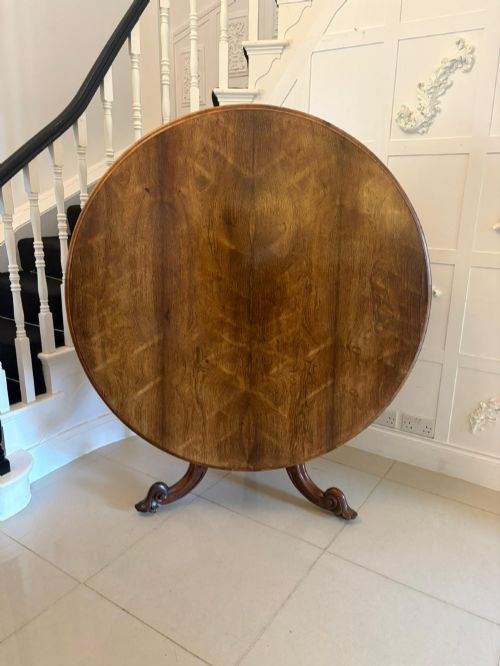
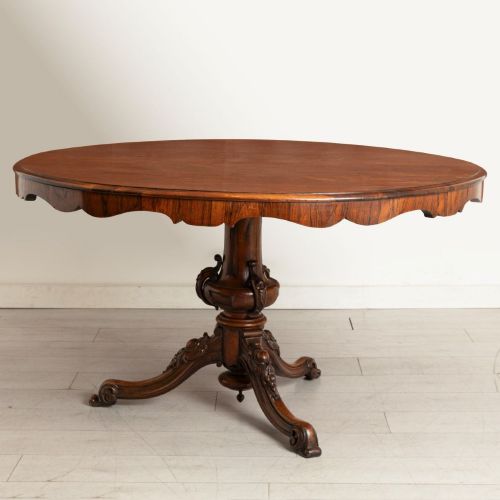
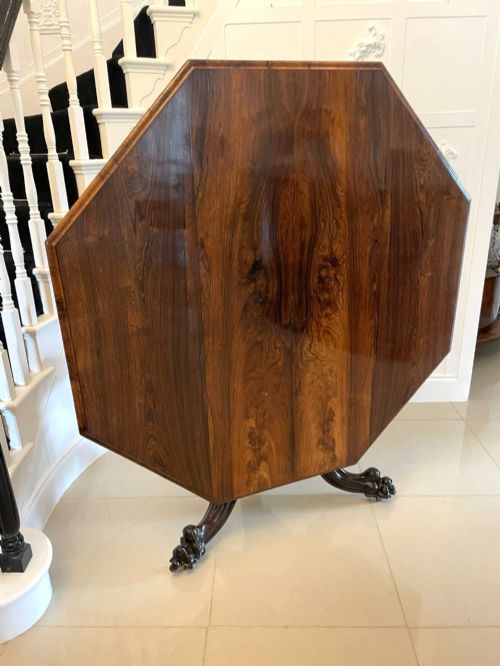
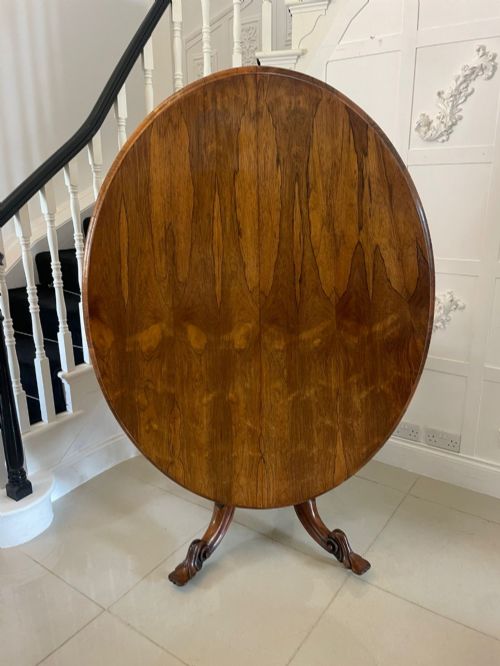
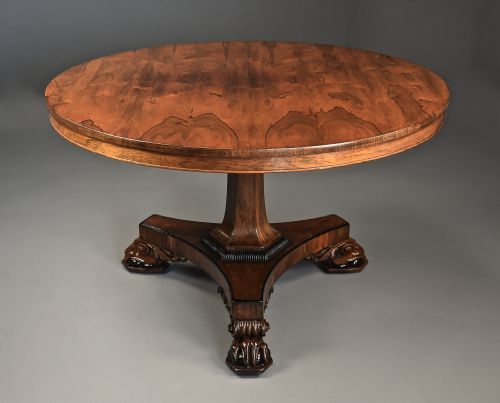
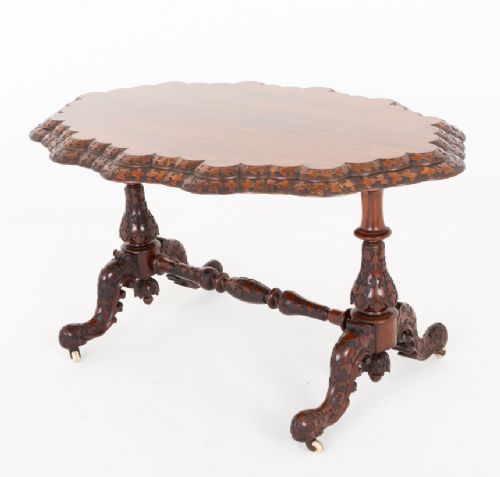
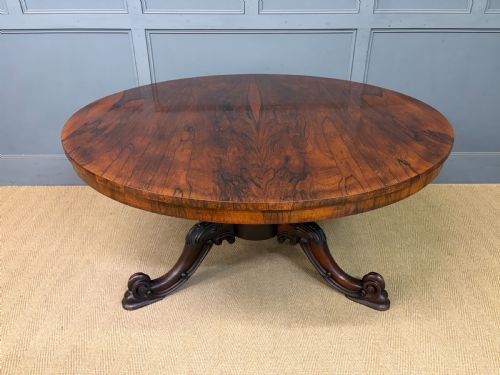
A victorian rosewood centre table is a freestanding nineteenth-century piece designed to occupy a prominent position in a principal room rather than sit against a wall. The selections span circular dining tables, tilt-top breakfast tables, and octagonal occasional pieces.
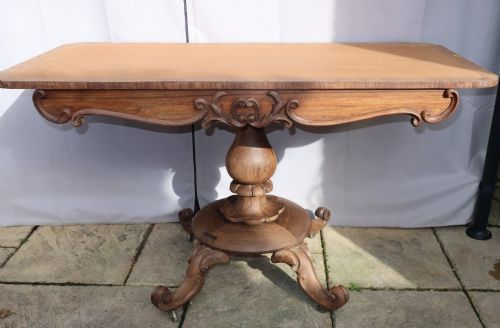
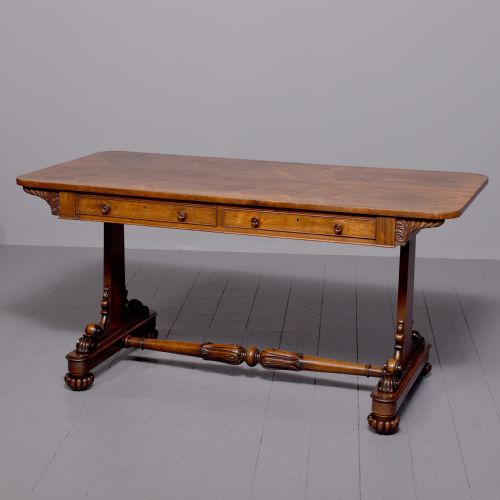
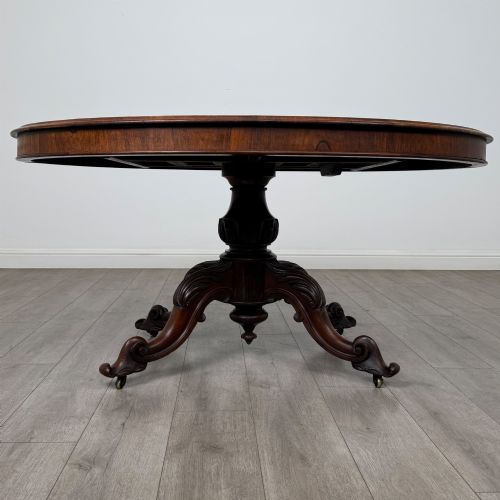
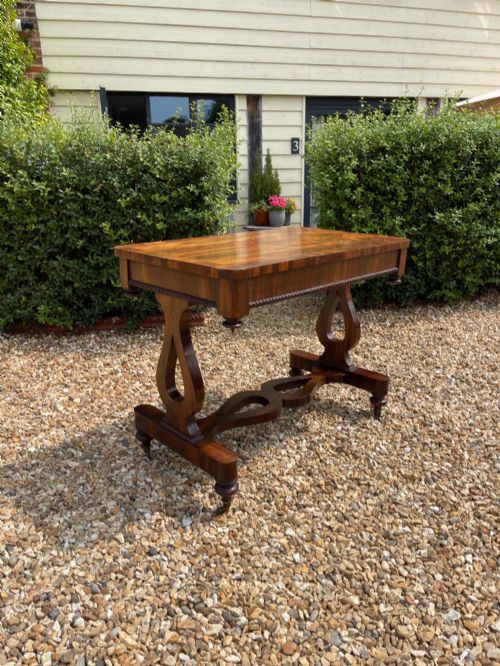
Most examples meet the eye as round or oval pedestals supported by carved columns and robust wooden bases. Makers also produced rectangular library tables and sofa tables during the Georgian, William IV, and Victorian periods.
The pieces often double as dining or loo tables, utilising tipping mechanisms to save space when not in use. Anglo-Indian variants and marquetry-inlaid versions appear alongside solid timber constructions.
Materials and construction
Carpenters utilised dense rosewood timber, frequently matched with secondary woods such as mahogany, satinwood, and zebrawood for contrasting elements. Brass components, ceramic fittings, and mother-of-pearl inlay feature across various stylistic revivals.
Surface decoration relies heavily on wood inlay, marquetry, and intricate carving applied to solid pedestals and friezes. Tilt-top mechanisms employ hinged wooden blocks and brass catches to secure the heavy tops.
Materials recorded across the inventory include rosewood, mahogany, satinwood, zebrawood, brass, and ceramic.
Distinctions in quality
The grade of rosewood timber and the complexity of the figure dictate the baseline standard of a piece. Heavily figured veneers and solid carved bases separate standard utilitarian furniture from exceptional cabinet work.
Execution of carving and precision in marquetry inlay reveal the workshop's competence. Well-balanced pedestal supports and smooth tilt-top actions demonstrate superior structural integrity.
Gillows·Mein of Kelso
The Victorian Rosewood Centre Table Glossary
- Centre table
- A freestanding table finished on all sides for placement in the middle of a room rather than against a perimeter wall.
- Tilt-top
- A hinged tabletop mechanism allowing the surface to fold vertically for storage or clearance.
- Marquetry
- Decorative patterns formed by fitting pieces of veneer into a prepared wooden ground.
- Loo table
- A large round or oval nineteenth-century table originally used for the card game loo.
- Frieze
- The horizontal band beneath the tabletop, often housing drawers or carrying inlay.
Victorian Rosewood Centre Table: Frequently Asked Questions
How do I use a centre table in a modern room?
Place the piece in the middle of an open space where it can be approached from all sides. It functions effectively as a display surface for lamps and books or as an informal dining spot.
Ensure sufficient clearance around the perimeter so the proportions of the room remain balanced and accessible.
What is the difference between a loo table and a breakfast table?
Loo tables derive their name from a popular card game of the period and typically feature tilt-top mechanisms for convenient storage. Breakfast tables share similar pedestal constructions but generally served morning dining.
Both forms utilise heavy rosewood timbers and often present circular or oval silhouettes supported by carved central pillars.
How can I identify a tilt-top mechanism?
Look beneath the tabletop for a hinged block assembly secured with brass latches or wooden pins. This allows the heavy top to rotate and lock into a vertical position.
Original mechanisms move smoothly without excessive play in the hinge joint.
Why do some tables feature marquetry while others are plain?
Plain rosewood highlights the natural grain and deep colour of the timber itself. Marquetry and wood inlay reflect later Victorian stylistic preferences for decorative surface ornamentation.
Both finishes were produced concurrently depending on the desired aesthetic of the commission.