

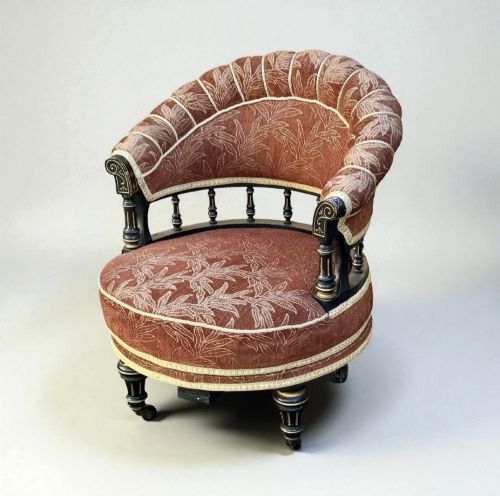
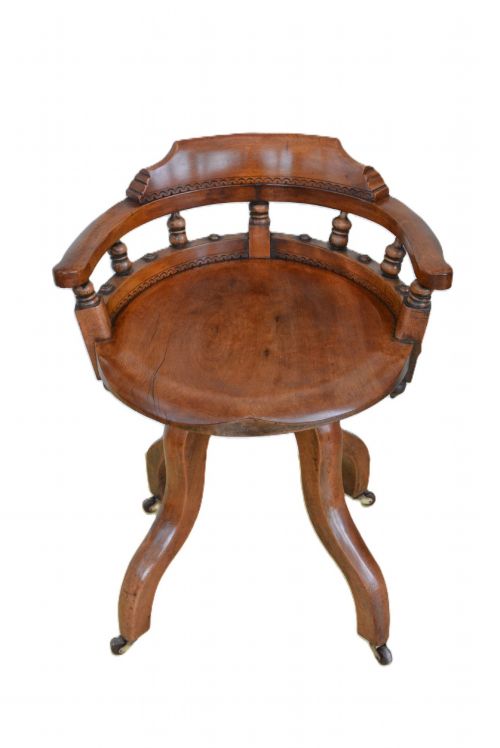
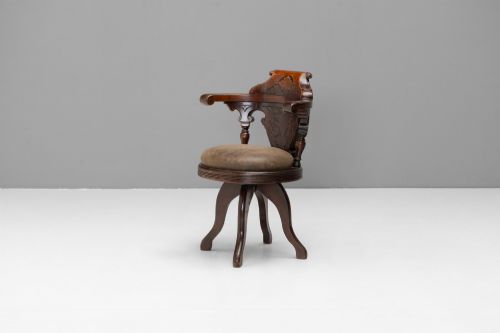
Victorian Revolving Armchair
A victorian revolving armchair delivers mechanical movement and steady desk utility, shaped by nineteenth-century workspace demands.
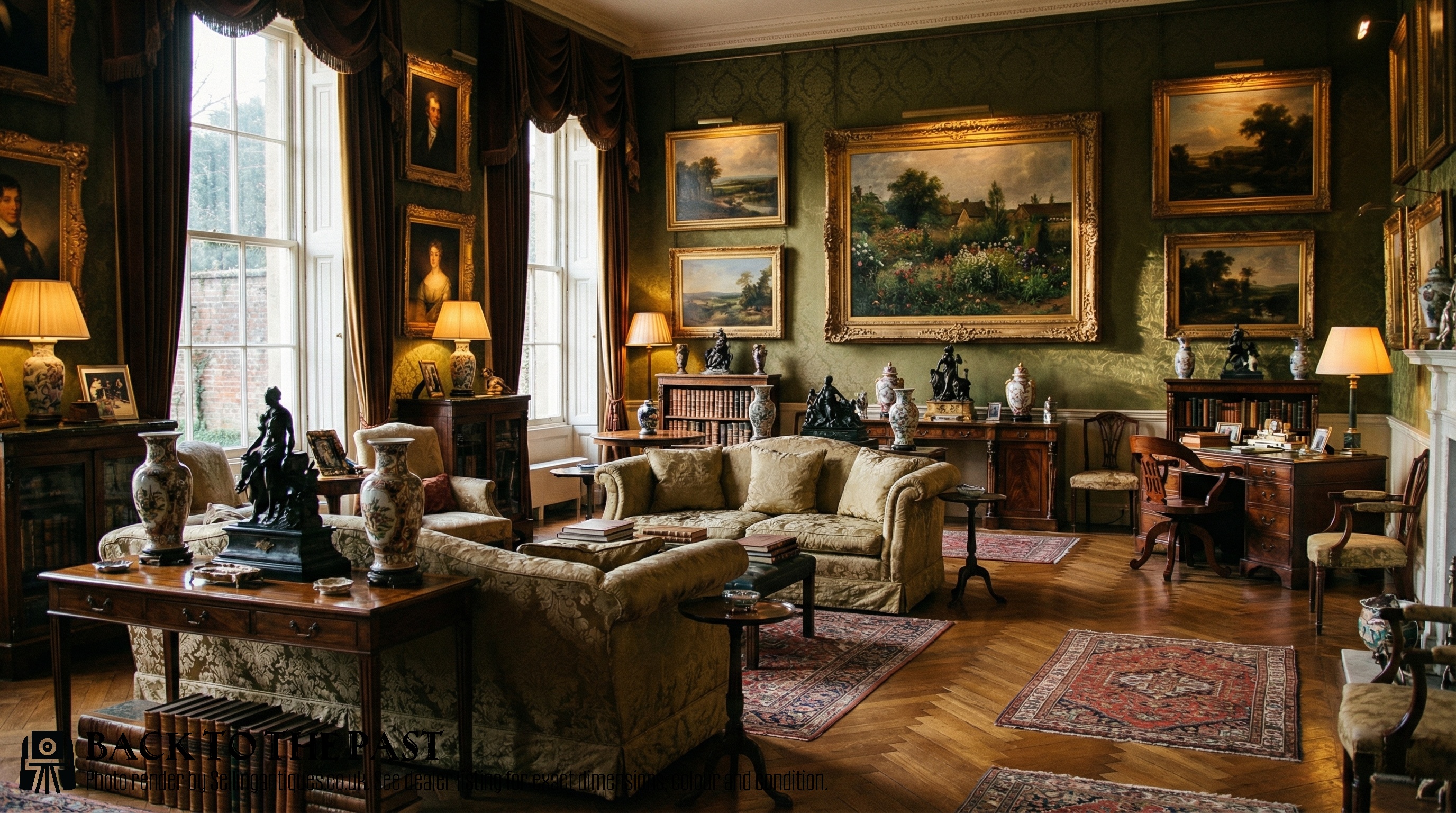
Victorian Revolving Armchair
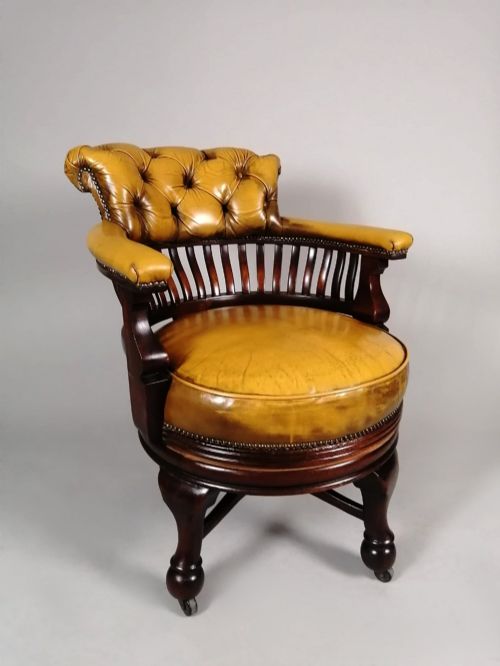
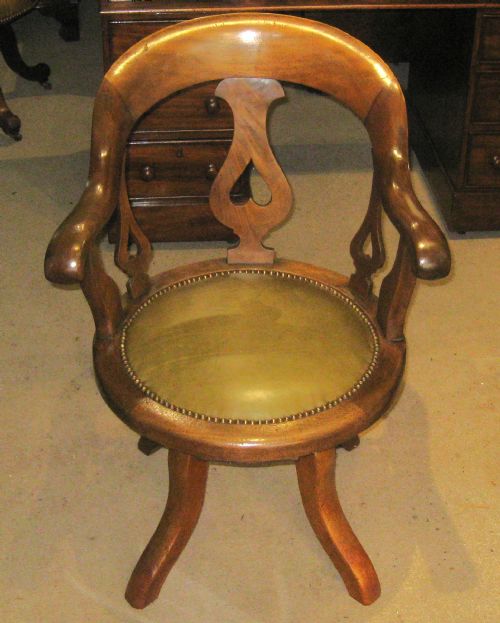
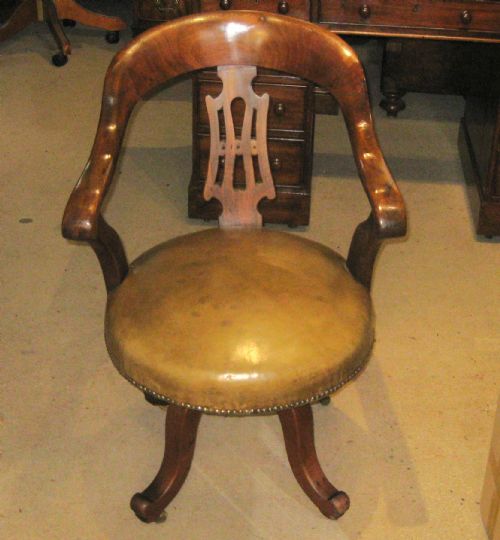
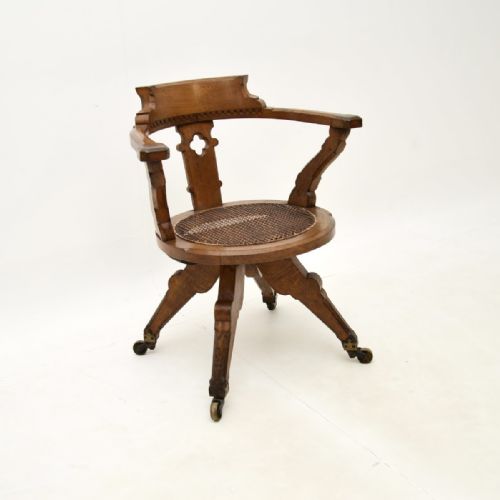
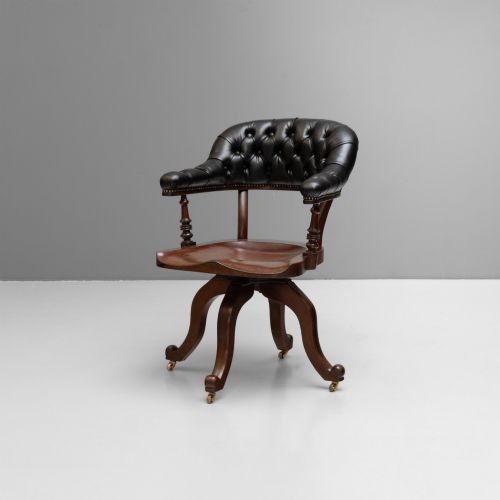
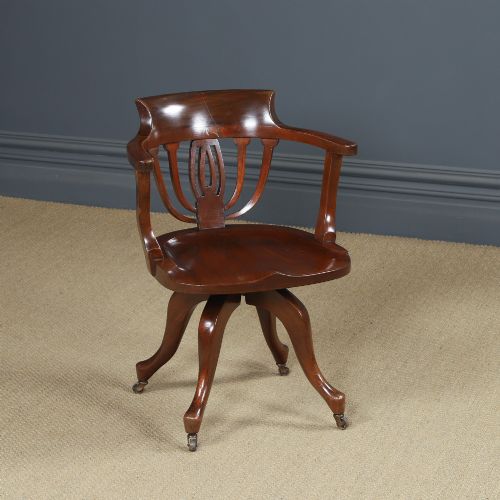
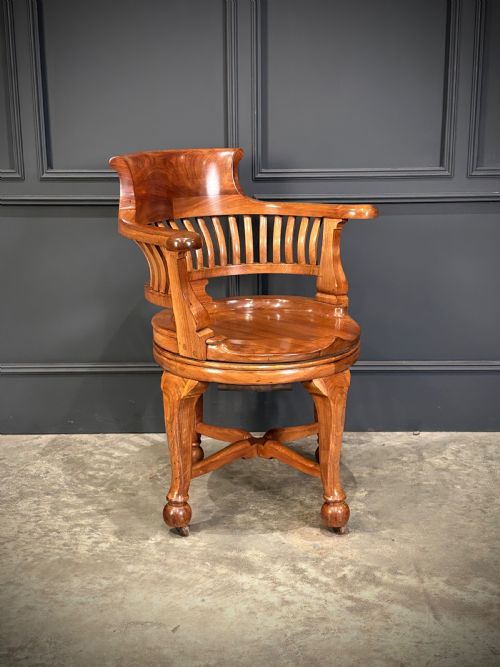
A victorian revolving armchair serves as a sturdy seat for an office, library or ship, combining a swivel mechanism with upholstered arm support. These pieces emerge primarily from the nineteenth century and the early twentieth century, spanning desks and maritime cabins.
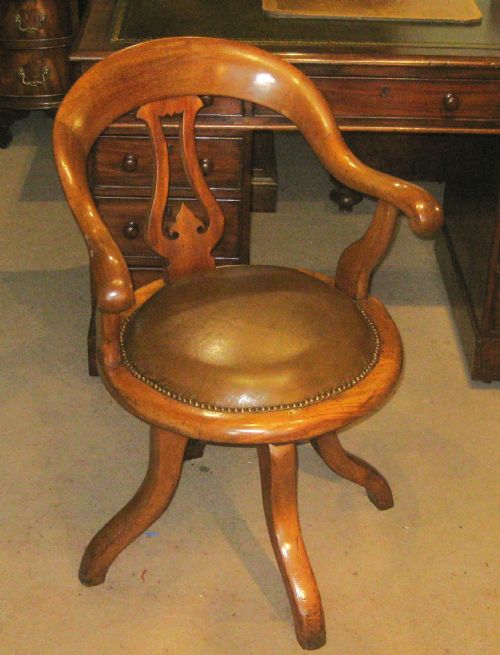
Mahogany and oak dominate the timber frame construction, frequently paired with inset leather seats or plain cane panels. The forms range from simple captain chairs to heavily carved ship variants and designated office desk chairs.
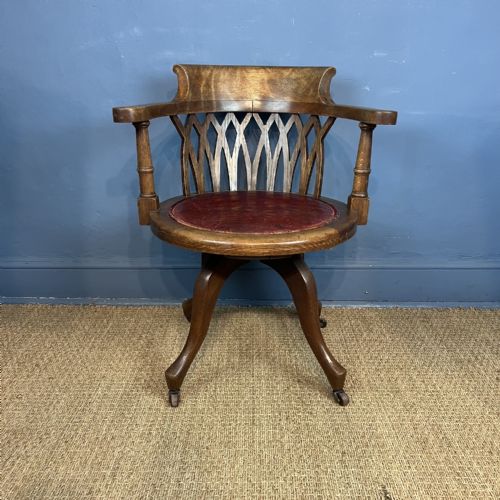
The standard version met on this page is a mahogany or oak swivel desk chair set on a central revolving mechanism, often upholstered in green, brown or red leather. Variations stretch to include walnut, ebonised finishes, and specific aesthetic or gothic revival detailing.
Materials and construction
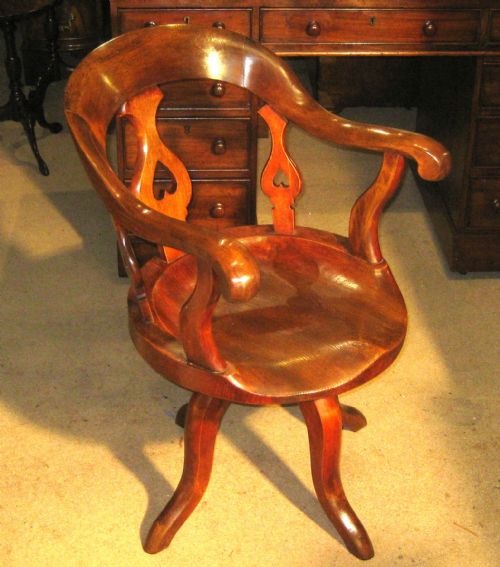
Timbers such as mahogany, oak and walnut provide the heavy structural foundation required to bear a swivelling mechanism without tipping. These woods are turned, carved or polished to create the robust frames characteristic of nineteenth-century seating.
Iron and brass components form the internal swivel mechanisms and screw shafts that permit rotation, concealed beneath wooden seats or exposed as heavy cast iron bases. Leather and cane supply the primary surface materials for seats and backrests, fixed with tacks or woven directly into the wooden framework.
Listings feature woods spanning mahogany, oak, walnut, and satinwood, paired with iron, brass, and leather components.
Distinctions in quality
The engineering of the revolving mechanism dictates daily usability, separating smooth rotating movement from stiff or loose joints. Higher quality examples retain stable, fluid rotation paired with robust timber framing that shows no structural wobble.
Carving depth and secondary materials such as satinwood inlay or specialised leather upholstery distinguish standard office seating from finer library and aesthetic movement pieces. The integrity of the original wood finish and the cohesion of the joinery elevate a utilitarian seat into a considered design object.
SHOOLBRED·GEORGE BARTHOLOMEW & CO·E W GODWIN
The Victorian Revolving Armchair Glossary
- Swivel
- A mechanical pivot assembly allowing the upper chair to rotate fully. This iron or brass apparatus sits between the seat base and the legs.
- Captain chair
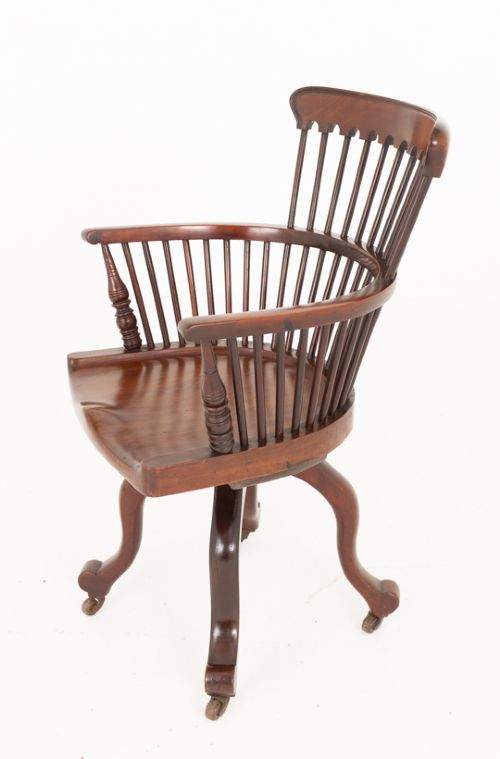
- A low-backed wooden armchair designed for office or shipboard use. These typically feature curved back rails supported by numerous small spindles.
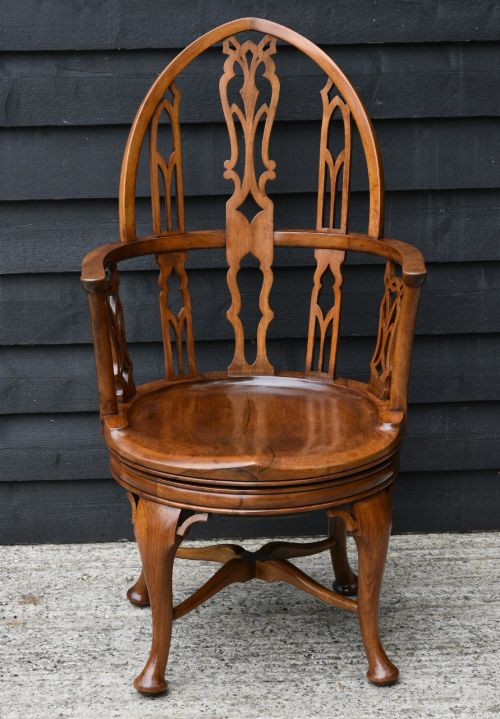
- Gothic Revival
- An architectural and decorative style drawing on medieval forms. Pieces display pointed arches, heavy moulding, and solemn carved details.
- Aesthetic Movement
- A late nineteenth-century design focus prioritizing visual beauty over narrative function. Furniture from this circle exhibits cleaner lines and refined craftsmanship.
- Cane seat
- A woven natural rattan panel forming a lightweight seating surface. This method offers flexibility and breathability within a rigid wooden frame.
Victorian Revolving Armchair: Frequently Asked Questions
What is a revolving captain chair?
A revolving captain chair is a low-backed wooden armchair fitted with a swivel mechanism designed for office or shipboard environments. They provide mobile support for writing and administrative work.
The design typically incorporates a curved wooden top rail and spindle supports above a rotating wooden or leather-inset seat.
How do I identify a Victorian office chair?
Victorian office chairs are identified through period timber selections like mahogany and oak, combined with mechanical swivel bases and sturdy armrests. Their construction reflects the functional demands of nineteenth-century workspaces.
Detailing often includes leather upholstery, turned wooden spindles, or gothic revival carvings unique to the era.
Were these chairs used on ships?
Certain revolving armchairs were manufactured specifically as ships chairs for maritime use, featuring weighted or secured bases to handle movement at sea. These pieces often display heavy oak construction and carved details.
They function identically to land-based desk chairs but reflect naval or passenger liner origins in their robust build.
How should I care for the leather seat?
Leather seats on these armchairs require gentle cleaning with appropriate conditioners to maintain flexibility and prevent cracking over time. Avoid harsh chemical cleaners that strip the original patina.
Regular light dusting and occasional conditioning will preserve the historical surface finish of nineteenth-century upholstery.