


Leather Office Armchair
This leather office armchair selection brings together sturdy swivel mechanisms and buttoned hide upholstery designed for long hours at a nineteenth or twentieth-century desk.
Leather Office Armchair
A leather office armchair provides a solid seating option for a study or library, drawing on traditional designs from the Victorian and Edwardian eras. These pieces function as working chairs, often featuring revolving mechanisms or fixed wooden frames designed for prolonged use.
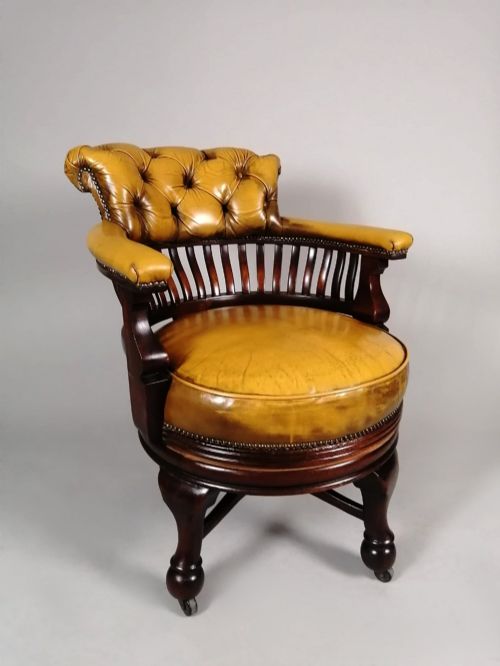
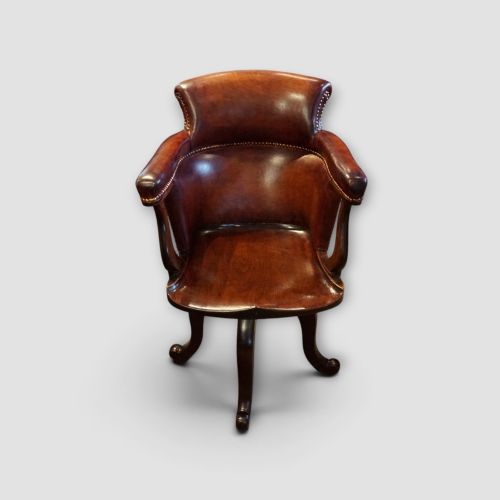
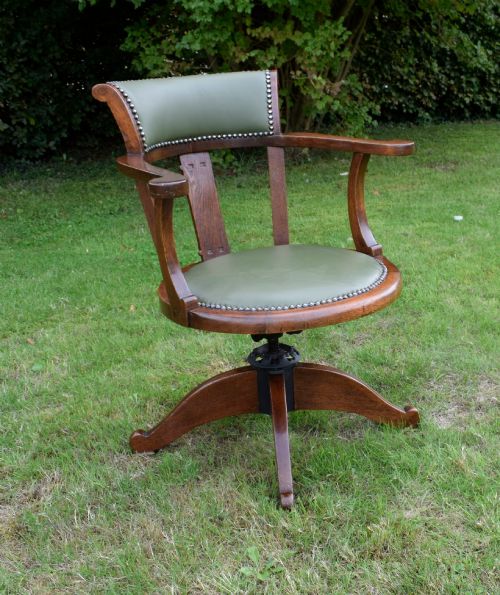
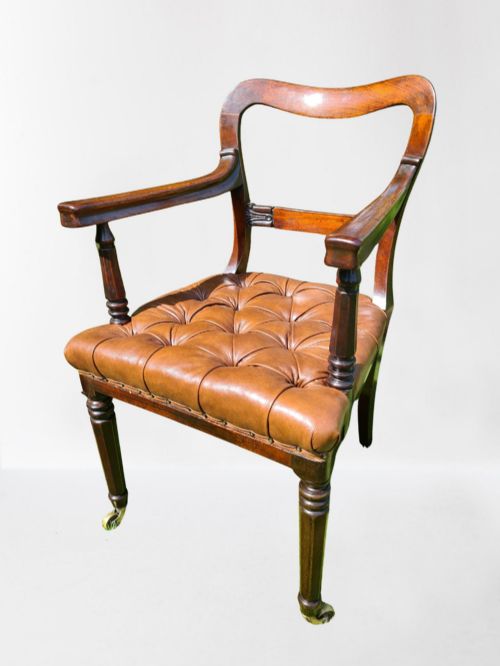
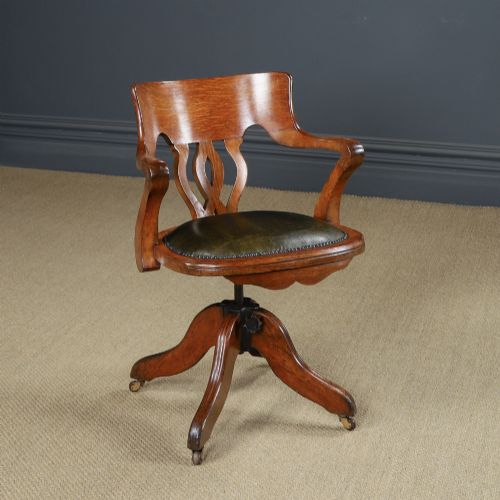
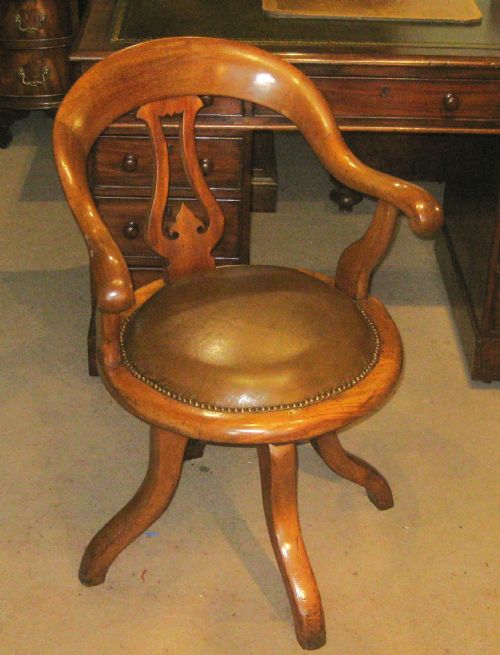
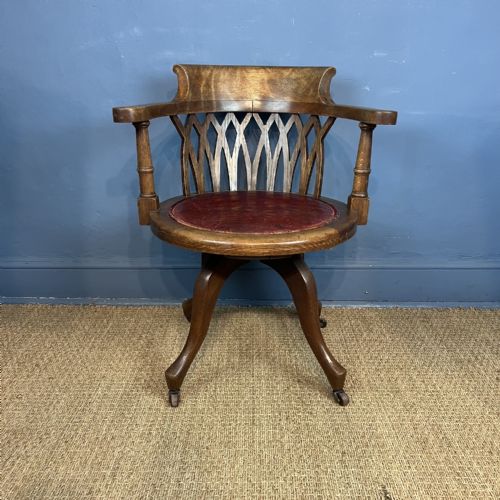
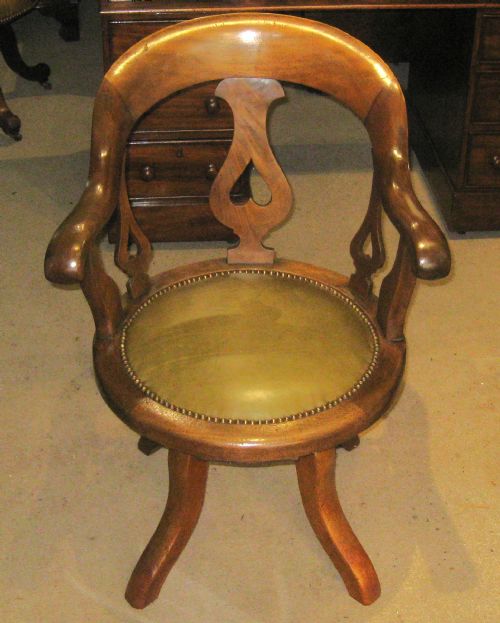
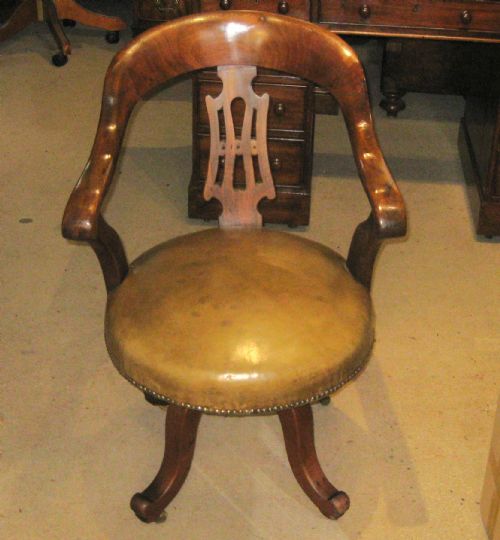
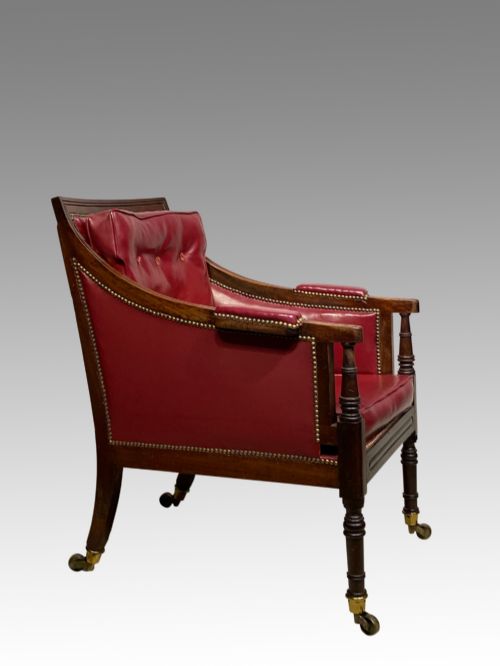
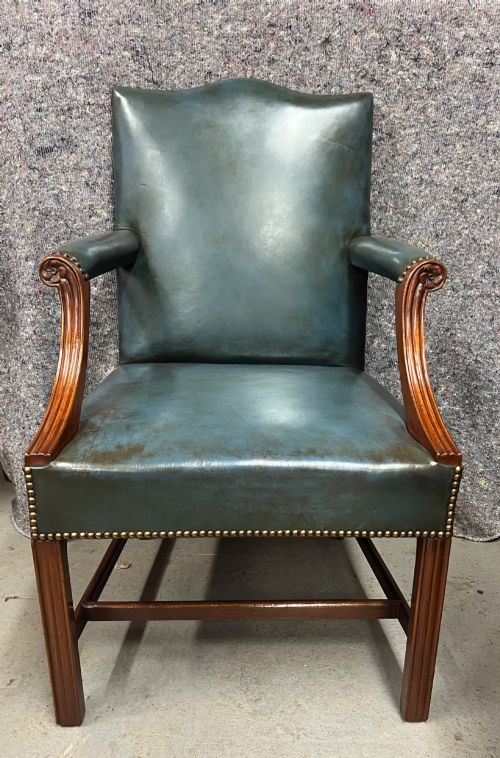
The most common examples on this page are mahogany and oak desk armchairs from the late nineteenth century and early twentieth century. Many incorporate green or red leather seats, alongside revolving swivel bases and castors.
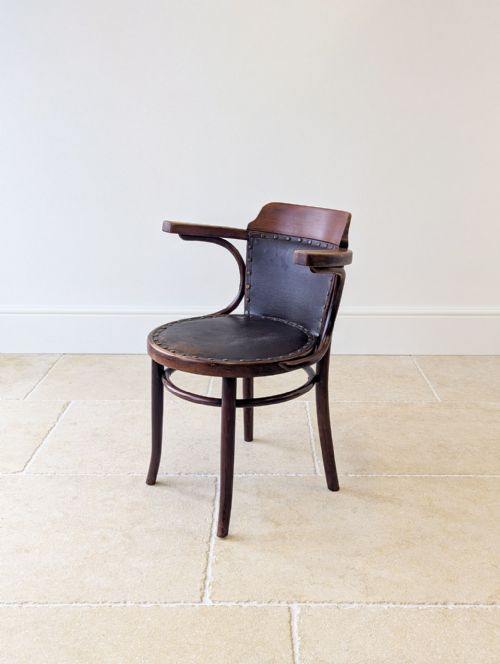
Makers produced these seats in various regional styles, including Edwardian bentwood designs, heavy Victorian library chairs, and lighter Georgian revival forms. They bridge the gap between domestic comfort and professional utility.
How they were made
Cabinetmakers constructed the frames primarily from dense hardwoods like mahogany, oak, and walnut, occasionally utilising beech or burr elm for bentwood elements. Joinery relied on mortise and tenon techniques to withstand the rotational stress of swivel mechanisms.
Upholsterers fitted cattle hide leather over stuffing, securing the edges with brass studs or decorative nailing. Iron and brass hardware supported the revolving spindle columns and adjustable tilt functions beneath the seat.
At least one Victorian maker experimented with ostrich leather upholstery, proving that nineteenth-century office workers enjoyed exotic comfort.
What varies in quality
The distinction between standard commercial seating and finer workshop production lies in timber selection and carved detailing. Dense, figured golden mahogany and quarter-sawn oak indicate superior material choices compared to plain utility timbers.
Mechanism engineering also separates examples, with robust cast iron swivel assemblies and smooth-action tilt functions marking higher grade production. Hand-tooled leather borders and careful button tufting demonstrate artisan execution over factory assembly.
Gillows·Bruce James Talbert
The Leather Office Armchair Glossary
- Revolving
- A seating mechanism allowing the upper chair body to rotate three hundred and sixty degrees on a central spindle. This feature became common in late nineteenth-century office furniture to improve workspace mobility.
- Captain's Chair
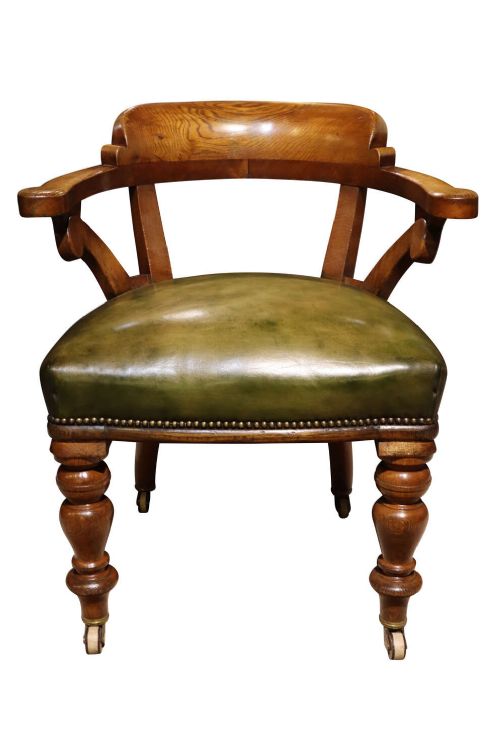
- A low-backed wooden armchair with a rounded top rail supported by vertical spindles above a saddle seat. Later variants incorporate padded leather upholstery and swivel bases.
- Bentwood
- A technique of steaming timber until pliable, allowing craftsmen to bend it into curved structural shapes. This method appears frequently in Edwardian office seating.
- Library Chair
- A sturdy upholstered armchair designed for reading rooms and studies, typically featuring padded arms and enclosed sides. These pieces prioritise deep cushioning over mechanical adjustments.
- Gainsborough Chair
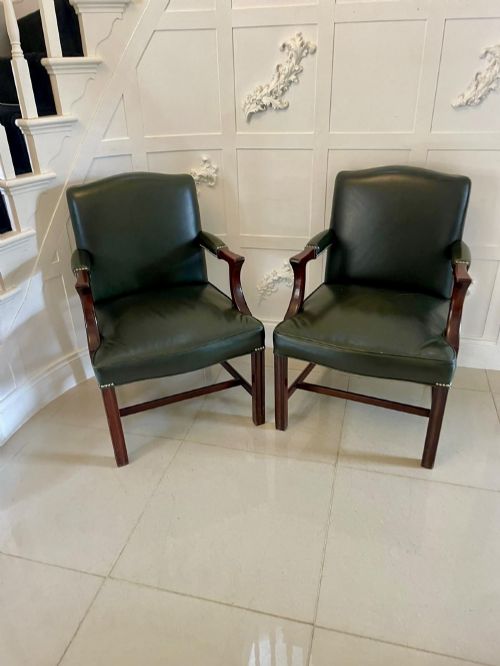
- An eighteenth-century style armchair featuring an upholstered back and seat with open padded arms and short legs. Revival versions often served as desk chairs in later centuries.
Leather Office Armchair: Frequently Asked Questions
How do I identify a Victorian desk chair?
Victorian desk chairs typically feature dense timbers like mahogany or oak, often combined with hand-stitched leather upholstery and heavy cast iron or brass revolving mechanisms. Look for deep buttoning and turned wooden spindles supporting the arms.
Earlier examples from this period lean towards robust library forms, while later nineteenth-century pieces introduce swivel bases designed for administrative work.
Were these chairs used in offices?
Yes, many of these chairs served as functional office and study seating from the mid-nineteenth century onward. The addition of swivel mechanisms and castors allowed clerks and professionals to move easily between desks and filing areas.
Sturdy timber frames and durable leather hides ensured the furniture could withstand daily commercial use.
What is the difference between an Edwardian and a Victorian model?
Edwardian models often incorporate lighter framing materials, such as bentwood or beech, alongside polished oak and mahogany. These twentieth-century pieces frequently display simpler lines influenced by Arts and Crafts ideals.
Victorian versions tend to be heavier and more ornate, featuring dark mahogany, carved walnut, and traditional button-tufted leather seats.
How do I care for antique leather upholstery?
Maintain antique leather by keeping the hide nourished with appropriate conservation waxes or balms to prevent drying and cracking. Avoid placing the chair in direct sunlight or near heat sources, which accelerates the deterioration of nineteenth-century leather.
Dust regularly with a soft cloth and protect the brass studding from excessive moisture during cleaning.