
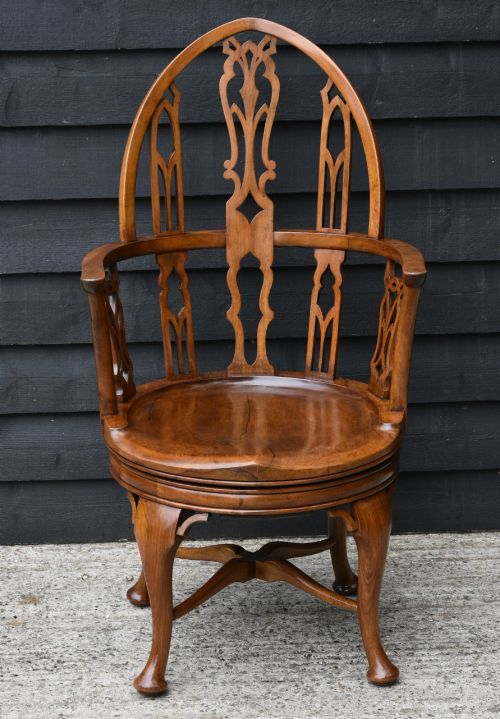
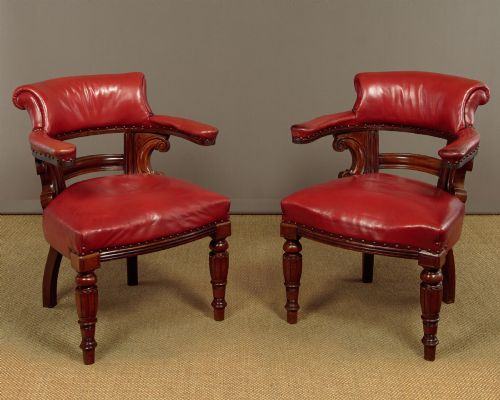
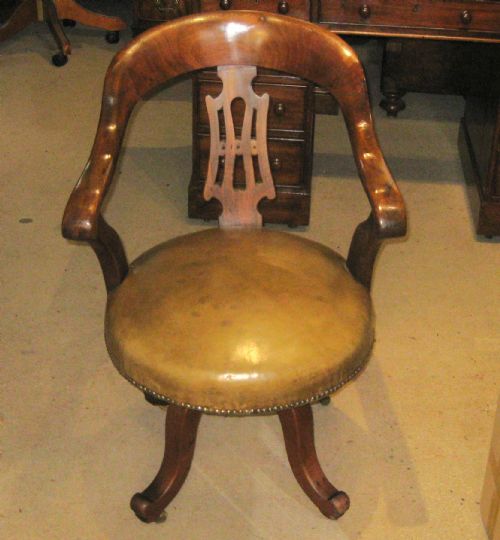
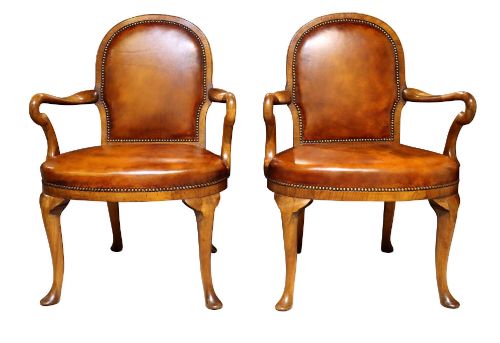






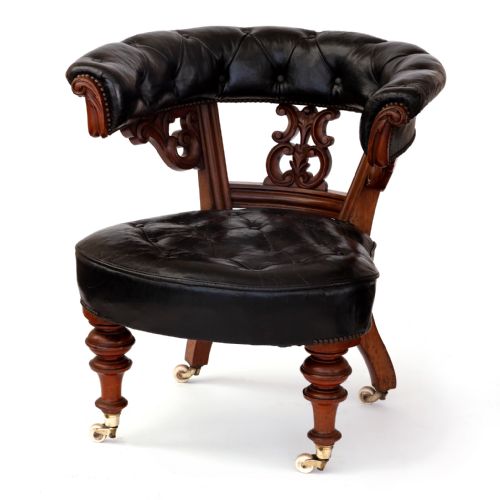
Walnut Captains Chair
A walnut captains chair brings solid timber and sensible desk comfort together, offering a sturdy seat built for long hours of writing or reading.
Walnut Captains Chair
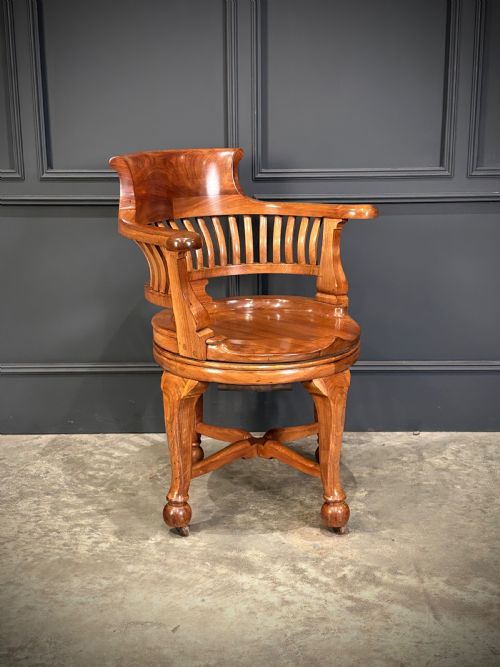
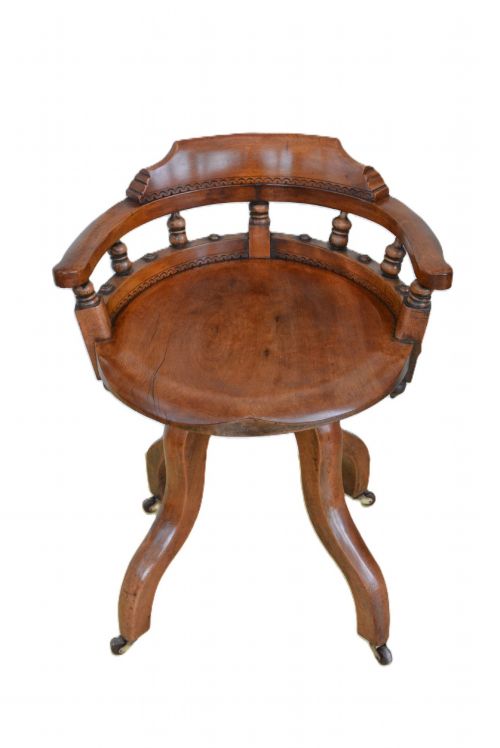
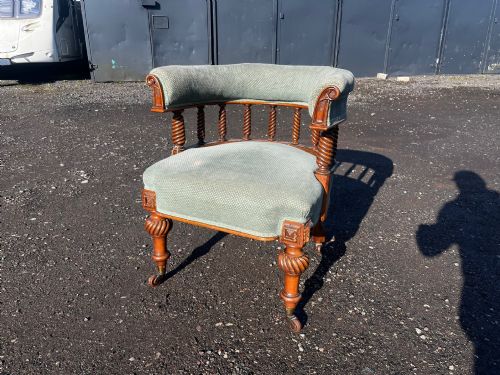
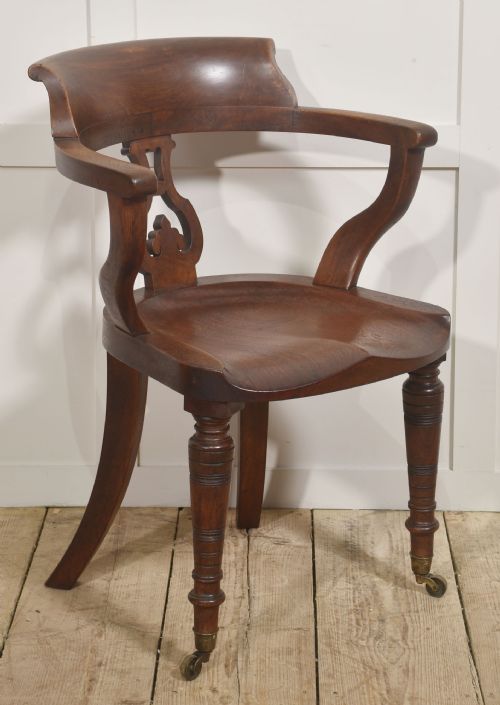
When a buyer searches for a walnut captains chair, they are looking at robust desk armchairs, swivel seats, and library armchairs constructed from timber with rich grain patterns. These sturdy seats served as functional office furniture in studies, libraries, and counting houses, designed for practicality and daily support.
The versions most commonly met in these selections span the Victorian and Edwardian eras, appearing alongside later Georgian revival styles and early twentieth-century interpretations. They typically combine a curved wooden back rail with arms that sweep forward, resting on four-legged bases or central revolving iron and brass swivel mechanisms.
Many examples arrive upholstered in leather, red leather, or textured fabric, while others rely on solid walnut frames with carved details or plain turned spindles. Formats range from fixed library chairs to heavy revolving desk models equipped with oil cloth cushions or low bow backs.
How they were made
Makers built these chairs using solid walnut framing, often shaped into curved bow backs or heavily carved structural supports that provided both visual weight and physical strength. Joinery relied on traditional methods to ensure the frame could withstand the twisting and turning of a revolving office seat.
Upholstery materials such as leather, velvet, and textile coverings were fastened over padding to create a comfortable seat for writing desks and study tables. Brass and iron mechanisms under the seat allowed for swiveling movement, while brass tacks or studs frequently secured the edges of the leather pads.
Listings feature walnut captains chairs spanning the nineteenth century through the Edwardian period, incorporating materials like brass, iron, leather, and solid walnut.
What varies in quality
Quality separates chairs with fluid, reliable swivel mechanisms and crisp cabinetmaker carving from pieces with stiff actions or generic replacement parts. The depth of the timber grain, the weight of the solid walnut, and the integrity of the structural joints dictate how well the seat has survived decades of daily use.
The standard of the upholstery work and the presence of original leather coverings also set individual pieces apart. Refined examples display careful attention to structural proportion and uncompromised timber frames, whereas lesser pieces may show heavier wear or mismatched replacement components.
The Walnut Captains Chair Glossary
- Bow back
- A curved wooden top rail that sweeps around the upper portion of the chair to support the sitter. This design offers comfortable arm placement.
- Revolving desk chair
- A seat fitted with an iron and brass spindle mechanism beneath the wooden platform. It allows the user to turn in a circle while seated.
- Library armchair
- A sturdy seat designed for reading rooms and private studies, featuring upholstered arms and a supportive back. These chairs prioritize comfort during extended periods of study.
- Aesthetic Movement
- A late nineteenth-century style focusing on visual beauty and artistic design rather than strict historical revival. Pieces from this movement often display refined lines and careful attention to timber finish.
- Gothic Revival
- An architectural and decorative style drawing inspiration from medieval forms. Chairs in this style feature pointed arches, heavy carving, and structural vigor.
Walnut Captains Chair: Frequently Asked Questions
What is a walnut captains chair?
A walnut captains chair is a sturdy desk or office armchair made from walnut timber, often featuring a curved back rail and a swiveling base designed for a study or library.
These chairs combine practical seating with solid wood construction, serving as reliable desk furniture since the nineteenth century.
Were these chairs used at desks?
Yes, they were primarily designed for use at writing desks, office tables, and library reading desks where a supportive armchair was needed.
Many examples feature revolving mechanisms to allow easy movement between different parts of a workspace.
How do I identify a Victorian example?
Victorian examples often display darker walnut tones, robust turned spindles, and heavy carved details characteristic of nineteenth-century cabinetmaking.
They frequently incorporate revolving iron swivel mechanisms beneath the seat or feature traditional leather upholstery.
Are these chairs comfortable for daily use?
They were built for practical daily work, offering supportive armrests and padded leather or fabric seats suited for writing and reading.
The ergonomic curve of the bow back provides natural support for the upper body during extended sitting.