

Swivel Desk Armchair
A swivel desk armchair provides a sturdy, revolving seat for the study, combining working comfort with period character from the Victorian and Edwardian eras.
Swivel Desk Armchair
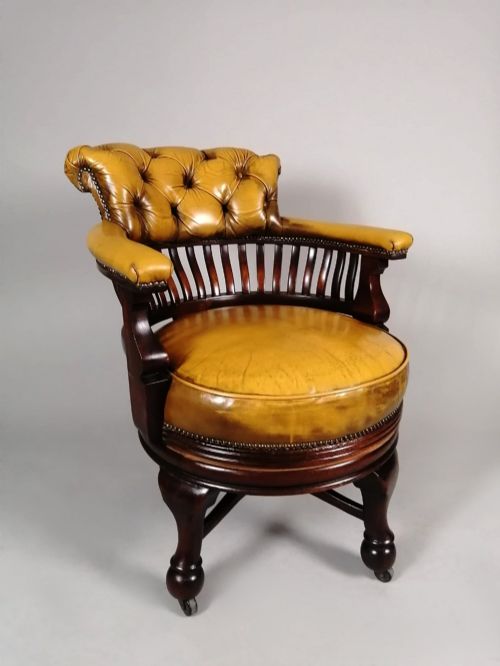
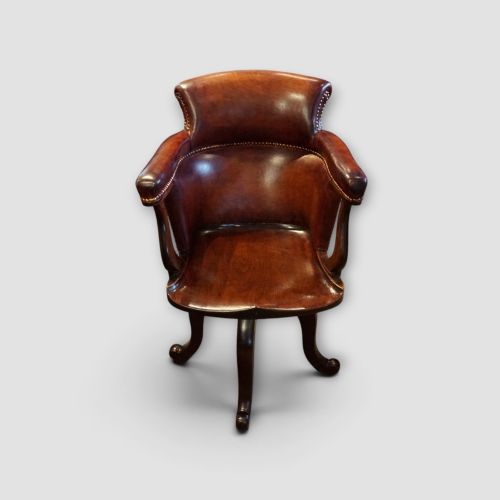
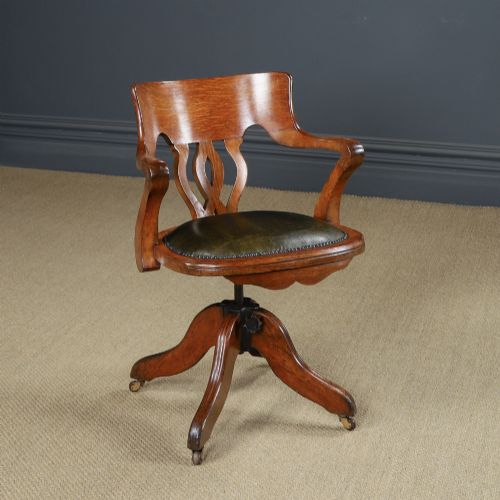
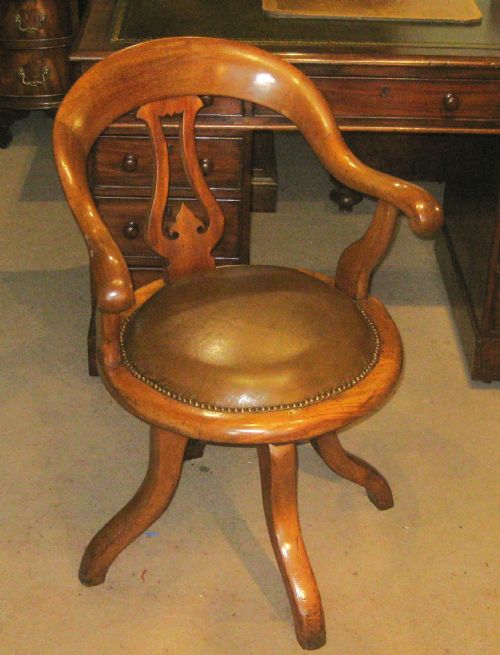
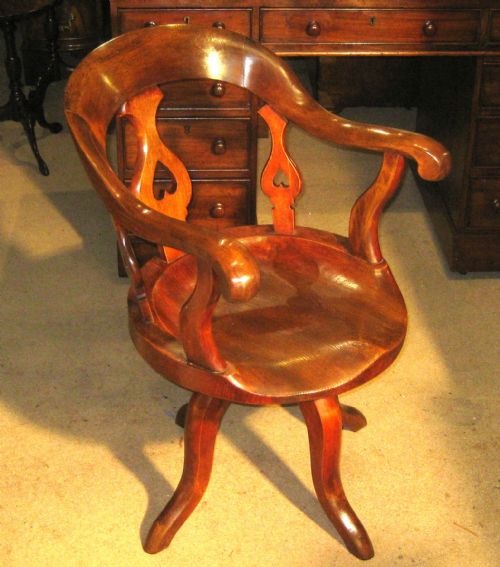
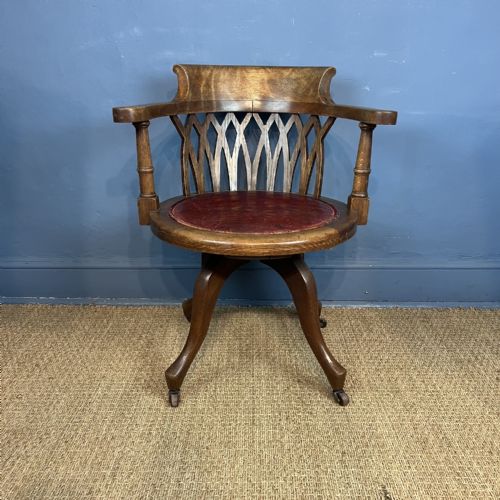
A swivel desk armchair is a heavy-duty working seat designed to rotate and support long hours at a partner desk or library table. The pieces found here date predominantly from the Victorian period through the Edwardian era into the early twentieth century.
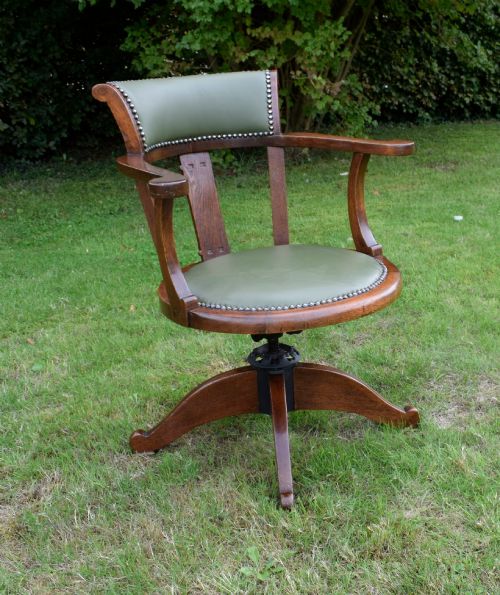
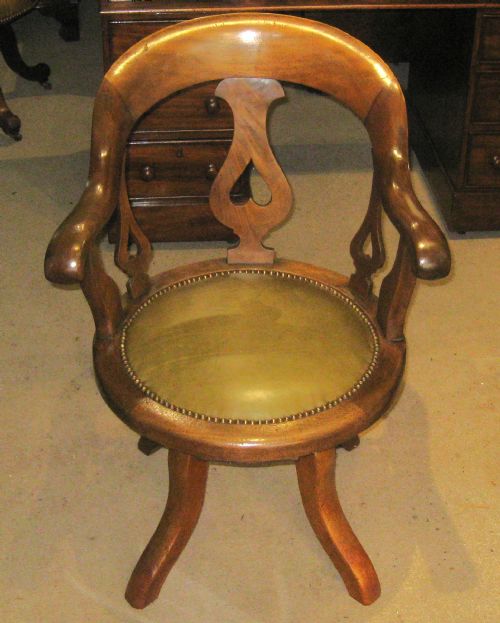
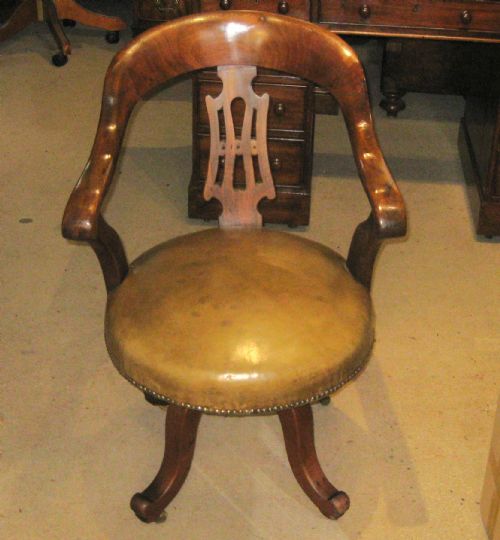
You will most commonly meet examples in solid oak or mahogany, frequently fitted with a revolving mechanism and inset leather upholstery. Many feature adjustable height and tilt functions intended for the nineteenth-century office or study.
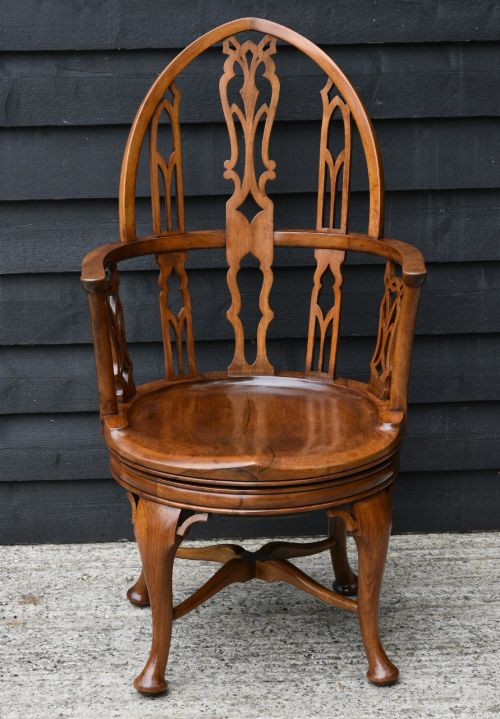
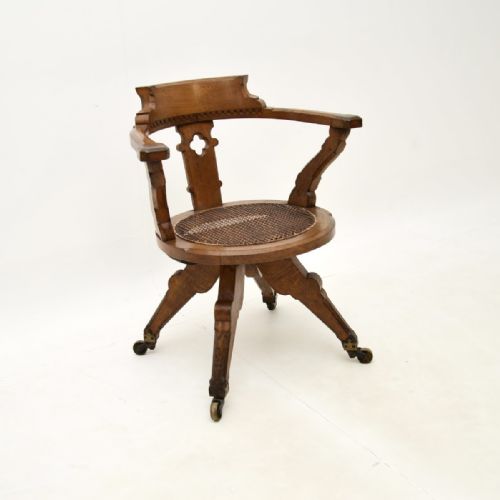
The selection ranges from utilitarian office seating to elaborate Gothic Revival pieces, aesthetic movement walnut frames, and specialised maritime ship chairs designed to cope with movement at sea.
How they were made
Cabinetmakers constructed these frames using dense hardwoods like oak, mahogany, and walnut, often employing solid timber for load-bearing spindles and carved elements. Cast iron and brass mechanisms supplied the internal swivel and tilt actions, anchored beneath the wooden seat base.
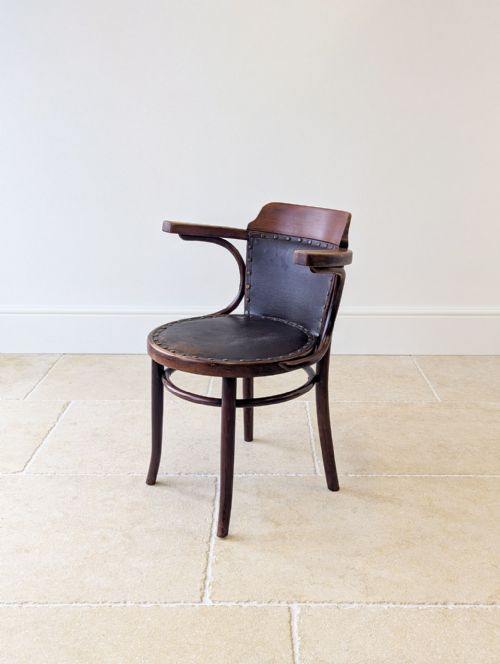
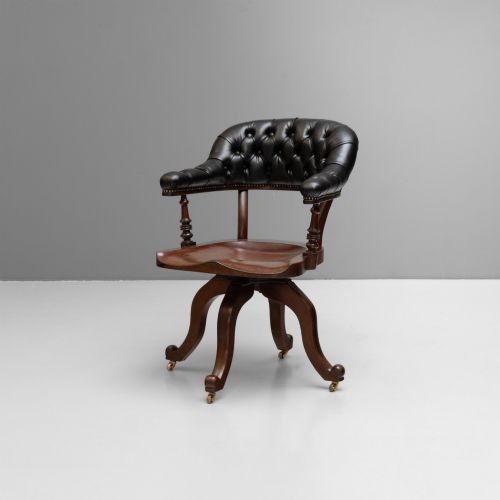
Upholstery consisted of supple leather, hide, or woven cane (bergère) stretched over padded seats, frequently secured with brass tacking or deep buttoning. Bentwood techniques also appeared in specific Edwardian models, utilising steam-bent components for curved arm supports.
Swivel Desk Armchair Retail Price Guide 2026
Typical asking prices for swivel desk armchair among the pieces listed under this phrase on Sellingantiques today, from the lower quarter to the upper quarter. They describe what is for sale here now, not the wider market.
Design styles represented across the inventory include Gothic Revival, Aesthetic Movement, Arts and Crafts, and Victorian Maritime variations.
What varies in quality
Quality in a swivel desk armchair rests upon the integrity of the timber framing and the sophistication of the mechanical swivel action beneath. Finer pieces demonstrate substantial carved detailing, superior timber selection such as golden or figured mahogany, and robust iron or brass mechanisms that operate smoothly.
Lesser examples utilise simpler turnings, standard oak or beech construction, and basic pivoting brackets. The grade and thickness of the original leather upholstery, along with the complexity of the spindle arrangement, further distinguish standard office seating from bespoke library armchairs.
S&H Jewell·WM Heywood Chair Co
The Swivel Desk Armchair Glossary
- Revolving
- Describes a chair fitted with a central spindle and bearing mechanism allowing the upper seat to turn a full circle.
- Swivel and tilt
- A mechanical arrangement permitting the occupant to rotate the seat while also leaning backward against an adjustable spring tension.
- Bergère
- A cane-panelled wooden armchair style utilised in select lighter office and desk seating of the early twentieth century.
- Gothic Revival
- A nineteenth-century design style characterised by pointed arch motifs, heavy tracery, and solemn carved ornamentation in oak.
- Aesthetic Movement
- A late Victorian style emphasising artistic craftsmanship, simpler structural lines, and dark polished walnut surfaces.
Swivel Desk Armchair: Frequently Asked Questions
How do I adjust the height on an antique swivel chair?
Most period swivel chairs rely on a threaded central iron spindle beneath the seat. Turning the chair top clockwise or anti-clockwise raises or lowers the seating platform.
Heavier Edwardian and later models often incorporate a cast iron spring-tilt mechanism secured with a threaded handle underneath.
Were these chairs used only in offices?
While many served in banks, legal chambers, and corporate offices, a significant number functioned as library captain's chairs in private homes. Specialised variants were also produced for marine use aboard ships.
Maritime examples featured heavier frames or specific balancing to maintain stability while underway.
How do I tell a Victorian swivel chair from an Edwardian one?
Victorian examples generally feature darker mahogany or heavily carved oak frames, often displaying Gothic Revival or robust aesthetic influences. They tend to have lower, wider proportions and deep-buttoned leather.
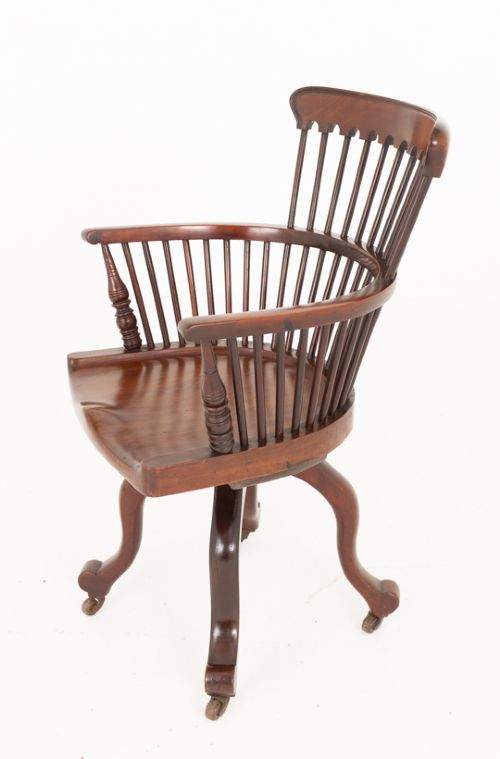
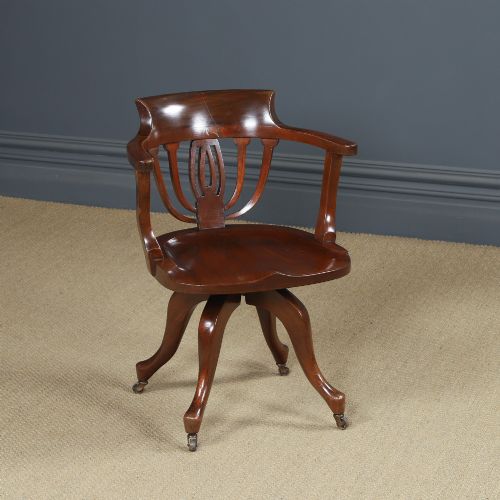
Edwardian pieces frequently showcase lighter oak or birch timbers, simpler spindle backs, and the introduction of combined swivel and tilt mechanisms.
What is a ship's chair?
A ship's chair is a heavy-duty swivel armchair originally manufactured for use on ocean liners or naval vessels. They often incorporated cast iron bases or weighted wooden frames to prevent tipping during rough weather.
Examples listed on this market include pieces associated with companies like P&O.