
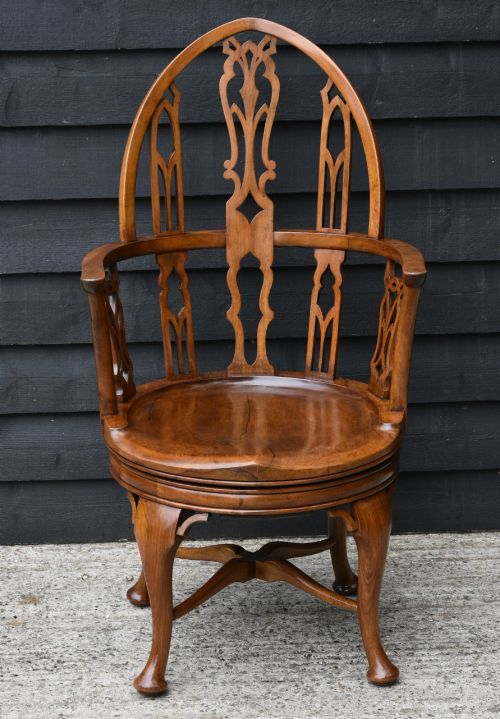
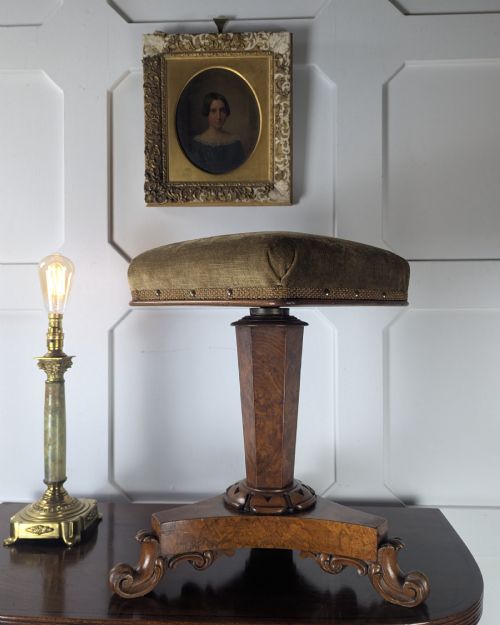
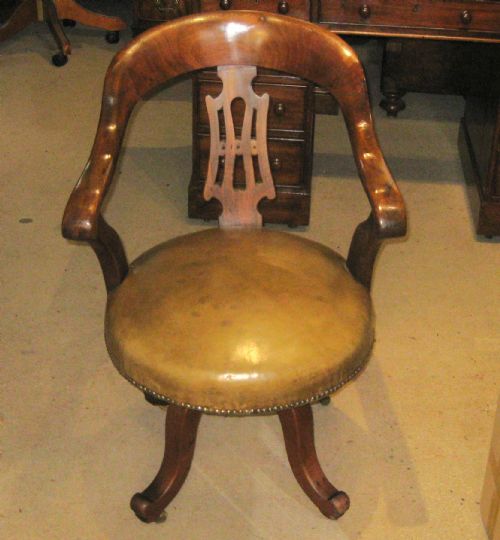
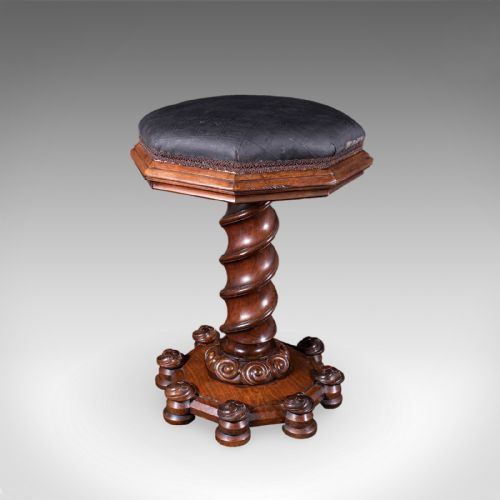
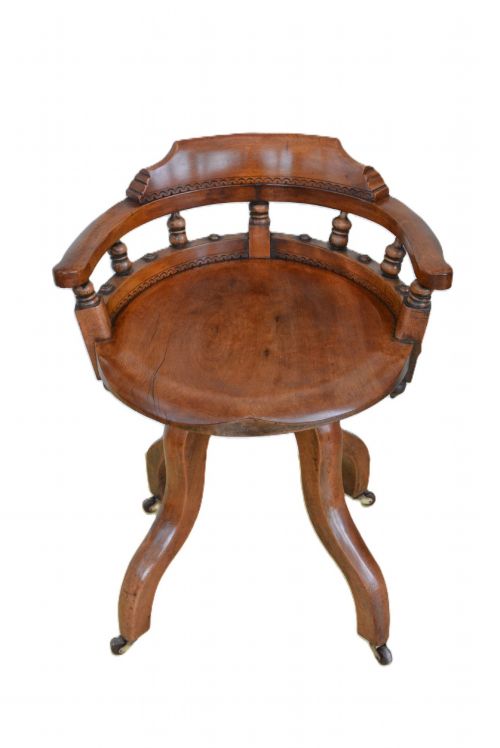


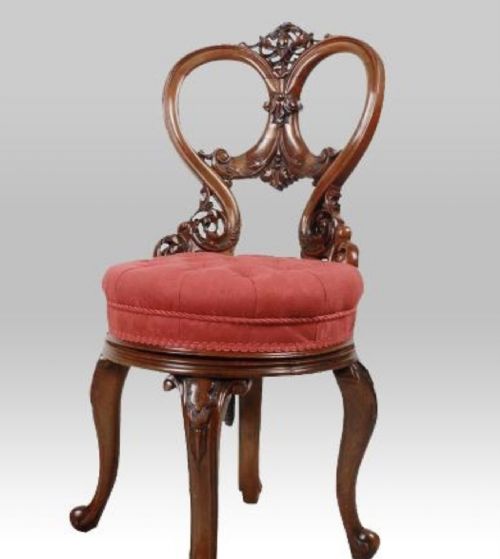


Carved Walnut Swivel Chair
These carved walnut swivel chair designs offer a practical pivot for a desk or a music room, combining sturdy turning mechanisms with rich timber figures.
Carved Walnut Swivel Chair
A carved walnut swivel chair brings together domestic seating and mechanical rotation, appearing across periods from the Georgian era through to Edwardian Arts and Crafts. Buyers exploring this category encounter revolving desk chairs, adjustable piano stools, and music chairs.
The selection on this page relies heavily on Victorian manufacturing, alongside examples attributed to the William IV and Regency periods. Forms range from tripod piano stools to pedestal office seating and organist chairs.
Makers adapted the swivel mechanism for various daily tasks, including dressing, playing the harp, or working at a desk. Walnut remains the unifying timber across these diverse functional types.
How they were made
Craftsmen shaped solid walnut and figured veneer into frames, supporting revolving seats with central metal or iron screws. These threaded risers allowed the user to adjust the height by turning the top.
Upholstery materials such as velvet, leather, and plain fabric were tacked over padding to form the seat platforms. Carved details on the legs and pedestals relied on manual woodworking techniques.
Listings feature walnut combined with materials like cast iron, brass, leather, and velvet across Victorian and Edwardian periods.
What varies in quality
The smoothness of the revolving action distinguishes a finer piece from a stiff or loose mechanism. Solid walnut framing and crisp carving indicate higher workshop standards than plain hardwood alternatives.
Proportions and the integration of the rise and fall screw determine the structural integrity of the seat. Superior examples retain original mechanical components without excessive play in the central column.
The Carved Walnut Swivel Chair Glossary
- Revolving
- Turning around a central axis or point. This allows the seated user to rotate without moving the base.
- Rise and fall
- A mechanism enabling height adjustment through a threaded screw column. Piano and music stools often utilise this system.
- Tripod
- A three-legged base providing stable support on uneven floors. Many Victorian piano stools employ this configuration.
- Figured walnut
- Timber with an attractive, swirling grain pattern. Cabinet makers selected these sections for prominent display.
- Pedestal
- A single central support rising from a base or feet. This column houses the swivel mechanism in many desk chairs.
Carved Walnut Swivel Chair: Frequently Asked Questions
How do I adjust the height on these chairs?
Most models use a threaded metal screw concealed beneath the seat platform. Turning the top clockwise or anti-clockwise raises or lowers the sitting height.
Some examples feature a side lever or locking key to secure the chosen position once adjusted.
Were these chairs meant for desks or pianos?
The evidence shows both functions clearly. Shorter revolving stools served musicians at pianos, harps, and organs, while versions with backs supported office and desk work.
Both types share the central swivel action that allowed players and workers to turn easily.
How do I date a walnut swivel chair?
Stylistic clues such as Gothic Revival motifs, Aesthetic Movement lines, or cabriole legs point to specific decades. Victorian and Edwardian examples often display machine assistance alongside hand carving.
Examining the metalwork within the swivel mechanism also helps narrow down the manufacturing period.
Is walnut durable enough for daily seating use?
Walnut is a hard and resilient timber that withstands regular movement and pressure well. The wood holds intricate carving without splintering.
Maintenance involves treating the timber surface carefully and ensuring the central pivot remains lubricated.