
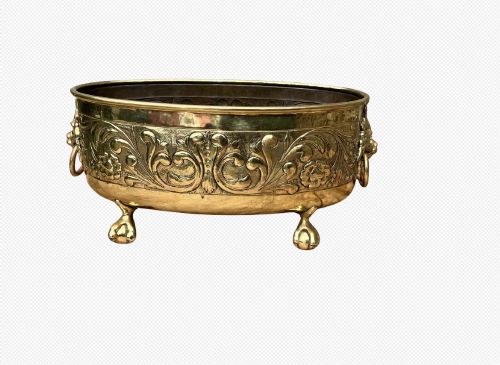


Victorian Repousse Brass Planter
These Victorian repousse brass planter vessels combine beaten metalwork with domestic horticulture, offering a striking display for indoor greenery.
Victorian Repousse Brass Planter
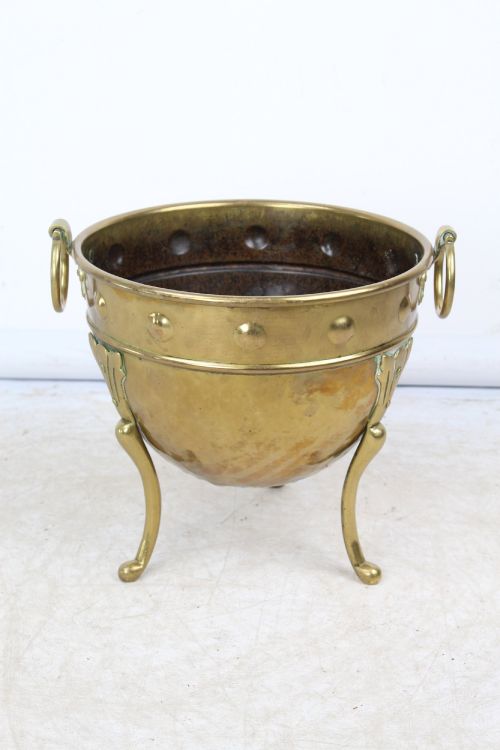
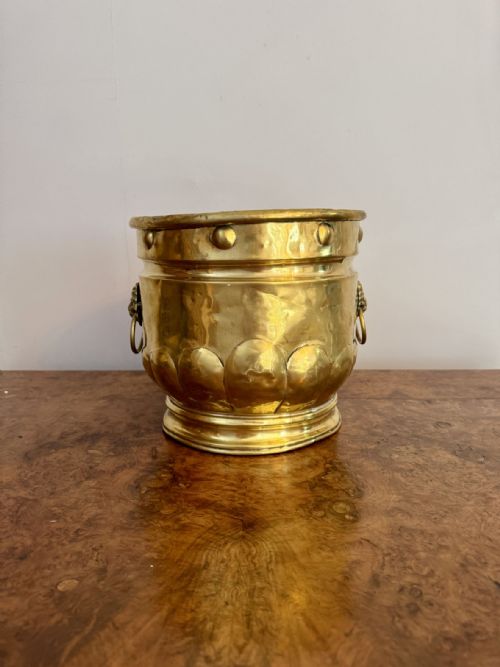
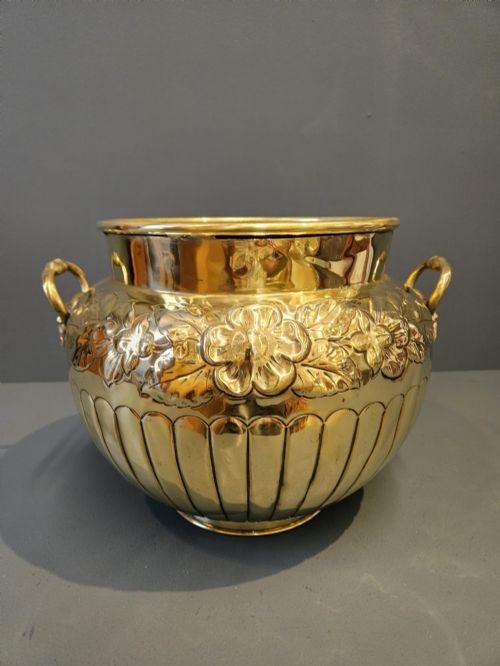
A victorian repousse brass planter comprises vessels designed for indoor greenery and domestic fuel storage, encompassing jardinieres, log bins, and plant stands produced across the nineteenth century. These items manifest in styles ranging from Arts and Crafts and Gothic Revival to Victorian Dutch Revival and French Rococo Revival.
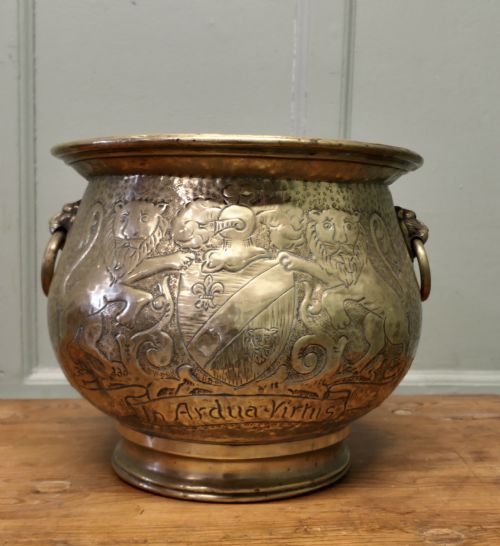
The pieces on this page are predominantly brass vessels featuring hand-beaten ornamentation, alongside associated examples incorporating copper and iron elements. Forms vary from square plant stands and trophy vases to large handled buckets bearing animal heads and lion masks.
How they were made
Craftsmen shaped these objects using brass and copper sheet metal, employing repoussé techniques to hammer designs from the reverse side to create raised surface relief. Iron components and silver plating also appear on specific vessels to provide structural support or contrasting highlights.
Makers integrated decorative motifs such as shields, animal heads, and lion mask handles into the body of the metalwork, sometimes combining brass bodies with copper bands or iron fixtures.
Materials recorded across the inventory include brass, copper, iron, and silver plate, shaped into jardinieres, log buckets, and plant stands.
What varies in quality
The standard of execution in the repoussé work determines the crispness and depth of the beaten relief on the metal surface. Heavier gauge metal sheets and more articulate handling of decorative handles, such as cast animal masks, distinguish finer examples.
Integrity of construction across the joints, the presence of complementary mixed metals like copper bands, and the overall balance of the form dictate the distinction between standard utilitarian items and superior decorative pieces.
Henry Loveridge·Petrus Ramus
The Victorian Repousse Brass Planter Glossary
- Repoussé
- A metalworking technique where the artisan hammers the design from the reverse side to form a raised pattern on the front. This method creates tactile, three-dimensional ornamentation across the surface of the metal.
- Jardiniere
- An ornamental pot or stand designed to hold growing plants or flowers indoors. These vessels often sit on short feet or a dedicated plant stand base.
- Dinanderie
- An term for medieval and later brass or copper hollowware objects produced in Europe. It encompasses various beaten and cast domestic vessels.
- Arts and Crafts
- A design movement prioritising traditional craftsmanship and hand-worked materials over mass production. Pieces from this aesthetic often display honest construction and visible hammer marks.
Victorian Repousse Brass Planter: Frequently Asked Questions
How were these brass planters used?
These vessels served primarily as indoor holders for potted plants, ferns, or floral displays, protecting interior surfaces from water. They also functioned beside the hearth as log bins, coal buckets, and peat receptacles.
Larger specimens accommodated substantial greenery or fuel supplies, while smaller table-top jardinieres held modest botanical arrangements in domestic parlours.
Where should I place a jardiniere?
These pieces suit placement on sturdy plant stands, floor positions near windows, or beside fireplaces where their metallic surfaces reflect firelight. Their substantial weight makes them stable receptacles for heavy plants or logs.
Care should be taken to use waterproof inner liners if housing live plants directly in unsealed historic vessels to protect the original interior metal.
How do I identify the period?
Dating relies on stylistic indicators such as Gothic Revival motifs, Arts and Crafts simplicity, or French Rococo Revival curves combined with construction methods. The use of beaten repoussé decoration is typical of nineteenth-century production.
Examining the weight of the metal and the method of joining the seams helps differentiate Victorian output from later decorative items.
What is the difference between a jardiniere and a log bin?
While both share similar metallic construction and repoussé decoration, log bins and fuel buckets generally feature handles suited for carrying heavier loads of fuel. Jardinieres focus on botanical display and may incorporate decorative stands or lighter forms.
In practice, makers and users often interchanged these vessel types according to domestic needs.