


Victorian Relief Jug
These pieces, known as a victorian relief jug, bring tactile moulded decoration and utilitarian service together in pottery and metalwork.
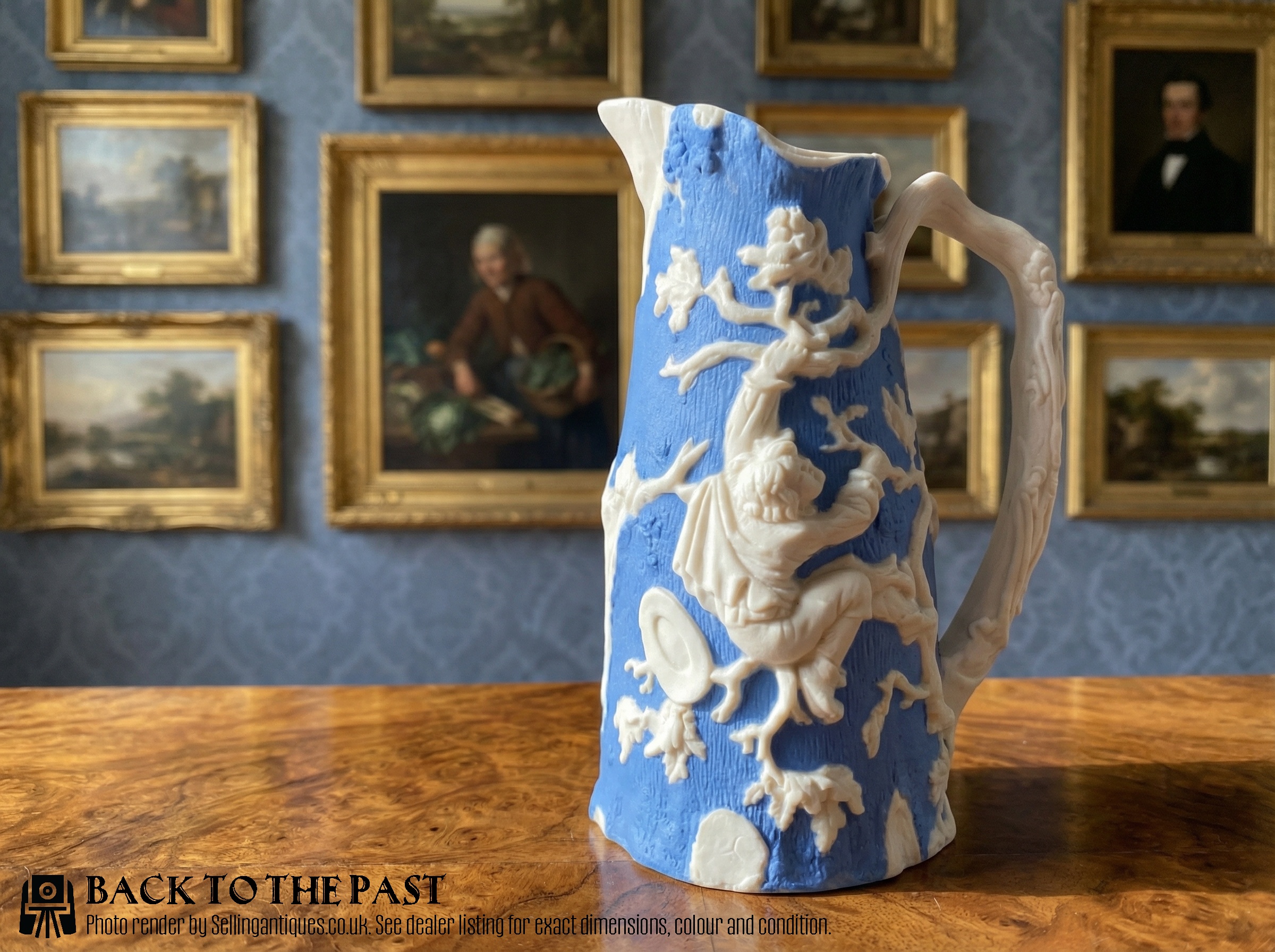
Victorian Relief Jug
When a buyer sets out to find a victorian relief jug, they encounter vessels defined by raised surface decoration, spanning styles from classical revival to Art Nouveau. The selections here include stoneware, earthenware, porcelain, and metal vessels originating across the nineteenth century.
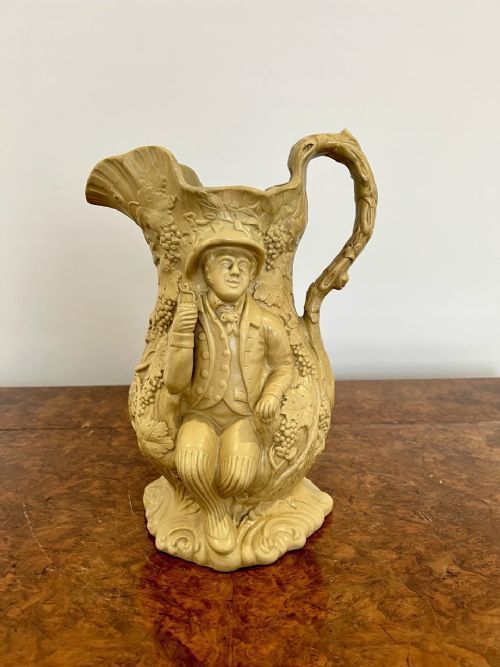
The most common examples on this page are salt-glazed and buff-coloured stoneware pieces featuring moulded classical scenes, agricultural motifs, or botanical sprigs. Makers utilised earthenware, majolica, and parian ware alongside stoneware to produce water jugs, tea sets, and wine pitchers.
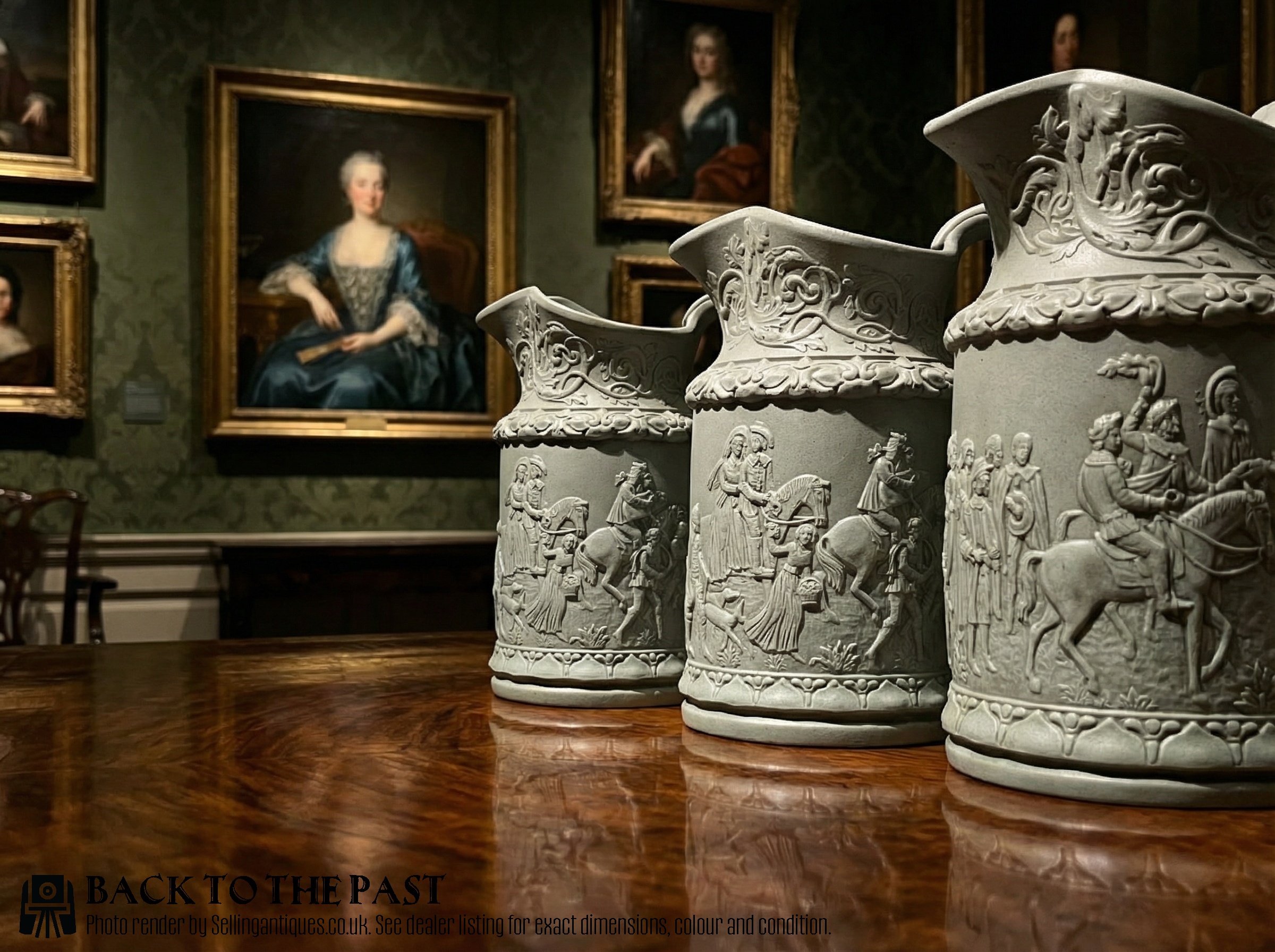
Materials and methods of production
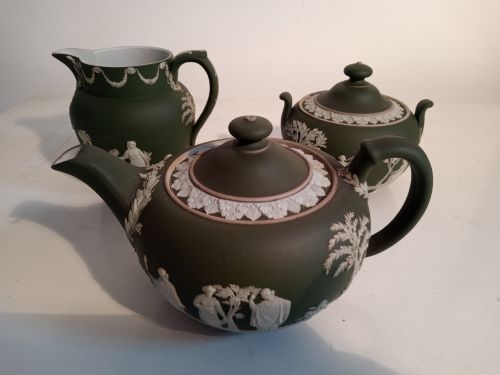
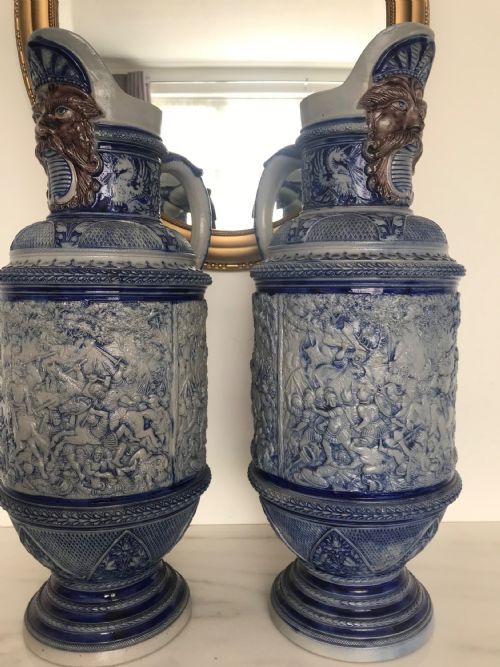
Potters formed these vessels using moulds to create raised patterns, working in salt-glazed stoneware, earthenware, and parian ware. Cobalt blue pigments frequently highlight the salt-glazed surfaces, while other bodies appear in olive green, sage green, buff, and black basalt.
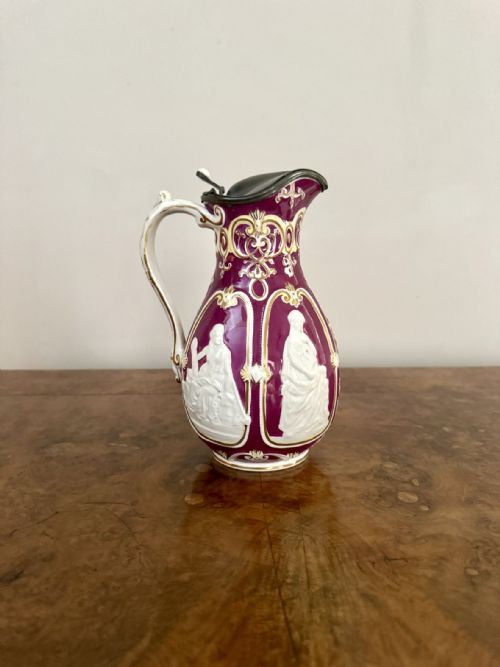
Metal versions incorporate pewter lidded mounts or electrotype manipulation. Silver rims appear on several stoneware harvest pieces, combining ceramic bodies with metalwork finishing.
Roman battle scenes and bacchanalian revels decorate the sides of vessels designed to pour ordinary milk and water.
Distinctions in craftsmanship
Superior examples display crispness in the moulded relief work, where figures and botanical details remain sharp and well-defined against the body. Lesser pieces show blurred modelling and softer edges where moulds became worn.
The quality of the material and glaze finish marks the grade of the vessel. Even salt glazes, consistent body colours, and well-fitted metal mounts separate standard utility items from exhibition-grade works.
Simon Peter Gerz·Doulton Lambeth·Henry Bourne·Charles Meigh·Emma Shute·Ridgway and Sons·Jones and Walley·Minton·George Jones·Copeland Spode·Staffordshire
The Victorian Relief Jug Glossary
- Relief moulded
- A technique where the design stands out raised from the surface of the vessel. This method allowed potters to press detailed scenes directly onto the body during formation.
- Stoneware
- A hard, dense pottery fired at high temperatures until impervious to liquid. It forms the durable body for many harvest and salt-glazed jugs.
- Parian ware
- A fine white bisque porcelain developed to imitate marble. Makers utilised it for unglazed figures and classical jugs.
- Salt glaze
- A finish achieved by throwing common salt into the kiln during firing, creating a distinctive pitted texture. It produces a hard, glossy surface on stoneware jugs.
Victorian Relief Jug: Frequently Asked Questions
How were these jugs used?
Victorian households utilised these vessels for serving water, milk, wine, or tea during daily meals and formal gatherings. Larger examples functioned as pitchers for communal table service or harvest celebrations.
Some pieces, such as puzzle jugs and beverage sets, served conversational or decorative roles in the dining room and parlour. Their durable ceramic and stoneware bodies suited active domestic service.
How do I date a relief jug?
Dating relies on stylistic clues, factory marks, and material types recorded across the nineteenth century. Pieces displaying tight classical motifs often align with mid-century production, while organic flowing lines point towards the later decades.
Maker stamps and registry marks on the base provide precise manufacturing periods. The presence of salt glazing or majolica glazes further helps narrow the decade of origin.
What is a harvest jug?
A harvest jug is a specific stoneware vessel typically decorated with agricultural scenes, hop vines, or hunting motifs. They frequently feature salt-glazed bodies and were used during seasonal rural festivities.
Many examples include pewter lids or silver rims added to protect the rim during heavy use. Their robust construction ensured survival through generations of agricultural service.
How do I display these jugs at home?
These jugs suit display on open shelving, sideboards, or mantels where their moulded relief work catches side lighting. Grouping graduated sets or contrasting colours creates visual balance in a room.
Ensure stable placement away from high-traffic edges, particularly for heavier stoneware and metal-rimmed pieces. Their sculptural forms allow them to function independently as decorative objects.