
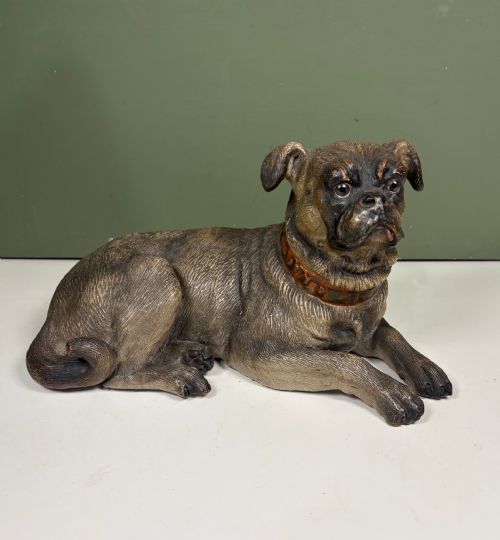


Victorian Pottery Dogs
Victorian pottery dogs are the earthenware mantelpiece figures that collectors prize for their rich Staffordshire heritage.
Victorian Pottery Dogs
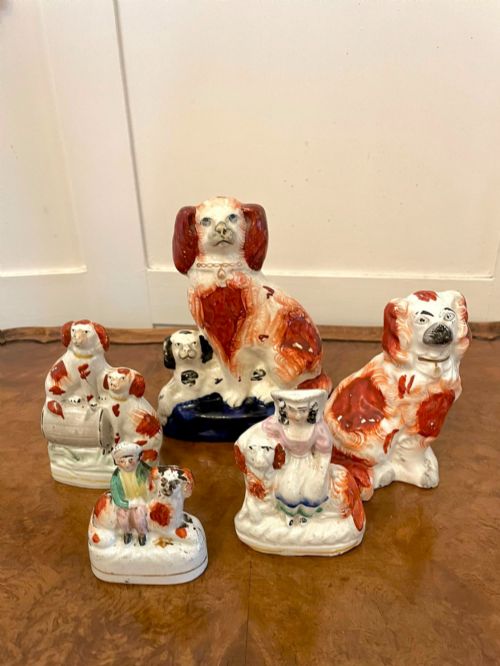
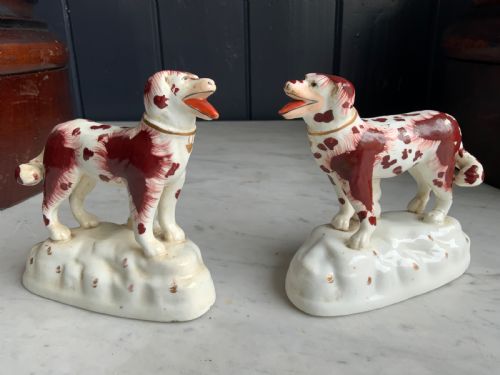
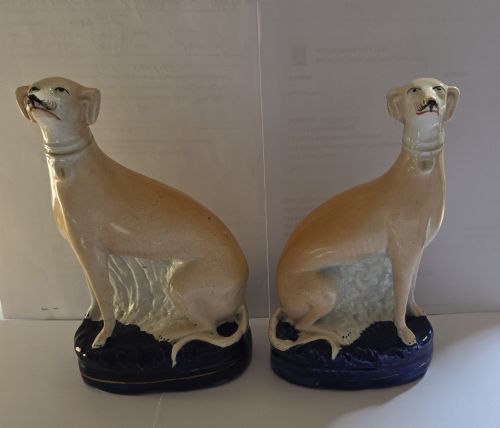
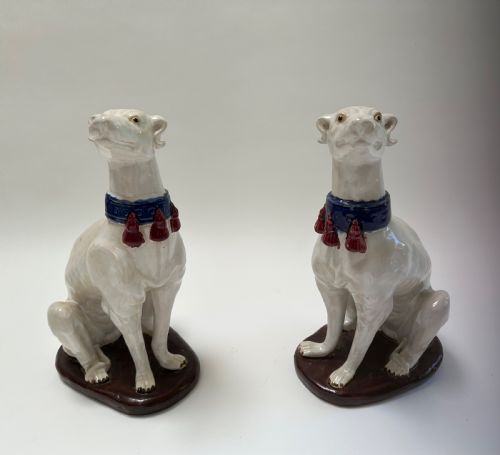
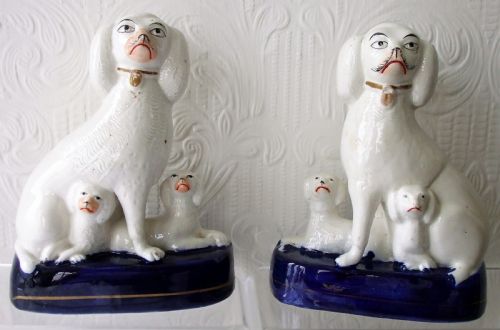
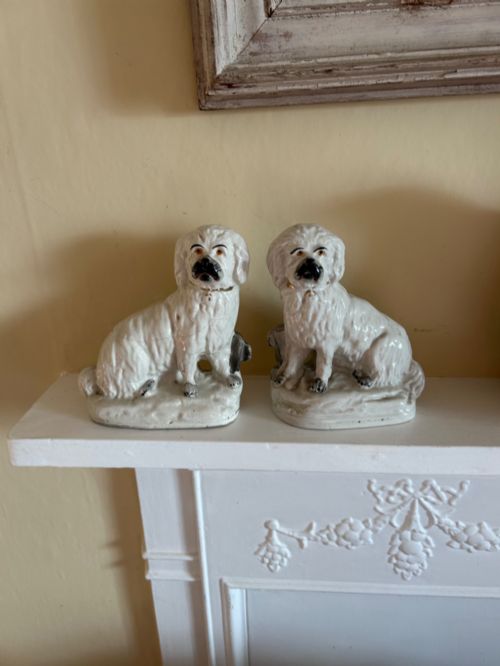
Victorian pottery dogs are decorative earthenware figures modelled as spaniels, poodles, greyhounds, whippets, and pugs. These ceramic animals were designed primarily as fireside companions and mantelpiece ornaments during the nineteenth century.
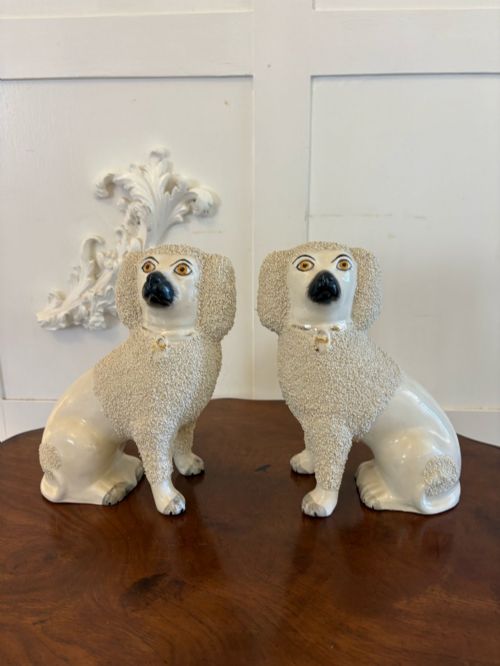
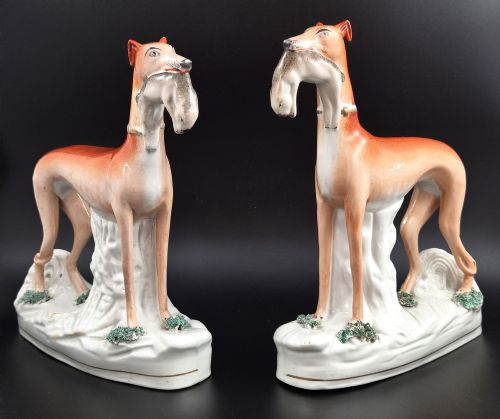
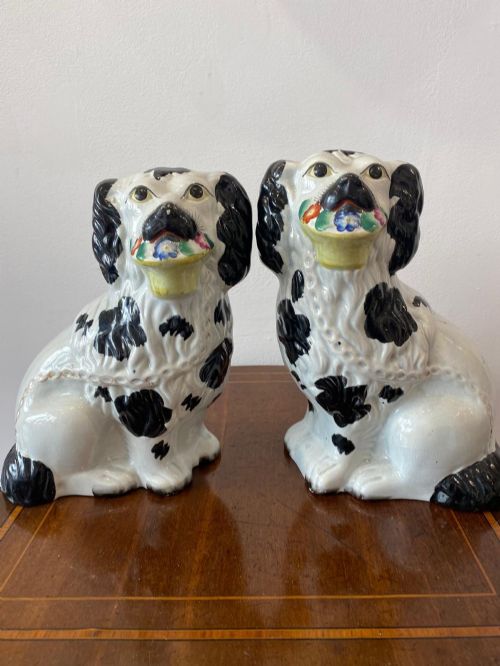
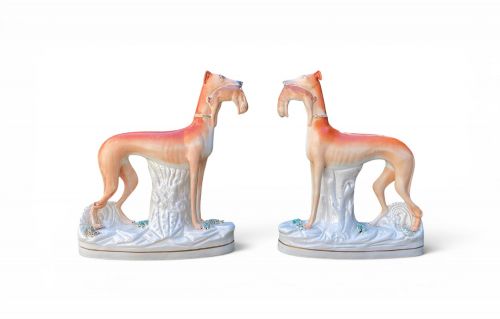
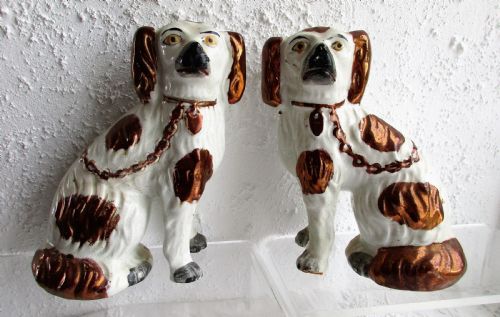
The version most commonly found on this page is the paired seated spaniel, often known as the comforter spaniel. Collectors also frequently encounter poodles with textured clay coats and athletic greyhounds accompanied by hares.
Most examples originate from the Staffordshire potteries and date from the middle to late nineteenth century. These ceramic figures capture the Victorian affection for domestic animals in a direct, sculptural form.
How they were made
Potters shaped these figures using earthenware clay, often cast in moulds and finished by hand. Lead glaze provided a smooth surface over the ceramic body before additional painting took place.
Potteries also utilised copper lustre glazes to create metallic finishes on the ceramic surface. Firing in traditional kilns set the lead glaze and fixed the enamel colours permanently to the earthenware body.
Victorian Pottery Dogs Retail Price Guide 2026
Typical asking prices for victorian pottery dogs among the pieces listed under this phrase on Sellingantiques today, from the lower quarter to the upper quarter. They describe what is for sale here now, not the wider market.
Materials recorded across the inventory include lead glaze, enamel paint, and gold leaf applied to ceramic bodies.
What varies in quality
Quality rests in the crispness of the modelling and the finesse of the hand painting on the earthenware body. Superior examples show expressive facial details and carefully applied gold leaf rather than rushed, uniform brushwork.
The preservation of the original lead glaze and enamel colours distinguishes better pieces from heavily worn alternatives. Matched pairs with clear definition in the clay forms command greater appreciation among collectors.
Thomas Parr·Wooley
The Victorian Pottery Dogs Glossary
- Earthenware
- A porous type of pottery fired at lower temperatures, commonly used for nineteenth-century figures. It forms the ceramic base for almost all Staffordshire dog figures.
- Lead glaze
- A shiny coating applied to pottery before firing that gives the surface a glossy appearance. This finish protects the underlying ceramic body and enamel colours.
- Gilt
- A thin layer of gold leaf or metallic gold paint applied to collars, lockets, and chains. It adds decorative contrast to the white or coloured earthenware body.
- Comforter spaniel
- A specific type of Staffordshire spaniel traditionally placed on Victorian mantelpieces. These dogs usually face each other as a matched pair.
Victorian Pottery Dogs: Frequently Asked Questions
How do I know if they are old?
Authentic nineteenth-century figures show crazing in the lead glaze and signs of age on the earthenware base. Hand-painted enamel details and minor wear help distinguish period pieces from later reproductions.
Examining the underside often reveals the unglazed clay and typical manufacturing vent holes of the period. The weight of the ceramic and the style of the modelling also point directly to Victorian production methods.
Were these dogs meant to be toys?
These ceramic figures were strictly decorative objects rather than children's toys. Families displayed them on mantelpieces, desks, and side tables to brighten domestic interiors.
Some specialised pieces doubled as quill holders or money boxes while retaining their primary sculptural function. Their role was purely ornamental, reflecting Victorian tastes for animal companionship in the home.
Why are some poodles textured?
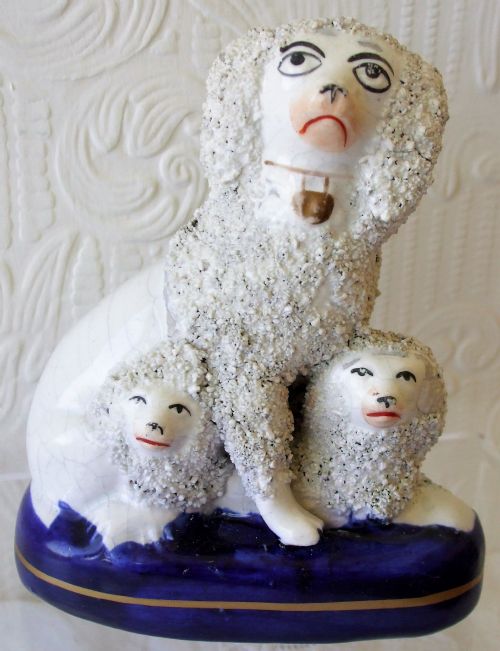
Potters created textured poodles by applying small clay shreds or crushed ceramic pieces to the wet body. This technique imitated the curly fur of real poodles before the glaze was applied.
Such figures require careful handling because the delicate clay curls can chip over time. This distinct finish marks out specific Staffordshire poodles from the standard smooth-glazed spaniels.