



Victorian Pottery Animal
These victorian pottery animal figures bring domestic dogs, lions, and sheep into the room with robust earthenware character.
Victorian Pottery Animal
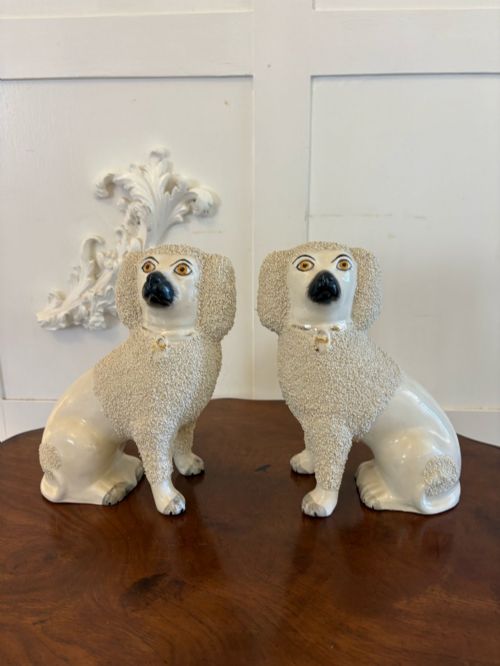
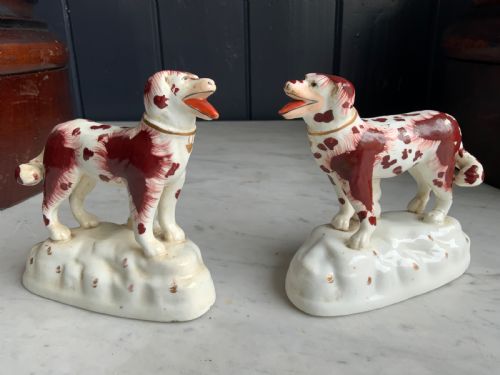
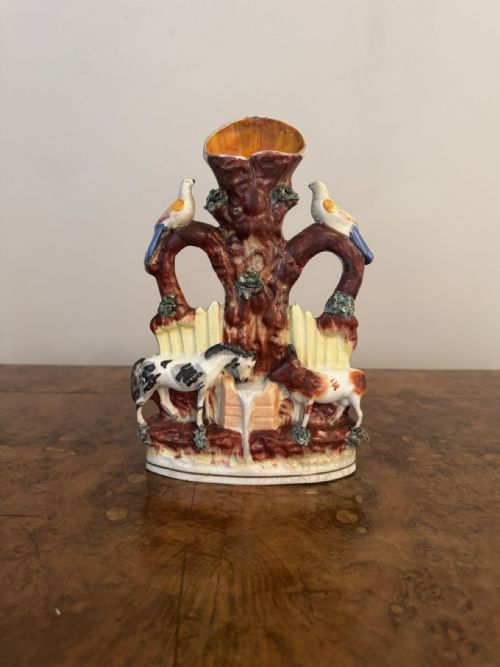
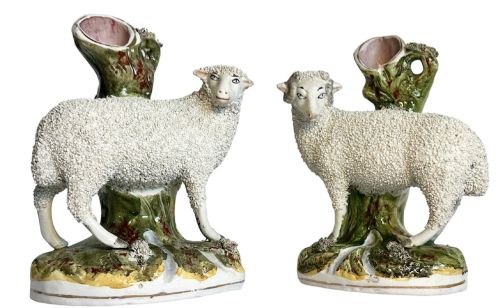
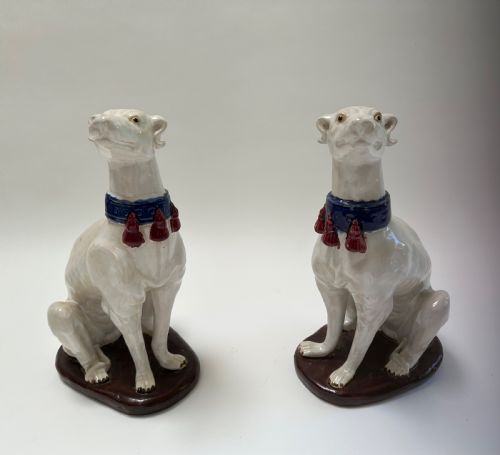
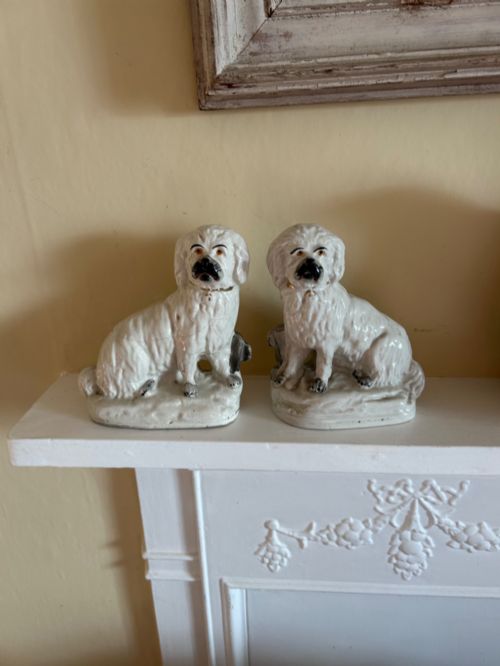
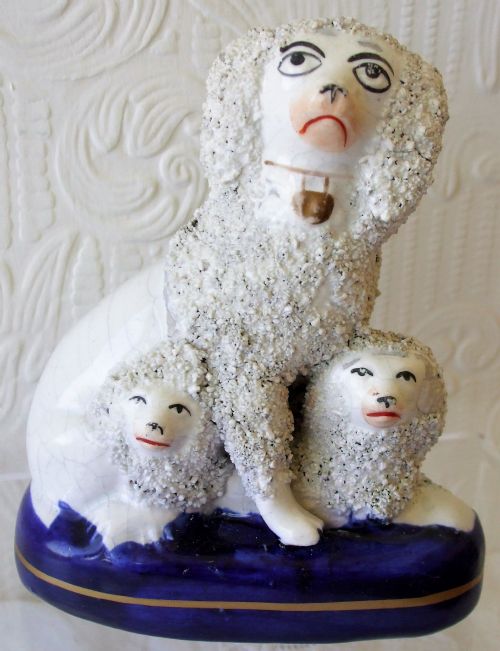
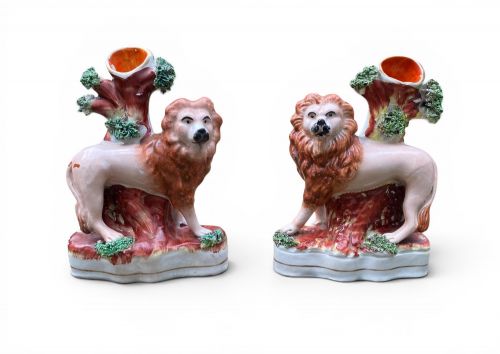
A victorian pottery animal search uncovers nineteenth century ceramic figures, decorative figurines, and spill vases produced across England. Buyers most frequently encounter Staffordshire pairs of poodles, lions, dogs, and sheep originating from the Victorian period.
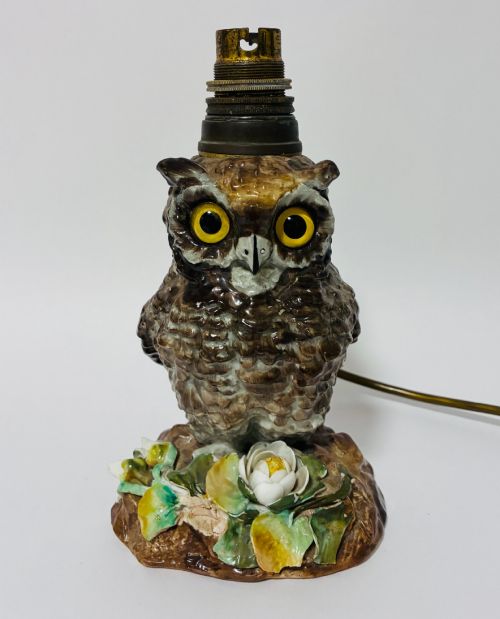
The selection ranges from utilitarian inkwells and bookends to sculptural lamp bases and large shelf ornaments. Domestic pets and exotic beasts appear side by side in earthenware.
Many examples take the form of symmetrical pairs designed for mantlepieces or table settings. Animal groups and spill vases combine decorative display with practical uses.
How they were made
Potters shaped these earthenware and ceramic figures using moulded clay bodies finished with glaze and enamel paint. Lead glaze and glossy treacle finishes provide the shiny surfaces seen on nineteenth century lions and dogs.
Makers applied hand-painted enamel details over fired ceramic to render facial expressions and coats. Copper lustre glaze offers metallic sheen on select sculptural pieces.
Nineteenth century Staffordshire figures include spill vases, bookends, lamp bases, and inkwells.
What varies in quality
Pairs matched for size and glaze consistency command greater attention than mismatched survivors. The depth and evenness of the coloured glaze directly affect the sculptural presence on the shelf.
Doulton Lambeth·Florence E Barlow·Rockingham Pottery·Wooley Staffordshire
The Victorian Pottery Animal Glossary
- Spill vase
- A hollow ceramic vessel designed to hold wooden spills for lighting fires or pipes. These holders usually stand beside a modelled animal figure.
- Tyg
- A large drinking vessel featuring multiple handles, often produced in stoneware during the nineteenth century. They provide sturdy drinking capacity.
- Treacle glaze
- A dark brown, translucent lead glaze yielding a glossy, treacle-like surface. Potters used this on nineteenth century lions and dogs.
- Earthenware
- Porous pottery fired at lower temperatures, forming the primary body for Staffordshire animal figures. It requires a glaze layer to become impermeable.
- Staffordshire pottery
- Ceramic wares produced in the pottery towns of Staffordshire, England. This regional grouping encompasses the majority of nineteenth century animal figures.
Victorian Pottery Animal: Frequently Asked Questions
Are these animal figures sold in pairs?
Many nineteenth century Staffordshire figures survive as matching pairs intended for symmetrical display on mantlepieces. Single dogs, lions, and zebras also appear across the selection.
Collectors often seek out complete pairs with matching glazes and dimensions. Poodles, lions, and sheep frequently turn up paired together.
What animals appear in this pottery?
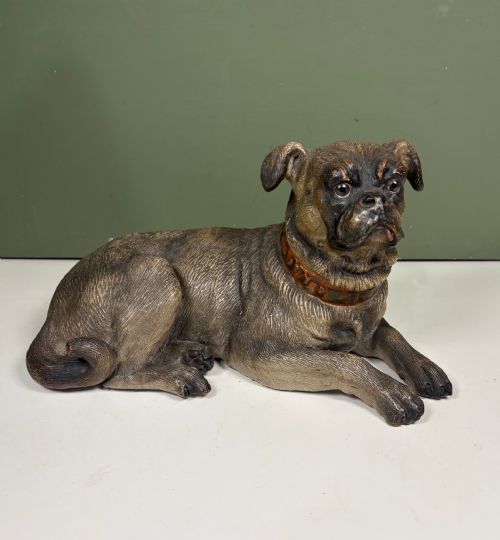
Domestic dogs such as poodles, pugs, greyhounds, and terriers dominate the nineteenth century ceramic output. Exotic and farm animals also feature prominently.
Lions, sheep, cows with calves, cats, owls, and zebras provide variety across the figurines and spill vases. Each species reflects Victorian taste for domestic pets and menagerie subjects.
How were these ceramic figures used?
Victorian households placed these pottery animals on mantelpieces, side tables, and bookshelves for purely decorative effect. Certain forms served secondary functions.
Spill vases held wooden spills for lighting candles, while inkwells accommodated writing desks. Bookends and lamp bases integrated animal sculpture into functional room accessories.
How do I spot nineteenth century pieces?
Look for heavy earthenware bodies finished with characteristic lead glazes, copper lustre, or treacle surfaces. Hand-painted enamel details indicate period production methods.
Stylistic traits align with nineteenth century decorative arts, including Italian Renaissance Revival influences and Victorian country pottery traditions.