


Victorian Porcelain Cabinet Plates
Victorian porcelain cabinet plates bring intricate hand-painted artistry, rich gilding and formal display pieces straight to the formal dining room or cabinet.
Victorian Porcelain Cabinet Plates
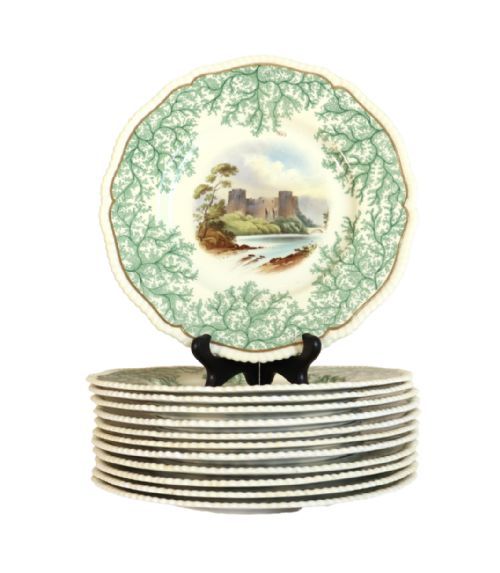
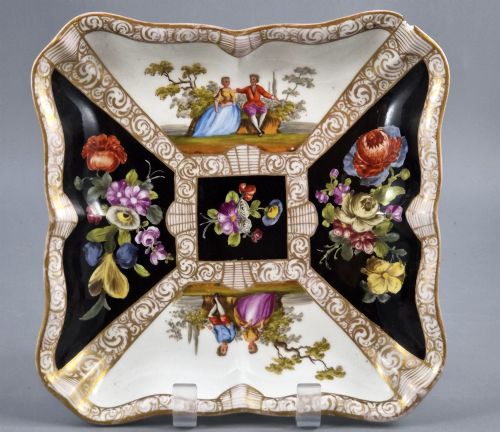
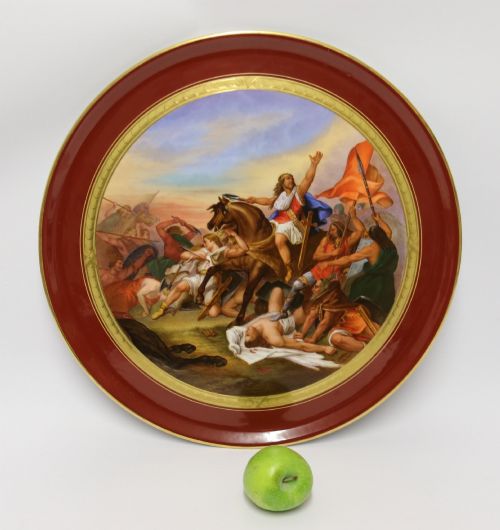
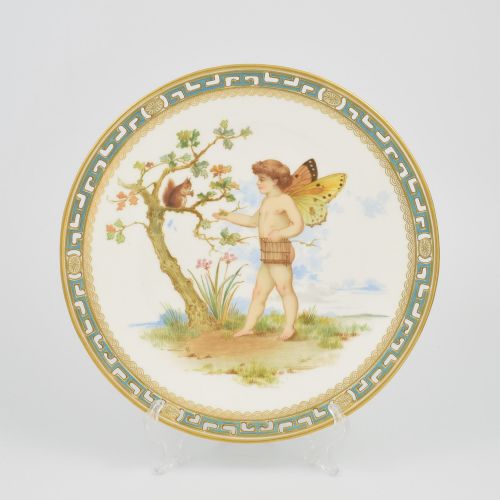
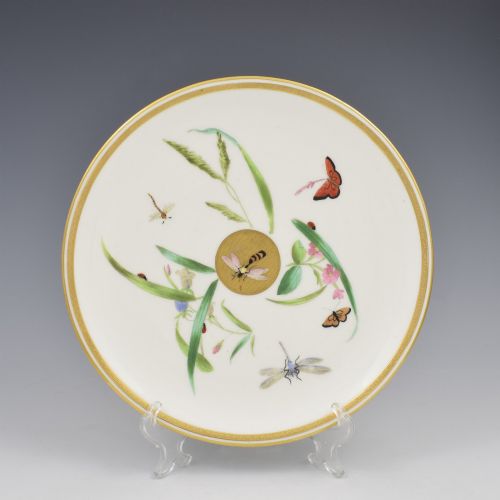
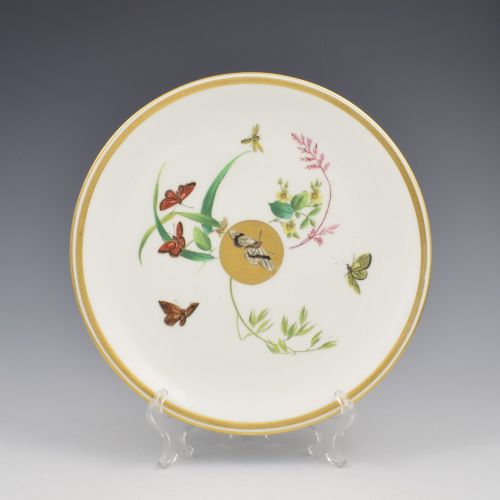
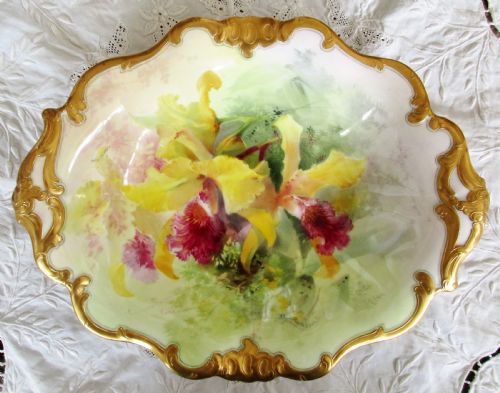
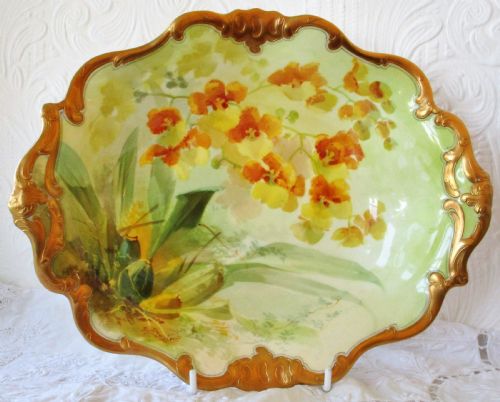
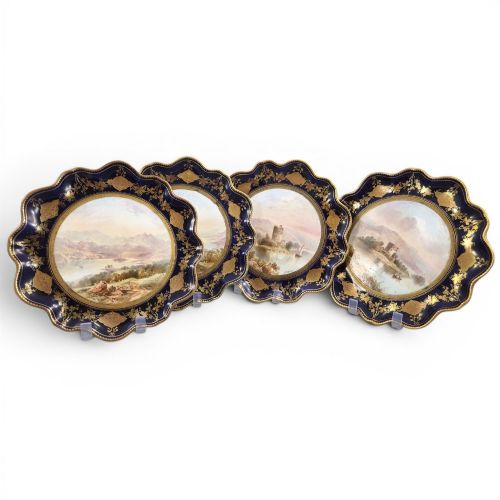
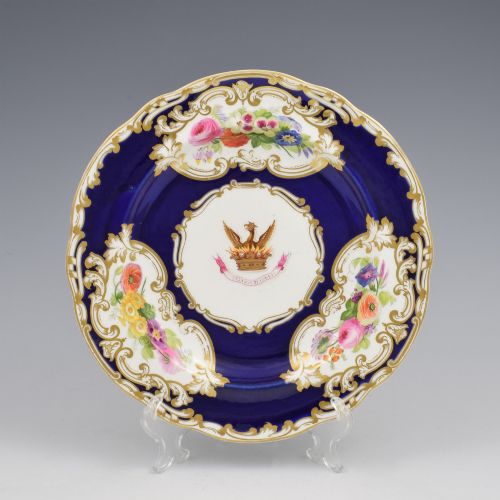
Victorian porcelain cabinet plates comprise decorative dishes, chargers and dessert services created primarily for display rather than everyday dining during the nineteenth century. These items showcase elaborate hand-painted landscapes, mythological scenes, botanical studies and heraldic crests created by prominent English, French and German factories.
Makers utilised various regional forms, ranging from basketweave Minton shapes and pierced Aesthetic Movement designs to dramatic armorial services bearing family crests. Pieces frequently reflect broader design shifts, moving from mid-century Rococo Revival exuberance towards Japanese-inspired motifs and late-century exhibition pieces.
How they were made
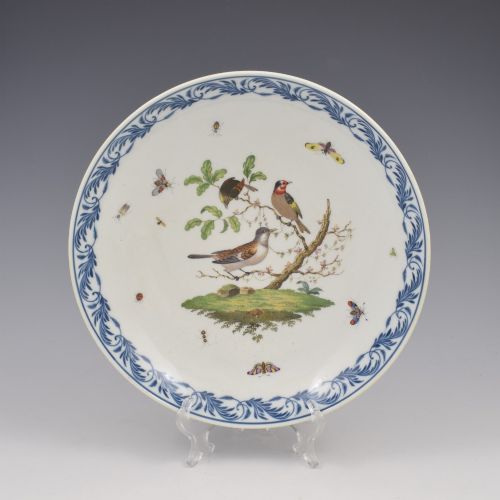
Potters formed these items using porcelain, hard-paste porcelain and bone china, applying smooth white glazes as the foundation for elaborate artistic decoration. Artisans then hand-painted detailed ornithological, landscape and figurative subjects directly onto the ceramic surface.
Makers completed the decoration by applying gold leaf, gilding and enamel highlights, often firing the pieces multiple times to set the metallic and coloured pigments securely into the glaze.
Items span the nineteenth century, covering Aesthetic Movement, Rococo Revival and Art Nouveau styles.
What varies in quality
The distinction between standard production and top-tier work rests on the skill of the painting and the prominence of the decorator or factory. Items featuring named artists, signed ornithological studies or intricate hand-painted historical scenes command greater attention than simple transfer-printed templates.
The application of heavy gilding, raised enamel work such as pearl jewelling, and complex pierced or reticulated borders also separates simpler domestic wares from exhibition-grade cabinet plates.
Spode·Meissen·Minton·Royal Doulton·Aynsley·Copeland·Coalport·Royal Vienna·Royal Worcester·Kornilov Brothers·Dresden
The Victorian Porcelain Cabinet Plates Glossary
- Cabinet plate
- A decorative ceramic dish intended strictly for display in a cabinet or on a wall rather than for practical table use.
- Armorial
- A plate or dish decorated with a painted family crest, coat of arms or motto.
- Gilding
- The application of gold leaf or powdered gold to ceramic surfaces for decorative borders and highlights.
- Reticulated
- Having an openwork or pierced pattern cut into the rim or border of the ceramic plate before firing.
- Hard-paste porcelain
- A durable, high-fired ceramic compound composed of kaolin and petuntse, commonly utilised by continental European factories.
Victorian Porcelain Cabinet Plates: Frequently Asked Questions
Were these plates used for dining?
Cabinet plates were primarily manufactured for visual display within dining rooms, drawing rooms or specialised display cabinets. Their delicate hand-painted surfaces and heavy gilding meant they were preserved as ornamental works of art rather than everyday tableware.
While some matched sets formed part of grand dessert services, many individual chargers and pierced dishes served purely to showcase the technical prowess of the pottery.
How do I identify the factory?
Makers marked their porcelain using impressed stamps, painted factory ciphers, and pattern numbers applied directly to the unglazed footrim or underside of the dish. Continental factories like Meissen utilised crossed swords marks, while English potteries relied on distinct printed or impressed symbols.
Signatures from specific ceramic artists or decorators occasionally appear alongside these factory marks, providing further confirmation of origin.
What styles are most common?
The pieces span various nineteenth-century design movements, with Rococo Revival, French nineteenth-century styles, and Aesthetic Movement motifs appearing frequently. Early examples often favor botanical and ornithological paintings, while later items embrace Japanese-inspired asymmetry and classical mythological subjects.
Exhibition pieces from the later decades frequently demonstrate elaborate pierced borders and heavily gilded grounds influenced by Sevres aesthetics.
How should I display them?
These decorative dishes suit enclosed wall cabinets, glazed dressers, or specialised plate stands that support the weight securely without stressing the rim. Proper placement protects the delicate enamel painting and raised gilding from environmental dust and accidental knocks.
Direct sunlight should be avoided to prevent any long-term fading of the hand-painted pigments and gold leaf details.