
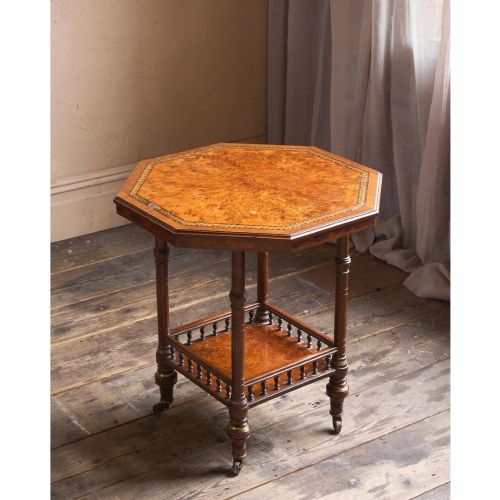


Victorian Parcel Gilt Table
These Victorian parcel gilt tables combine dark woods with bright highlights to bring warmth and formal richness into a room.
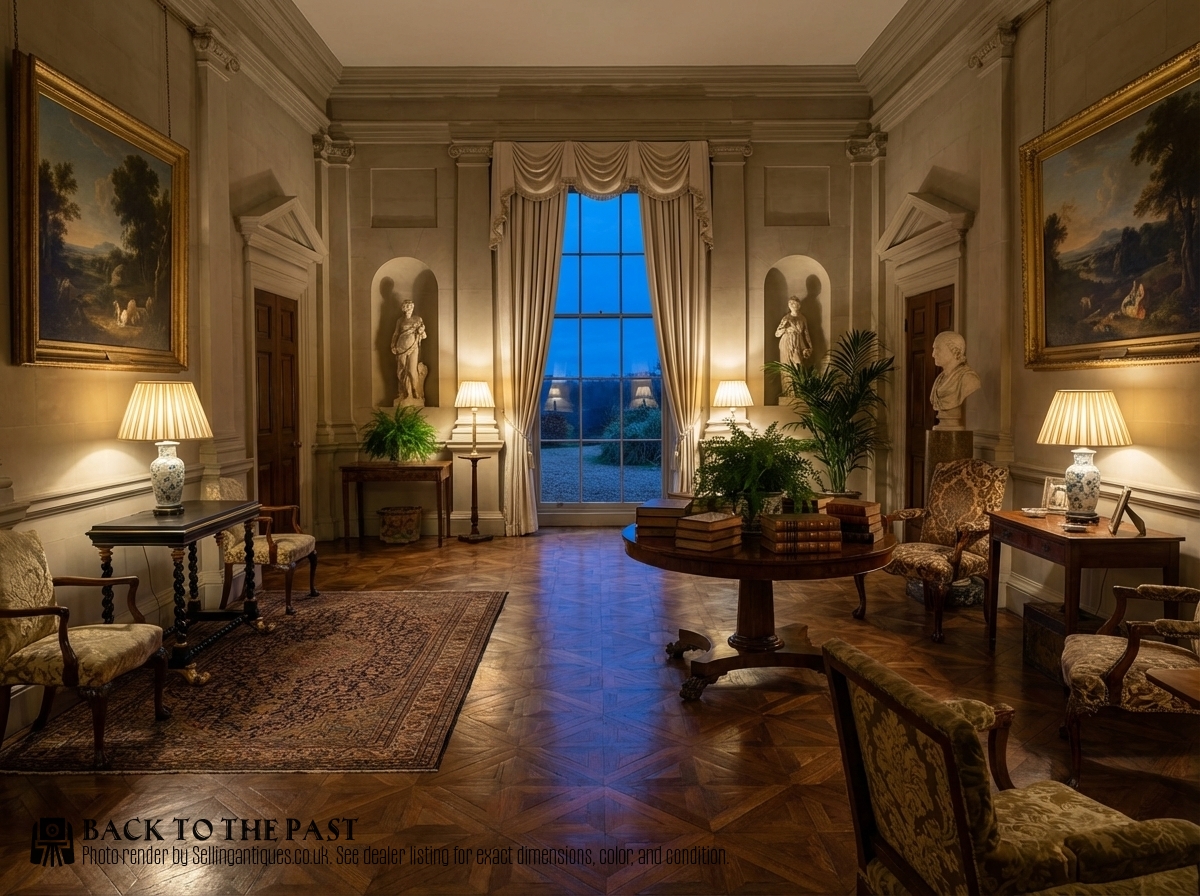
Victorian Parcel Gilt Table
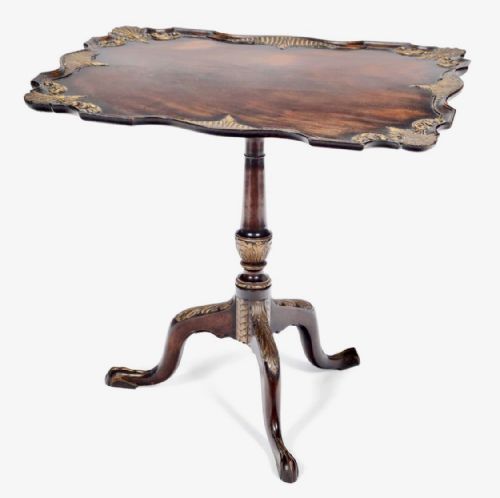
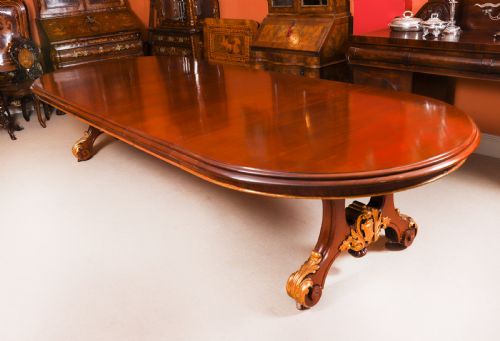
A victorian parcel gilt table is a piece of nineteenth-century furniture defined by surfaces of mahogany, walnut, or ebonised wood accented with partial gilding. The listings here present a variety of forms designed for different domestic uses, including centre tables, writing tables, side tables, and occasional tables.
The objects span the Victorian period alongside revivals of earlier styles like Regency, Baroque, and Rococo. Buyers frequently encounter ebonised wood or rich veneers combined with gilded details, reflecting the varied tastes of the nineteenth century from Gothic influences to the Aesthetic movement.
How they were made
Craftsmen built these tables using solid timbers such as mahogany and walnut, often applying veneers of amboyna, burr walnut, or thuya over a secondary wood. Surfaces were frequently ebonised to create a deep black finish that contrasted sharply with the applied metallic highlights.
Gilding was applied in thin sheets of gold leaf to carved details, mouldings, and incised lines, highlighting specific architectural elements of the design. Brass mounts and baize linings appear in specific forms such as games tables and writing desks, adding functional utility to decorative elegance.
Victorian card tables often hid secrets beneath their baize, ready for an evening of polite deception over whist.
What varies in quality
The calibre of a piece rests on the depth of the cabinetmaking and the crispness of the carving and gilding. Tables produced by documented makers demonstrate superior timber selection, particularly in the choice and book-matching of exotic veneers like amboyna and burr walnut.
Design complexity also separates standard production from exceptional work, seen in elaborate structural forms such as two-tier consoles, multi-legged étagères, and specialised gaming or writing tables fitted with fine brass hardware.
Wylie & Lochead Glasgow·Gillows·Lamb of Manchester·Howard & Sons·Mappin & Webb·Harrods
The Victorian Parcel Gilt Table Glossary
- Parcel gilt
- Woodwork decorated with partial applications of gold leaf. This technique highlights specific carved details or mouldings against a dark or polished wood ground.
- Ebonised
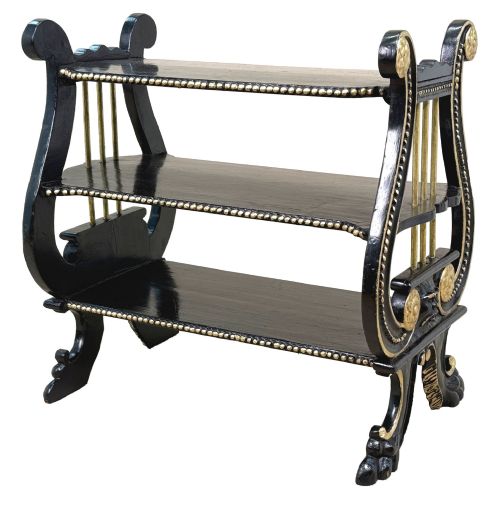
- Wood stained or painted to imitate ebony. The process creates a dense black surface frequently paired with gilt highlights during the nineteenth century.
- Étagère
- A piece of furniture consisting of open shelves for displaying small objects or books. These multi-tiered items often feature parcel gilt and ebonised frames.
- Tripod table
- A small freestanding table supported by a central pillar on three feet. Many examples incorporate a tilt-top or snap-top mechanism.
Victorian Parcel Gilt Table: Frequently Asked Questions
How do I clean a parcel gilt table?
Dust gently with a soft, dry cloth to prevent accumulation. Avoid commercial polishes or moisture, which can damage delicate gold leaf and aged wood finishes.
Keep the piece away from direct sunlight and heat sources to protect the wood veneers and prevent the ebonised surfaces from fading or cracking.
Where should I place a centre table?
A centre table is designed to be viewed from all sides, making it ideal for the middle of a spacious room or a large entrance hall.
Ensure there is sufficient clearance around the piece for movement, allowing the details of the legs and tabletop to be appreciated fully.
What is the difference between a console and a side table?
Console tables are traditionally designed to stand against a wall, often supported by brackets or front legs, and sometimes paired with matching wall mirrors.
Side tables are freestanding pieces built with four legs, intended to sit flush against room boundaries while offering a movable surface for lamps or books.
How can I tell a Victorian table from a Regency one?
Victorian pieces often incorporate heavier proportions, darker ebonised finishes, and eclectic revival styles influenced by Gothic, Baroque, and Aesthetic movements.
Regency items typically display cleaner neoclassical lines, lighter mahogany or rosewood timbers, and restraint in ornament compared to mid-nineteenth-century work.