




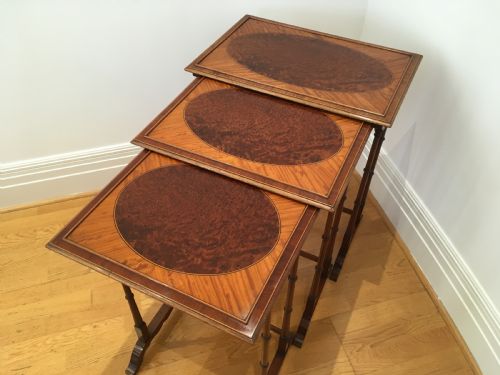

Amboyna Wood Occasional Table
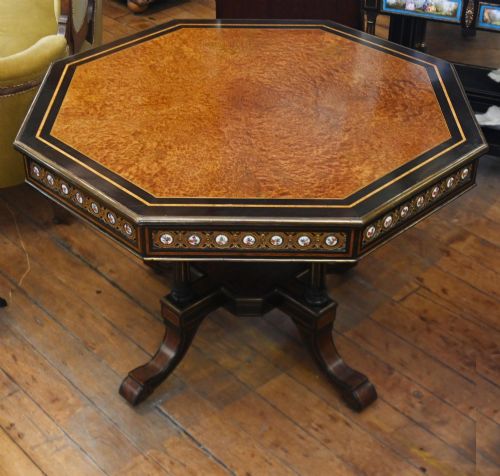
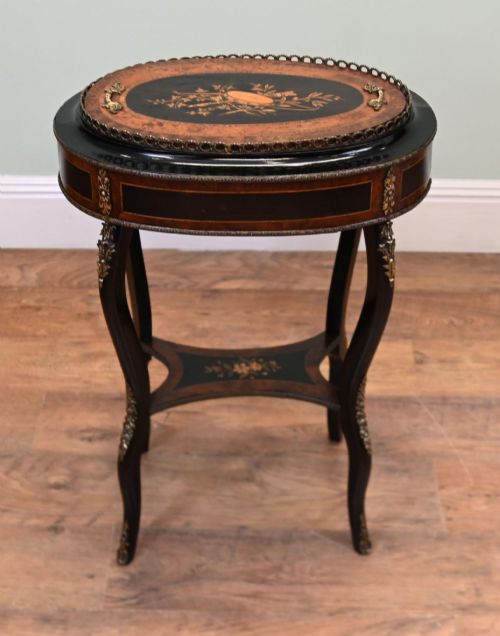
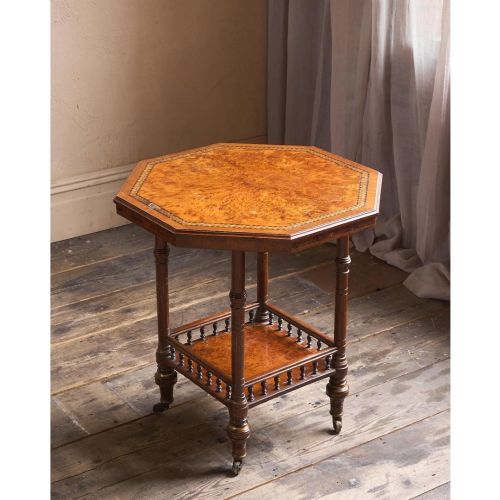
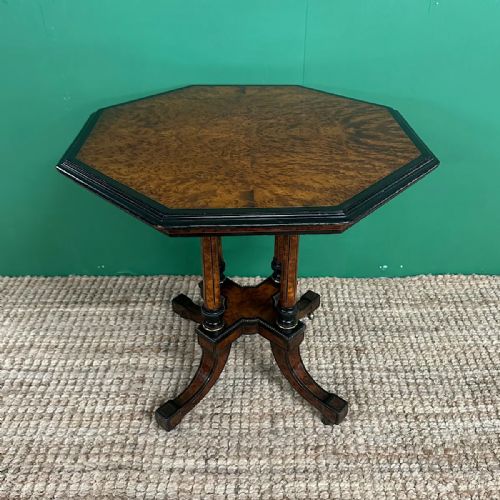
These amboyna wood occasional table pieces bring striking exotic grain to a room, offering a compact surface suited to daily placement.
Amboyna Wood Occasional Table
An amboyna wood occasional table provides a compact surface for a lamp or small display, drawn from periods spanning the Regency era through to the Edwardian years. Buyers seeking an amboyna wood occasional table will encounter side tables, etageres, nests of tables, tripod wine tables, and dumb waiters.
The material appears across Victorian, Regency, Chinese Traditional, and French Napoleon III styles. Most examples date from the nineteenth century, including specific decades like eighteen-eighty and eighteen-seventy, alongside pieces from nineteen-hundred.
Makers and workshops utilised amboyna veneer alongside solid hardwoods to achieve rich surface patterns. These occasional pieces range from simple tripod designs to multi-tiered etageres and nested sets.
How they were made
Craftsmen applied amboyna veneer over supportive wood foundations, such as walnut, mahogany, or general hardwood, to showcase the distinctive burl grain. Ebonised wood and parcel gilt details often provided contrast to the warm, mottled brown tones of the amboyna.
Brass mounts and accents occasionally secured or decorated joints and edges, while giltwood highlights emphasised carved elements on formal examples. French polishing sealed the veneer to protect the complex grain patterns from moisture and wear.
Amboyna Wood Occasional Table Retail Price Guide 2026
Typical asking prices for amboyna wood occasional table among the pieces listed under this phrase on Sellingantiques today, from the lower quarter to the upper quarter. They describe what is for sale here now, not the wider market.
Amboyna burl wood was historically named after the Moluccan island of Ambon, where traders first gathered the prized timber for European cabinet makers.
What varies in quality
The visual appeal depends largely on the tightness and movement of the amboyna burl veneer selected for the top. Finer examples display balanced grain orientation across the surface rather than irregular patches.
Secondary timbers and structural stability separate standard production from superior cabinet work, particularly in tripod bases and multi-tiered etageres. The integration of contrasting details, such as parcel gilt or ebonised borders, dictates the formal ambition of the piece.
Gillows
The Amboyna Wood Occasional Table Glossary
- Ebonised wood
- Timber treated with a dark stain or finish to imitate ebony. This technique highlights surrounding gilt or lighter veneers.
- Parcel gilt
- Wood decoration where specific carved or raised details receive a coating of gold leaf. It creates a contrasting accent against dark timbers.
- Etagere
- A small standing piece of furniture with multiple open shelves for display. These tiers are often supported by slender columns.
- Tripod wine table
- A small freestanding table supported by a central pillar above three feet. It provides a stable surface with a minimal floor footprint.
Amboyna Wood Occasional Table: Frequently Asked Questions
What periods do these tables cover?
The pieces span from the Regency period through the nineteenth century, Victorian era, and into nineteen-hundred and the Edwardian years.
Most examples reflect Victorian and nineteenth-century cabinet making traditions.
Are these tables made of solid amboyna?
Amboyna is almost exclusively utilised as a veneer applied over supportive secondary timbers like walnut, mahogany, or hardwood.
This technique displays the decorative burl figure across the top surfaces.
What styles are available?
Styles range from English Regency and Victorian designs to French Napoleon III and Chinese traditional forms.
This variety includes tripod wine tables, etageres, and nests of tables.
How do I care for amboyna veneer?
Keep the surface away from direct sunlight and extreme humidity to protect the delicate burl veneer and polished finish.
Dust gently with a dry cloth and avoid harsh chemical cleaners.