




Antique Center Table Small
An antique centre table small in scale offers grand proportion and fine timber work for rooms where space is at a premium.
Antique Center Table Small
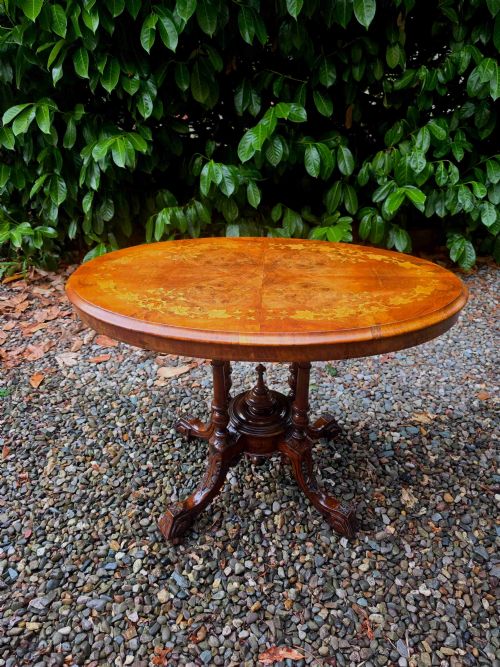
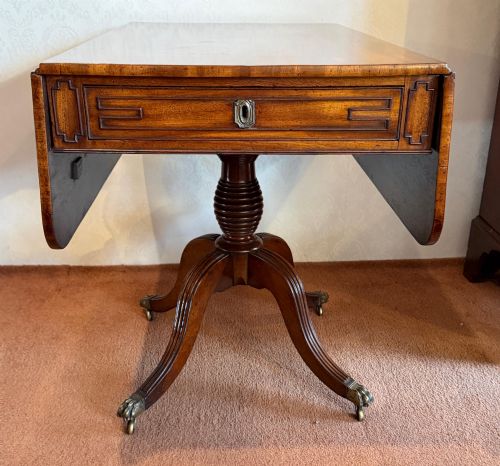
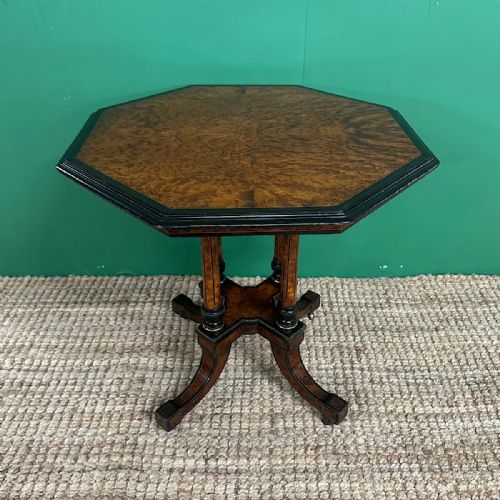
The antique centre table small category brings together compact freestanding pieces designed to sit in the middle of a room or serve intimate functions in period interiors. These tables emerge from Georgian, Regency, and Victorian workshops, spanning circular lamp tables to drop-leaf breakfast formats and miniature display pieces.
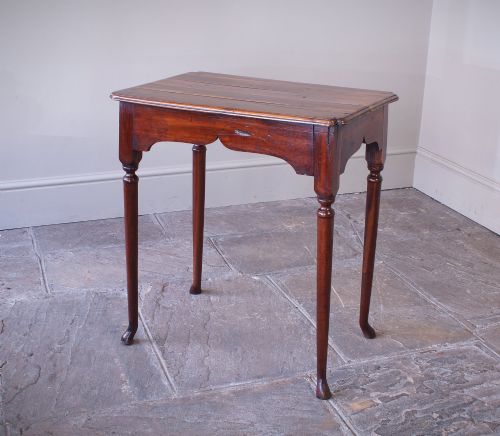
The selection on this page shows a strong presence of 19th-century craftsmanship, alongside earlier Georgian fruitwood examples and later Edwardian iterations. Buyers encounter circular inlaid tops, drop-leaf mechanisms, and miniature furniture formats that replicate larger salon tables in diminutive proportions.
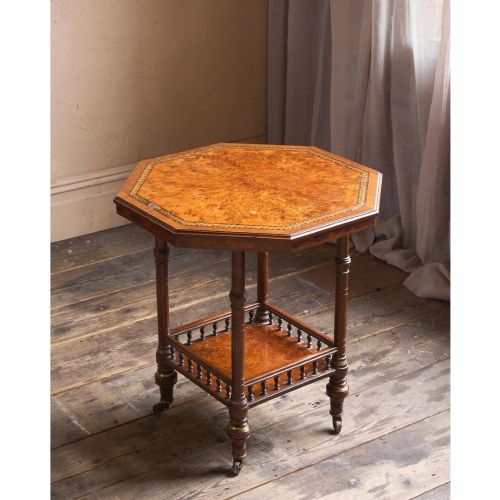
Makers utilised rich timbers like mahogany, walnut, rosewood, and amboyna veneer, often enhanced with brass inlay, marquetry, or parcel gilt. These forms served diverse domestic roles, functioning as writing desks, work tables, and occasional lamp stands within formal drawing rooms.
Materials and construction methods
Cabinetmakers constructed these tables using dense hardwoods such as mahogany, walnut, and rosewood as a stable carcass, frequently applying burr walnut, burr yew, amboyna, or satinwood veneers to the visible surfaces. Marquetry and contrasting stringing of ebony or fruitwood create intricate geometric and floral patterns across the table tops.
Metal elements appear in the form of cast brass inlay, mounts, and delicate hardware, complementing the polished timber grains. Drop-leaf and tilt-top mechanisms rely on precise wooden joints, hinges, and central columns supported by pillar and claw bases or multi-legged frames.
Factors that distinguish quality
The grade of timber selection and the precision of the veneer work determine the visual depth of the piece, with choice burr cuts and balanced grain matching indicating superior execution. Crispness in hand-cut marquetry and the integration of brass inlay show the maker's technical capability.
Structural integrity depends on the stability of the central column or leg joints and the smooth operation of drop-leaf mechanisms or drawers. Original patination and retention of surface polish preserve the character of the wood over centuries of use.
Gillows
The Antique Center Table Small Glossary
- Centre table
- A freestanding table finished on all sides, designed to stand in the middle of a room rather than against a wall.
- Marquetry
- Decorative veneer work using various coloured woods, shells, or ivory to form intricate pictorial patterns on the table top.
- Amboyna veneer
- A highly prized, richly figured exotic wood grain applied in thin sheets over a stable secondary timber carcass.
- Drop-leaf table
- A table with hinged flaps on the sides that fold down to save space or lift up to extend the surface area.
- Boulle
- A style of marquetry using tortoiseshell and brass inlay, named after the famed French cabinetmaker André-Charles Boulle.
Antique Center Table Small: Frequently Asked Questions
Where should I place a small centre table?
These tables suit hallways, drawing rooms, or bedrooms where a freestanding piece can be viewed from all sides.
They function well as lamp tables, central display surfaces, or intimate writing desks without dominating the room.
How do I care for antique timber surfaces?
Keep the wood away from direct sunlight and heat sources to prevent the veneers from drying out or splitting.
Apply traditional beeswax polish occasionally and buff gently with a soft cloth to maintain the natural lustre.
What is the difference between an occasional table and a centre table?
Centre tables are traditionally finished identically on all four sides so they look correct when placed in the middle of a space.
Occasional tables often have simpler backs or were designed to be pulled up for specific tasks like sewing or reading.
How can I identify the Regency period in these tables?
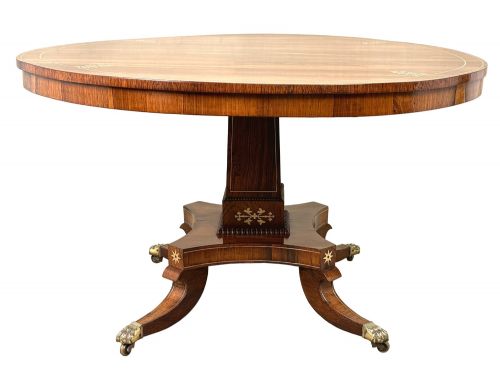
Regency pieces often feature classical architectural motifs, dark rosewood timbers, and contrasting brass inlay or stringing.
Look for bold circular tops supported by robust central pillars with tripartite or quadrupartite brass-capped feet.