


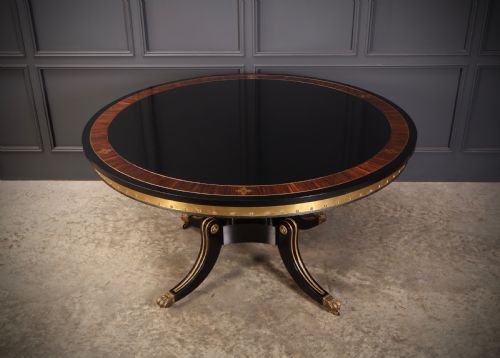


Ebonised Black Centre Table
An ebonised black centre table brings dark, striking presence to a room, offering a surface designed to anchor a space with distinct period character.
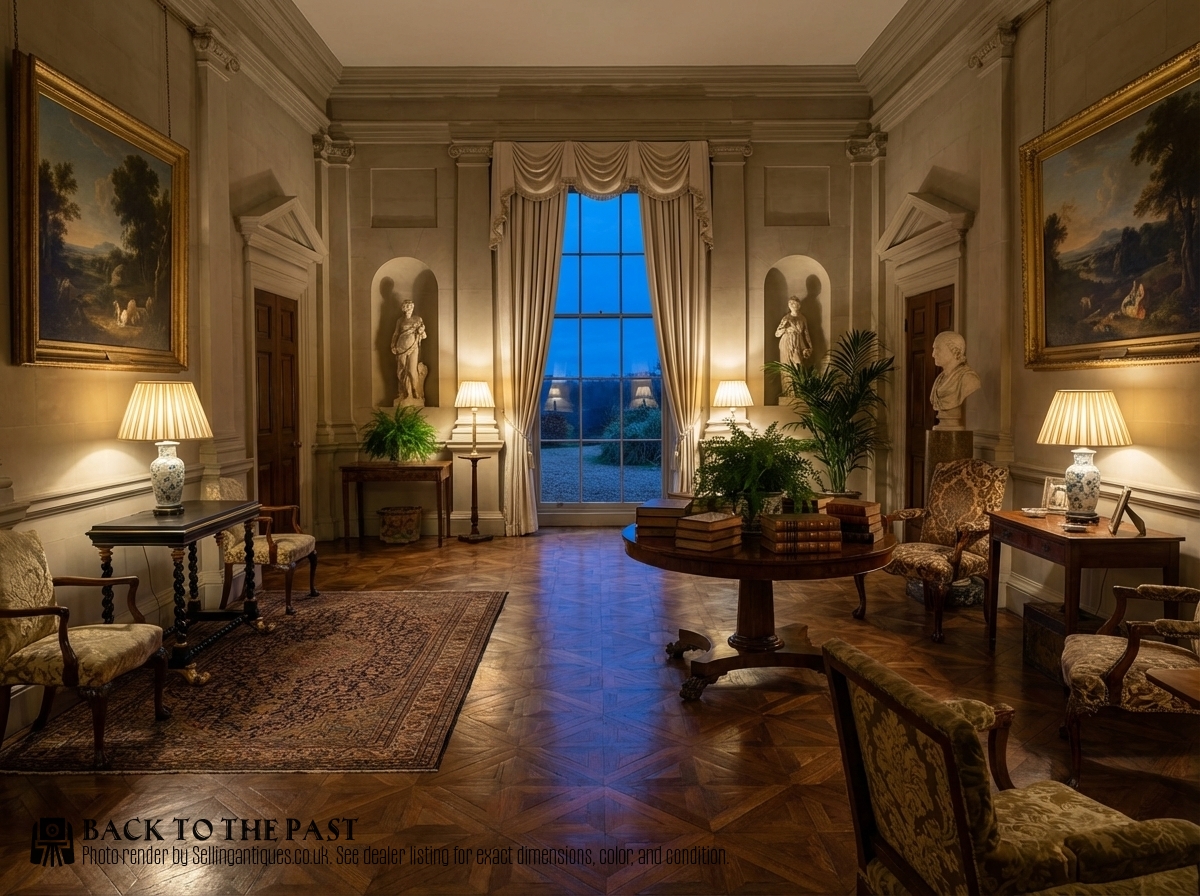
Ebonised Black Centre Table
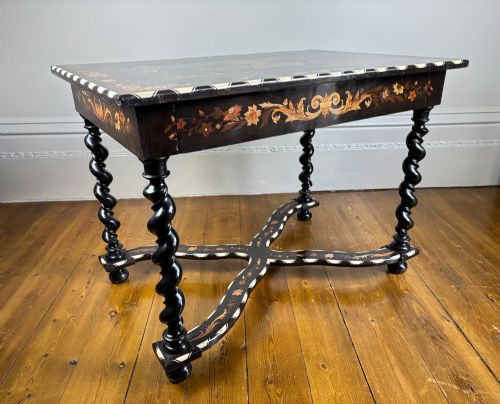
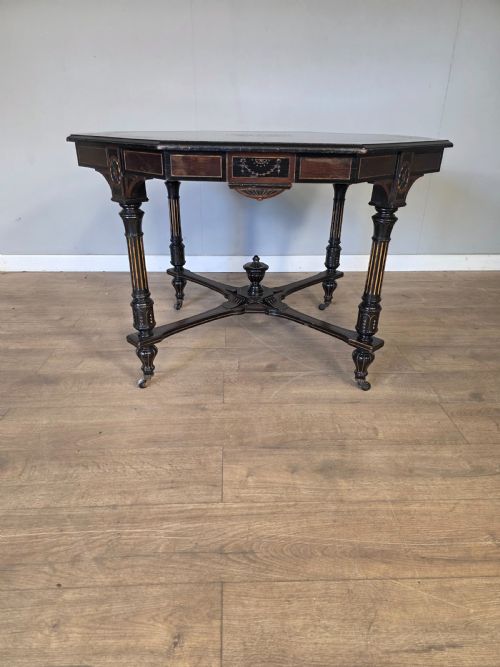
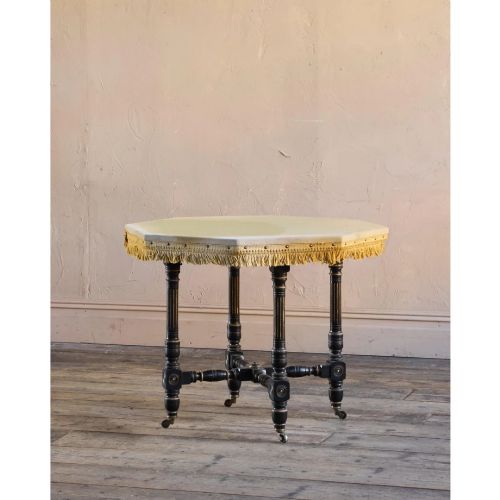
An ebonised black centre table appears across the nineteenth century and into the early twentieth century, spanning Victorian, Regency, and Empire styles. These pieces take the form of round, oval, or occasional tables designed to stand free in a room rather than against a wall.
The selections on this page demonstrate varied regional influences, including French Napoleon III, Dutch Baroque Revival, and Italian craftsmanship. Alongside traditional centre tables, buyers encounter related forms such as writing tables, coffee tables, and plant stands.
Materials and Construction
Carers and cabinet makers achieved the signature dark finish using ebonised wood or hardwood, sometimes pairing the blackened surfaces with parcel gilding, ormolu mounts, or contrasting burr walnut. Many examples incorporate intricate marquetry, bone inlay, or brass stringing into the timber top.
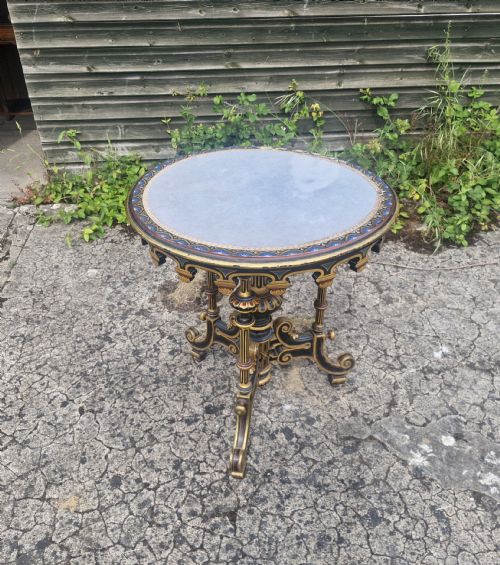
Higher specifications integrate heavy marble tops or specimen marble into the wooden framework, supported by carved pedestals or turned legs. Workshops utilised these dense materials to create sturdy, substantial furniture intended for prominent display.
Listings feature pieces spanning the Regency period through the Victorian era and into the 1930s, incorporating marble, brass, and ormolu.
Assessment of Quality
The standard of an ebonised black centre table rests upon the precision of its decorative details, such as the tightness of brass inlay and the fineness of bone marquetry. Tables featuring heavy marble inserts or rich parcel gilding generally represent a more ambitious commission.
Proportion and structural integrity define the distinction between standard production items and exceptional pieces bearing attribution to notable makers. The depth and finish of the ebonised surface itself indicate the care taken during the original construction.
Hindley & Sons·Maison Millet·Paul Sormani
The Ebonised Black Centre Table Glossary
- Ebonised
- Wood treated with a stain, dye, or paint finish to imitate expensive ebony. This dark surface forms the primary visual characteristic of these tables.
- Marquetry
- Decorative veneer applied to furniture in patterns using different woods, bone, or metal. Artisans cut these delicate elements to fit flush within the timber surface.
- Ormolu
- Gilded bronze mounts applied to furniture for decorative effect. These metallic accents frequently appear on French Empire and nineteenth-century pieces.
- Parcel Gilded
- Furniture decoration where specific carved or raised details receive a partial application of gold leaf. This technique creates contrast against the black ebonised ground.
- Specimen Marble
- A tabletop composed of various small pieces of coloured marble arranged in geometric or pictorial designs. Such tops signify high-status nineteenth-century manufacture.
Ebonised Black Centre Table: Frequently Asked Questions
Where should I place a centre table?
A centre table stands freely in the middle of a room, intended to be viewed from all sides rather than pushed against a wall. It works well in large hallways or principal reception rooms as a focal point.
Ensure there is sufficient clearance around the piece for movement, allowing the design and any inlaid top to be appreciated fully.
How do I care for ebonised wood?
Ebonised surfaces require gentle dusting with a soft, dry cloth to prevent the accumulation of grit. Avoid harsh chemical cleaners or silicone polishes that can degrade the dark finish over time.
Keep the timber away from direct heat sources and strong sunlight to prevent the black finish from fading or the underlying wood from splitting.
What is the difference between Victorian and Regency tables?
Regency tables date from the early nineteenth century and often feature classical proportions, clean lines, and restrained brass inlay or satinwood contrasts. Victorian examples tend to be heavier, incorporating elaborate carving, Aesthetic Movement motifs, or Revival styles.
Looking at the turn of the legs and the style of any marquetry helps establish the likely manufacturing period.
Can I use an antique table for daily dining?
While these pieces are structurally robust, many antique tables feature delicate brass stringing, bone inlay, or polished marble tops that benefit from protection. Using placemats or coasters prevents surface scratches and moisture damage to the antique finish.
Heavier marble-topped variants handle everyday use well, provided they are not overloaded with heavy weights.