





Victorian Oval Occasional Table
A victorian oval occasional table brings warmth and proportion to a room, offering a practical surface with soft lines drawn by nineteenth-century cabinet makers.
Victorian Oval Occasional Table
A victorian oval occasional table is a versatile nineteenth-century piece designed for general use in a drawing room, parlour or hallway. The search phrase covers a broad family of compact furnishings, from lamp and coffee tables to larger centre, loo and sewing tables.
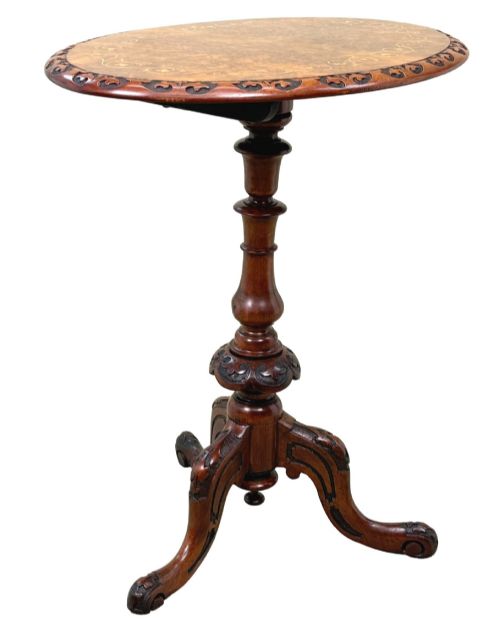
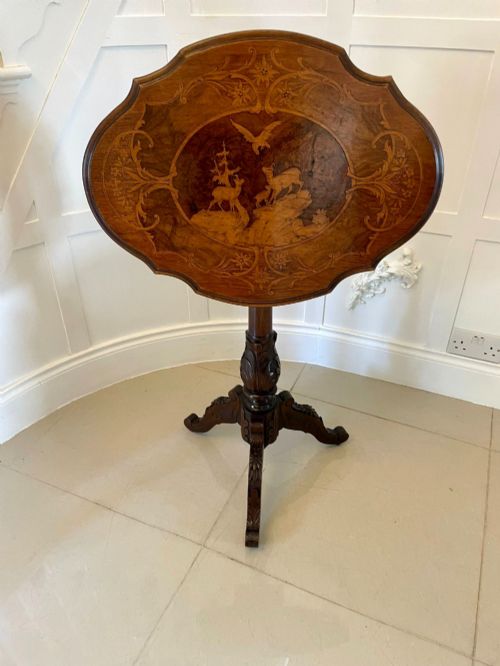
Forms vary according to their original domestic purpose, including drop-leaf, tilt-top, tripod and basket-base configurations. Buyers encounter everything from small window tables to substantial centre tables designed to stand free in the room.
Materials and Construction
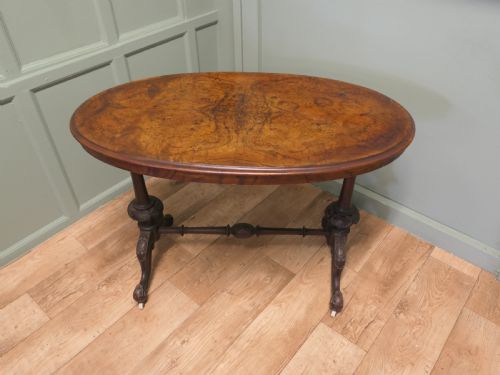
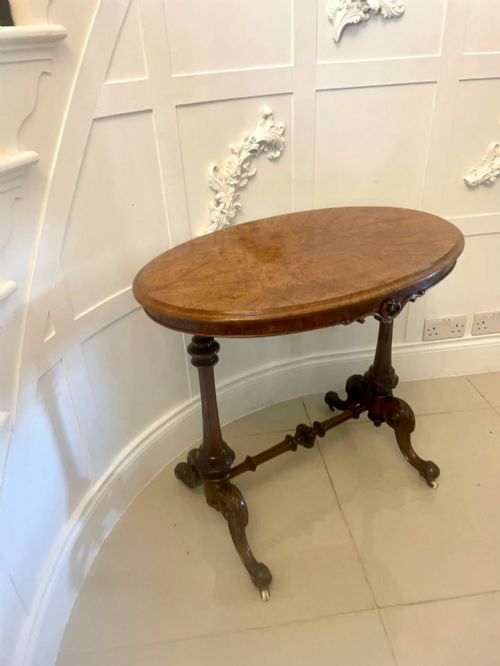
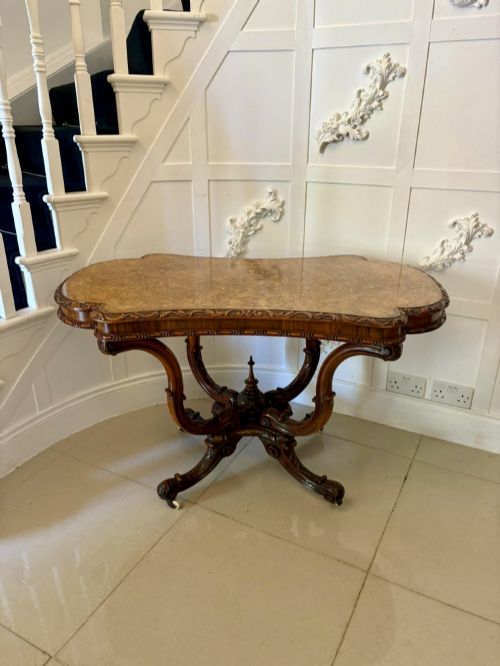
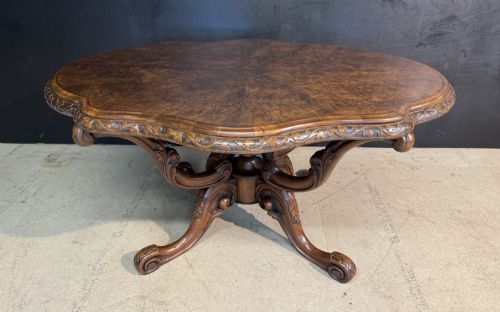
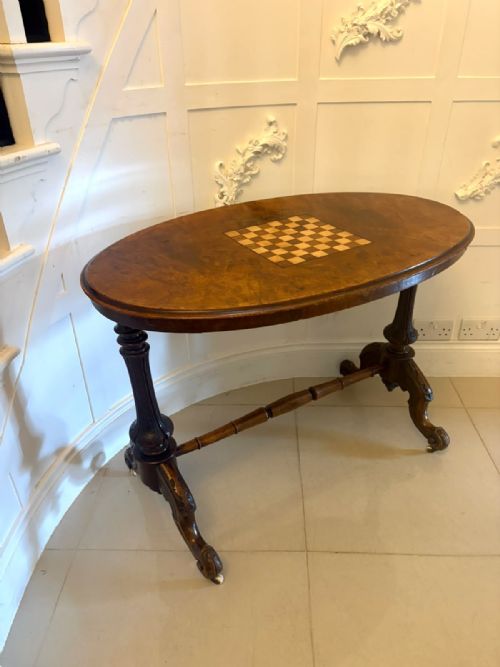
Makers relied heavily on walnut and burr walnut veneers, laid over solid secondary timbers to create highly figured, decorative table tops. Cabinet makers cut thin slices of burr timber to expose swirling grain patterns, which they framed with contrasting stringing and floral marquetry.
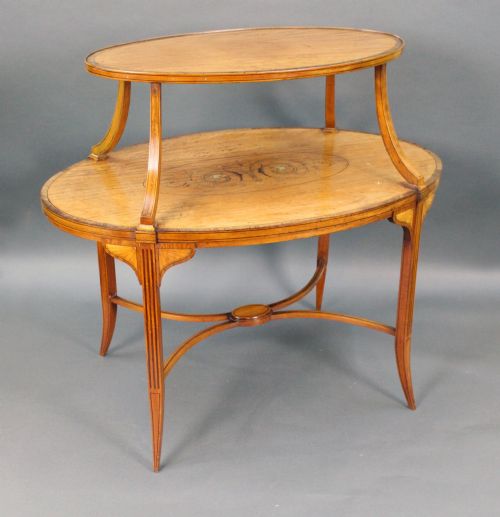
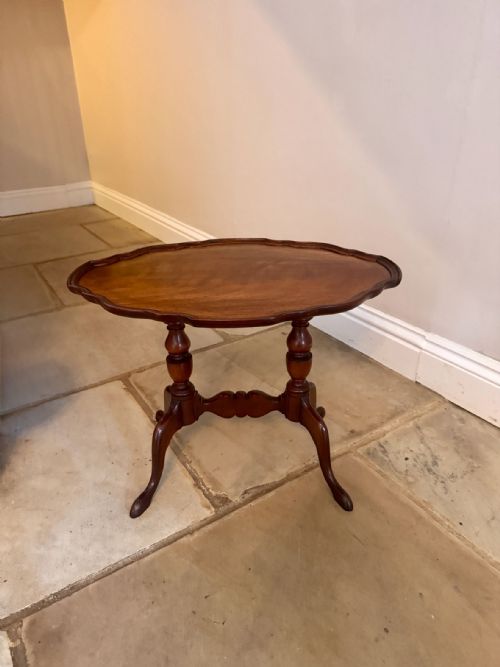
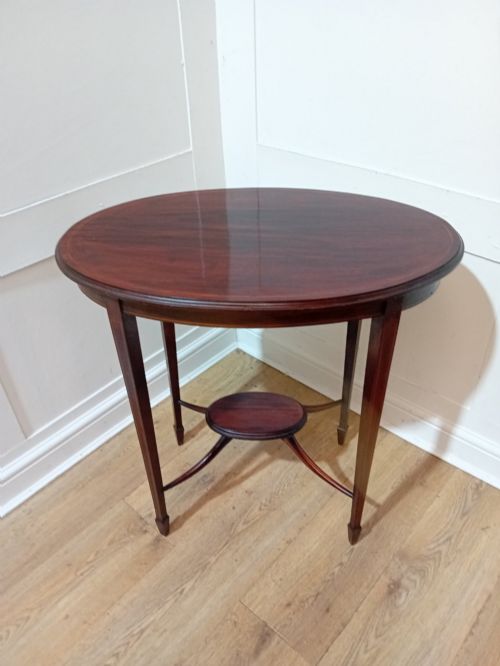
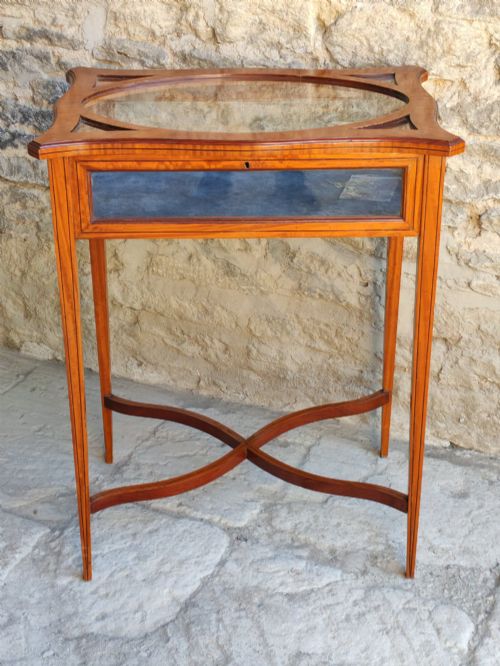
Solid mahogany and satinwood also feature prominently, shaped with hand-carved foliate details, turned supports and sturdy cross-stretchers or tripod bases. Marquetry inlay incorporated various specialty woods and occasional ceramic or brass mounts to enrich the surface design.
Victorian Oval Occasional Table Retail Price Guide 2026
Typical asking prices for victorian oval occasional table among the pieces listed under this phrase on Sellingantiques today, from the lower quarter to the upper quarter. They describe what is for sale here now, not the wider market.
Listings feature nineteenth-century periods alongside diverse materials including burr walnut, mahogany, satinwood, and brass.
Distinctions in Quality
Quality rests upon the selection of the timber veneers and the precision of the hand-cut inlay work. Superior pieces display lively, symmetrical burr grain with crisp, tight marquetry that remains flush with the surrounding surface.
Structural integrity and carving depth further separate standard examples from finer works. Master cabinet makers executed underframes, turned legs and carved foliate borders with sharp definition and stable joints that resist warping over time.
Gillows
The Victorian Oval Occasional Table Glossary
- Burr Walnut
- A specialised wood cut from walnut tree growths, prized for its swirling, highly figured grain patterns. It forms the primary decorative surface on many nineteenth-century tables.
- Marquetry
- The art of applying small pieces of veneer to a structure to form decorative patterns or pictures. Craftsmen used contrasting timbers to create floral and geometric motifs.
- Centre Table
- A freestanding table designed to be viewed from all sides and placed in the middle of a room rather than against a wall. These often feature elaborate pedestal or pillar bases.
- Tilt Top
- A tabletop hinged to the central pillar so it can be folded vertically when not in use. This mechanism allowed furniture to be stored against a wall to save space.
Victorian Oval Occasional Table: Frequently Asked Questions
What is a victorian oval occasional table used for?
These tables served multiple functions in nineteenth-century homes, acting as surfaces for lamps, sewing materials, books or tea. Today, their manageable proportions make them ideal as side tables, coffee tables or decorative centrepieces.
Their curved oval shape allows them to fit comfortably into tight seating arrangements where sharp corners would prove intrusive.
How can I tell if a table is genuinely Victorian?
Authentic nineteenth-century pieces display traditional construction methods such as hand-cut dovetails, timber shrinkage appropriate to age, and secondary woods like pine or oak beneath the primary veneers. Examining the underside and joints reveals the hand-tool marks left by period cabinet makers.
Stylistic cues, including specific Victorian revival motifs and period hardware, help narrow down the manufacturing decade.
Are these tables sturdy enough for daily use?
Most surviving examples remain remarkably robust, having withstood generations of domestic life. Solid timber frames and stable tripod or pillar bases provide reliable support for everyday items like lamps and cups.
Regular care and stable indoor humidity help preserve the joints and prevent the delicate veneer work from drying out.