

Victorian Octagonal Centre Table
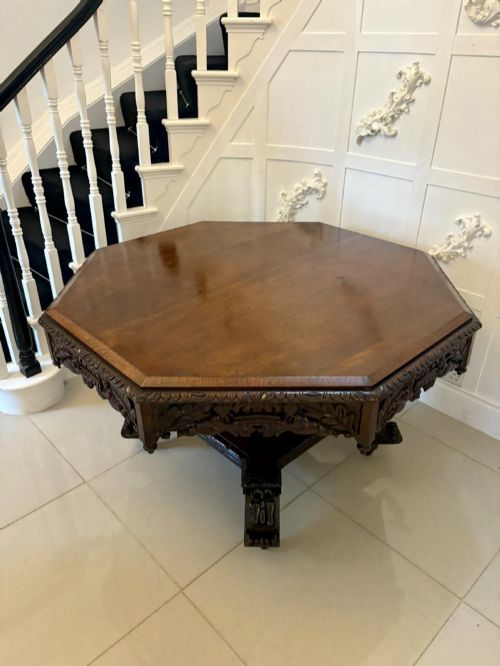
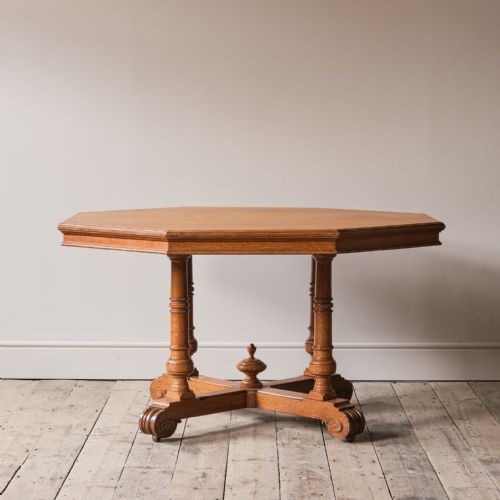
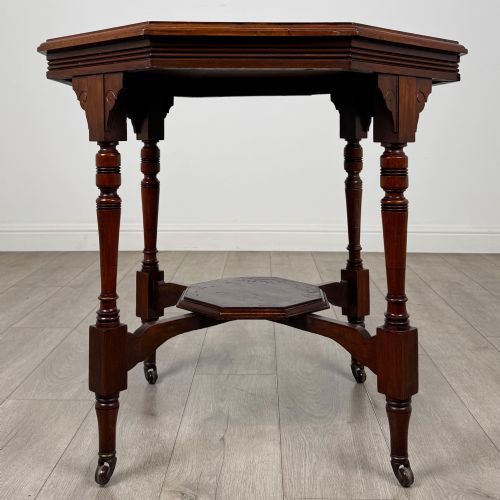
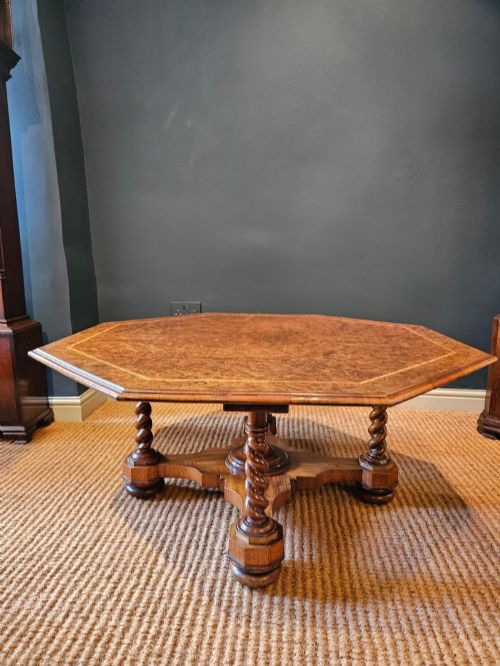
A victorian octagonal centre table anchors a room with distinctive geometry and rich timber grain, offering a practical surface designed to stand free in an interior.
Victorian Octagonal Centre Table
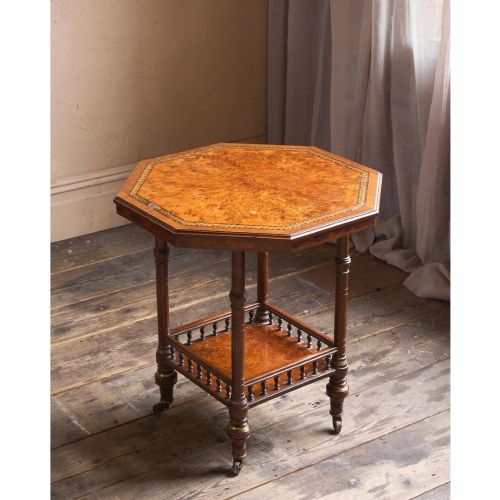
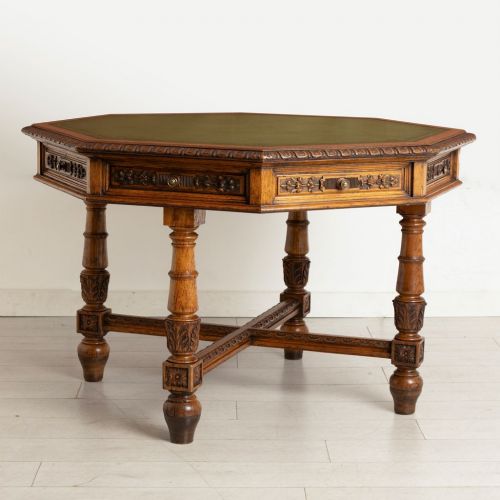
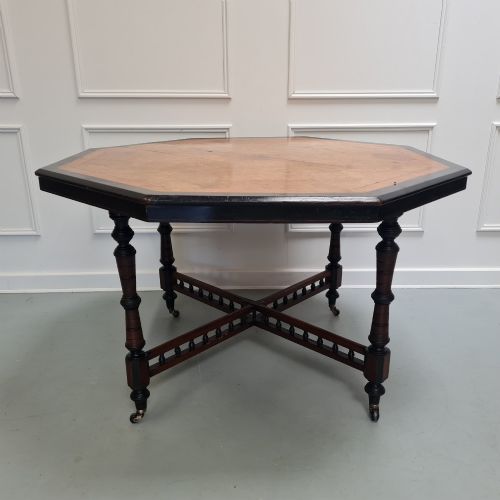
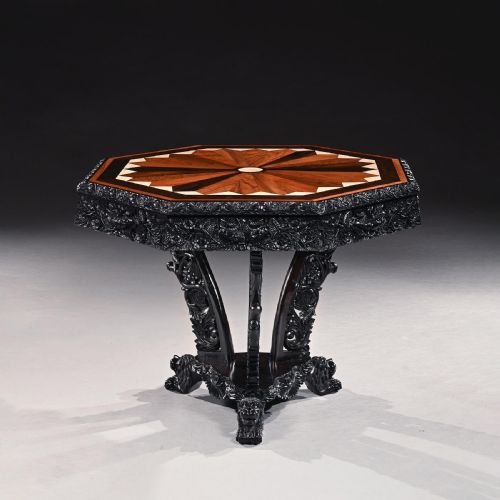
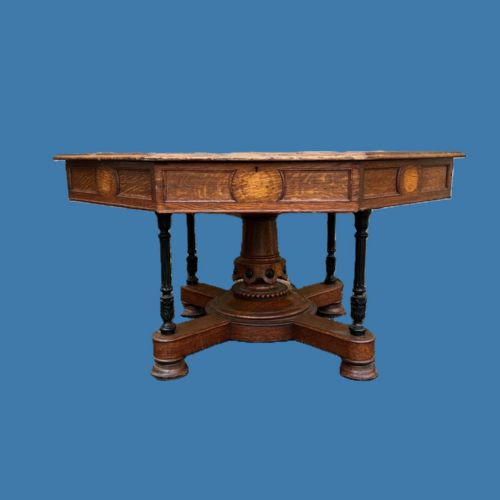
The form spans the nineteenth century, including Early Victorian, Aesthetic Movement, and Late Victorian examples, alongside related styles like Gothic Revival and Anglo-Indian Colonial. While some pieces function as large library tables with heavy pedestals or carved legs, smaller variants serve as occasional or lamp tables.
Workshop production ranges from standard domestic furnishings to bespoke library tables produced by notable cabinet makers. The eight-sided top allows chairs or guests to gather evenly around the perimeter, making the form both decorative and functional.
How they were made
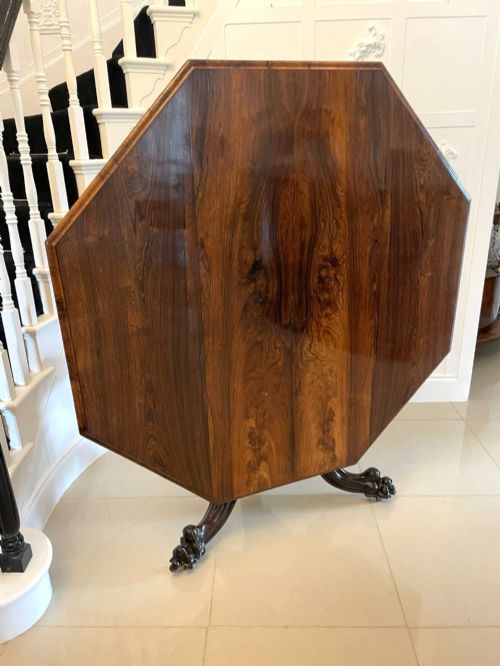
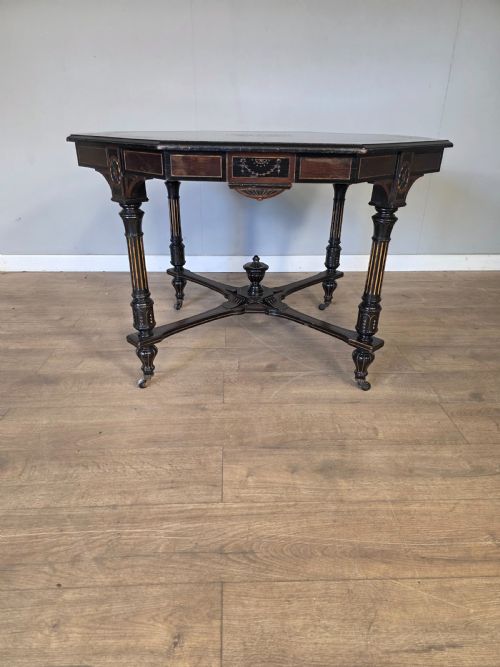
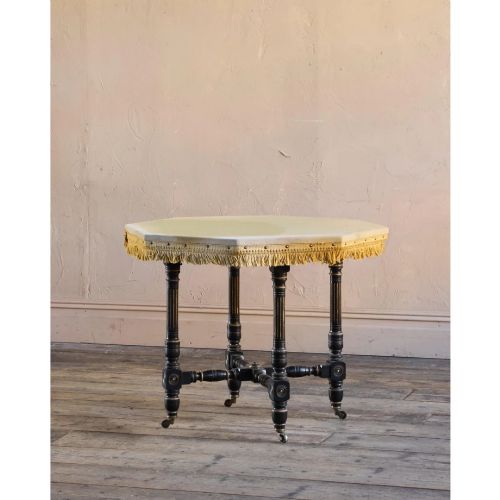
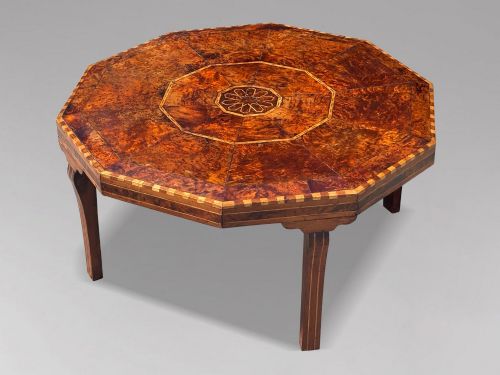
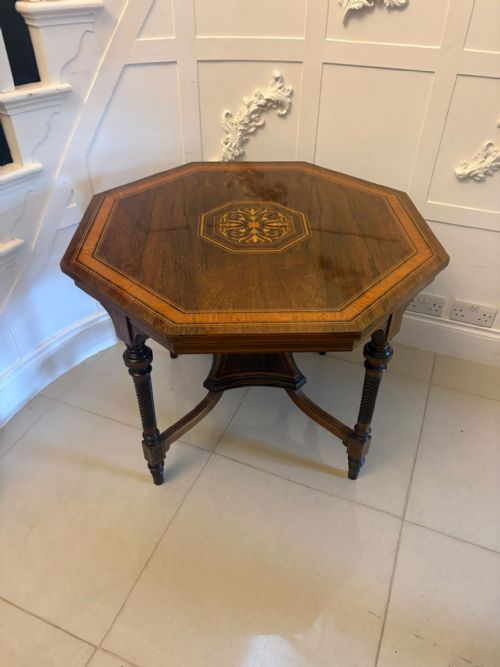
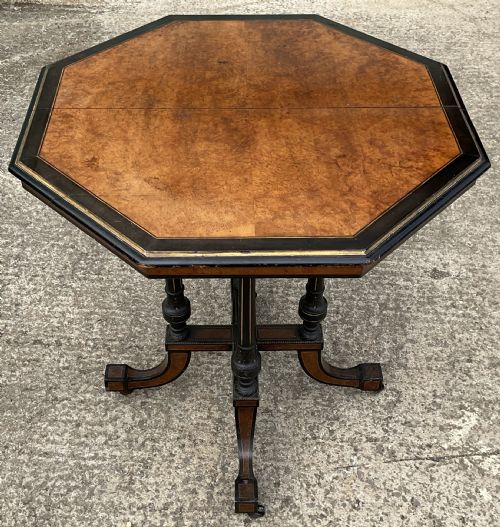
Cabinet makers utilised solid timbers like oak, mahogany, and walnut for structural frames and turned pedestals, applying decorative veneers such as burr walnut, satinwood, amboyna, and burr yew to the octagonal tops. Marquetry and parquetry geometric patterns were inlaid by hand using contrasting woods, while ebonised finishes provided a dramatic dark surface often associated with the Aesthetic Movement.
Writing and library variations incorporated inset writing surfaces of tooled Moroccan leather, bordered by gilt tooling. Pedestal bases typically split into three or four carved legs, sometimes terminating in castors to allow movement across heavy carpets.
Victorian Octagonal Centre Table Retail Price Guide 2026
Typical asking prices for victorian octagonal centre table among the pieces listed under this phrase on Sellingantiques today, from the lower quarter to the upper quarter. They describe what is for sale here now, not the wider market.
Table forms span library tables, coffee tables, hall tables, and occasional tables with leather, marble, or inlaid wood tops.
What varies in quality
The distinction between standard domestic production and top-tier workshop output lies in the choice of timber and the precision of the marquetry inlay. Superior examples display dense, highly figured burr veneers and crisp hand-carving on the pedestal and legs, whereas simpler pieces rely on plain mahogany or oak.
Construction details such as the integration of the tilt-top mechanism, the stability of the central pillar, and the condition of the original leather or polished wood surface determine the overall standing of an individual table.
Gillows·A Hindley and Sons·James Shoolbred and Co·W Williamson and Sons
The Victorian Octagonal Centre Table Glossary
- Centre table
- A freestanding table designed to be viewed from all sides rather than pushed against a wall. These pieces typically occupy the middle of a room.
- Marquetry
- Decorative veneer work forming pictures or geometric patterns using various coloured wood thin slices. Cabinet makers applied these designs directly to the table top.
- Parquetry
- Geometric mosaic woodwork used for repeating patterns on tabletops. It relies on contrasting wood species to create a tiled effect.
- Ebonised
- Wood stained or painted black to imitate ebony. This finish gained popularity during the Aesthetic Movement.
- Pedestal table
- A table supported by a single central pillar rising from a base. This design allows maximum legroom around the multi-sided top.
Victorian Octagonal Centre Table: Frequently Asked Questions
Where should a centre table go?
These tables are designed to stand free in the middle of a room, allowing access from all sides.
They work well in large reception rooms, libraries, or wide hallways where furniture does not need to sit against a wall.
How do I care for a veneered top?
Keep wooden surfaces away from direct sunlight and heat sources to prevent the burr veneers from drying or cracking.
Polish occasionally with traditional beeswax and avoid placing un protected damp items on the wood.
What is an Aesthetic Movement table?
Aesthetic Movement pieces date from the late nineteenth century and often feature ebonised wood or contrasting timber details.
They reflect a shift toward artistic design, frequently incorporating Japanese-inspired motifs or simpler structural lines.
Were octagonal tables used for dining?
Larger examples, particularly those described as library or dining tables, provided stable surfaces for meals or large books.
Smaller octagonal versions functioned primarily as occasional, lamp, or games tables rather than dining furniture.