


Victorian Oak Decanter
A victorian oak decanter set offers heavy timber framework and secure spirit storage, combining late nineteenth-century craftsmanship with practical hospitality.
Victorian Oak Decanter
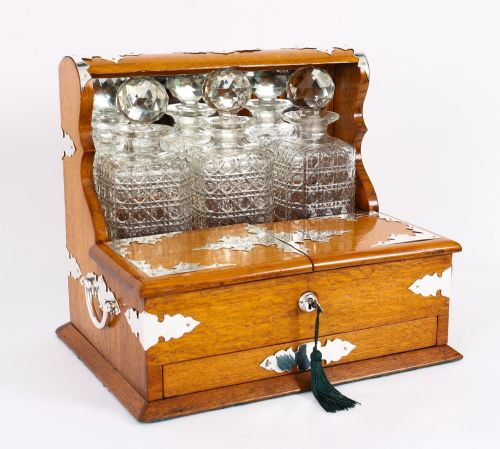
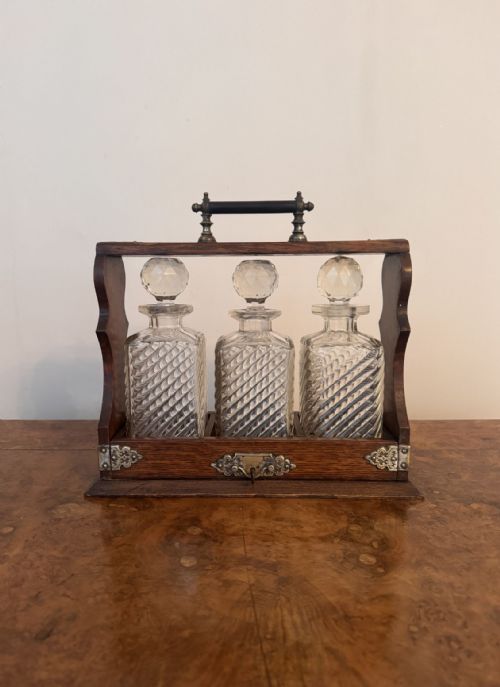
A victorian oak decanter set primarily takes the form of a locking tantalus, a dry bar, or a fitted box designed to secure spirits away from servants or children. These pieces date predominantly from the Victorian and Edwardian eras, spanning from roughly eighteen eighty to nineteen hundred.
Materials and construction
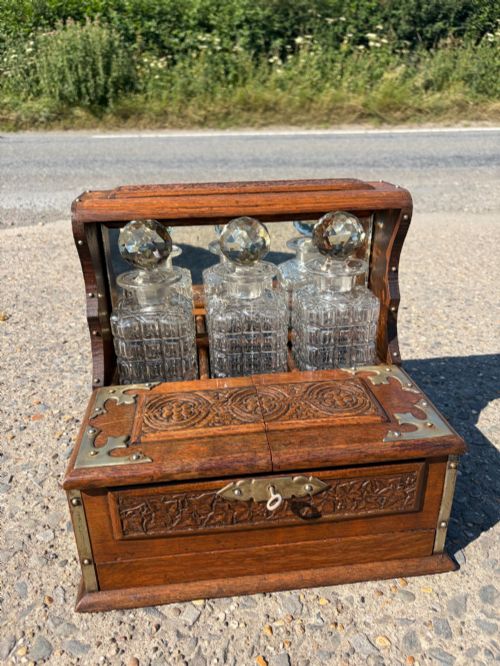
These pieces rely heavily upon solid oak timber frameworks, frequently enhanced with brass mounting, brass binding, silver plate, or marquetry stringing. The internal fittings accommodate heavy glassware, utilising cut glass or cut crystal decanters alongside wooden treen coasters and glass mirror panels.
Joinery techniques from the period prioritized robust housing for locking mechanisms operated by small keys, securing the decanter necks beneath metal bars. Stands and boxes integrate compartments for playing cards and games alongside the spirit storage.
Some barrels on Black Forest stands kept whiskey, gin, and brandy flowing while looking entirely like woodland sculpture.
What separates the tiers
Quality in these pieces rests upon the integration of the locking mechanism and the complexity of the accompanying cabinetwork. Simpler single-bottle cased pieces or plain wood stands sit at the functional end of the scale, while elaborate compendiums incorporating games boards and heavy brass mounts represent higher production standards.
The choice of timber grain, such as figured pollard or golden oak, combined with intact working locks and matching sets of cut crystal decanters, distinguishes the more ambitious workshop output from standard utility barware.
Fenton Bros
The Victorian Oak Decanter Glossary
- Tantalus
- A locking spirit cabinet or stand that holds decanters securely by their necks, displaying the contents while preventing unpermitted pouring. The name derives from the mythological figure Tantalus, who could see water but could not reach it.
- Games Compendium
- A fitted box containing equipment for multiple parlour games, such as playing cards, dominoes, and gaming counters. These are frequently built into the base or rear of oak tantalus frames.
- Treen
- Small handmade wooden household objects and utilitarian wares. In this context, it refers to turned wooden wine bottle stands and decanter coasters.
- Pollard Oak
- Timber taken from trees that have been pollarded, producing a decorative, highly figured burl wood grain prized in Victorian cabinetmaking.
- Silver Plate
- A thin layer of silver fused to a base metal, commonly utilised for the locking bars, handles, and escutcheons on nineteenth-century spirit cases.
Victorian Oak Decanter: Frequently Asked Questions
What is a tantalus?
A tantalus is a secure frame that holds decanters in place with a locking metal bar across their stoppers. This design prevents guests or household staff from accessing the spirits without the key.
Most examples hold two or three glass decanters and sit on an oak base, sometimes combined with a storage box for cigars or playing cards.
How do I unlock the decanters?
The locking mechanism typically involves a small key turned in a brass escutcheon on the side or front of the wooden base. Turning the key releases the vertical retaining arm, allowing it to slide or tilt backward so the decanters can be lifted free.
Original working keys add utility to these items, though replacement locks can be fitted by specialists if the mechanism is seized.
Were these used in dining rooms?
These pieces served after-dinner drinks in drawing rooms, studies, and dining parlours during the late nineteenth and early twentieth centuries. Gentlemen gathered after meals for spirits while entertaining guests with cards from the built-in games compendium.
The sturdy oak construction and locking mechanism made them suitable for sideboard placement in active family homes.
How do I date an oak tantalus?
Dating relies upon stylistic clues such as brass mounts, the depth of the oak colour, and the presence of registration marks or maker stamps. Pieces marked with eighteen eighty or eighteen ninety generally feature heavier brass work and deep golden or pollard oak timbers.
Edwardian versions from around nineteen hundred often display slightly lighter oak tones and simpler, cleaner lines reflecting changing interior tastes.