





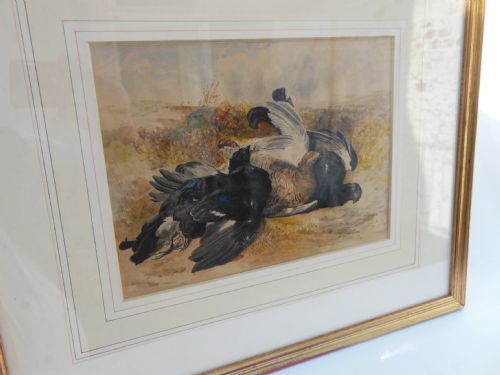
Victorian Moorland Painting
These Victorian moorland painting works capture vast upland expanses and rugged terrain, offering a striking window into nineteenth-century British landscape art.
Victorian Moorland Painting
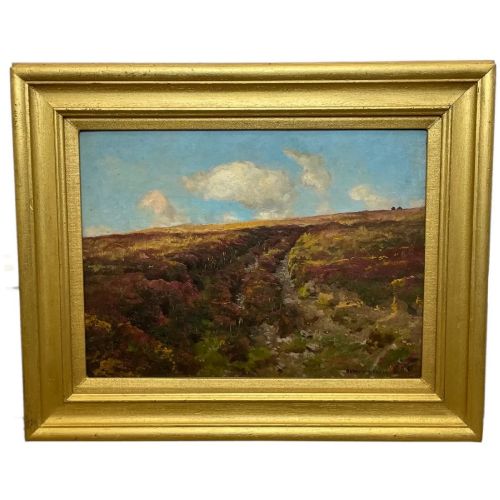
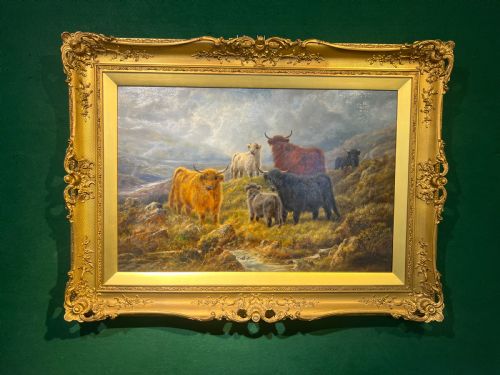
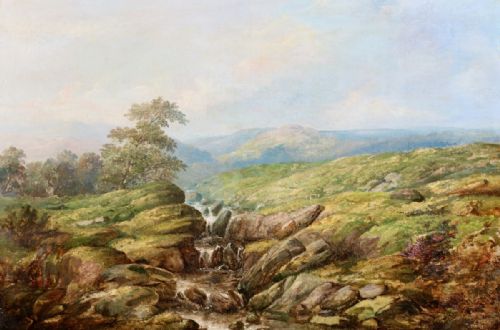
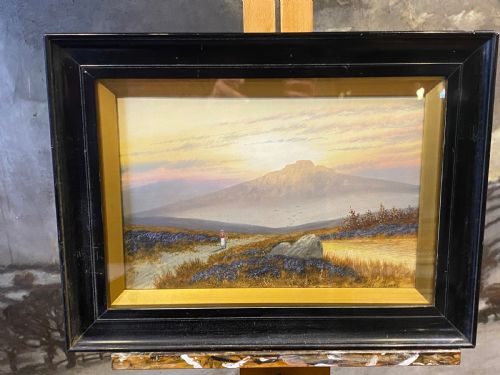
When you search for victorian moorland painting, you encounter a focused genre of nineteenth-century and early twentieth-century British art depicting wild landscapes, often populated by sheep, deer, sporting dogs, or solitary figures. The works recorded on this page range from expansive oils on canvas to delicate watercolours, pastels, and gouache studies.
The most common subjects centre on named locations such as Exmoor, Dartmoor, and Cornwall, alongside broader pastoral and Highland sporting scenes. These pieces reflect the period's fascination with untamed British scenery, executed by established artists working within British Realism and Victorian Fine Art traditions.
Most examples come framed in period gilt wood or gilded mouldings that complement the earthy palettes of heather, moor, and sky. Collectors look to these canvases and works on paper to bring the atmospheric depth of the British countryside into an interior.
What Varies in Quality
The distinction between standard works and exceptional pieces rests in the handling of light, atmosphere, and anatomical precision within the figures and animals. Master painters capture the specific meteorological conditions of moorland weather, whereas lesser examples rely on formulaic compositions and repetitive background washes.
Condition and originality also dictate the standing of a piece, particularly the preservation of the paper or canvas and the retention of the period gilt wood framing. Works signed by recognised practitioners of the Victorian era command greater attention due to their documented exhibition history and technical proficiency.
Listings feature works spanning the Victorian era through the early twentieth century, utilising oil on canvas, watercolour, pastel, and gouache.
Arthur Wardle·Robert Watson·Joseph Knight·James Orrock·John A Houston·Colin Graeme Roe·Joseph Farquharson·John Charles Tunnard·Edmund Morris Wimperis·Arthur H Enock·Frederick Richard Lee·Charles James Adams·Robert Cleminson·Alfred Graham
The Victorian Moorland Painting Glossary
- Gouache
- An opaque watercolour paint mixed with a binding agent, producing a heavier, more saturated finish than standard transparent watercolour. Artists utilised it to capture dense cloud formations and solid terrain on paper.
- Pastel
- A dry painting medium consisting of powdered pigment and a binder, allowing for rapid application of vibrant colour. It appears in large-scale moorland works alongside gouache to render soft atmospheric effects.
- Gilt Wood
- Wood treated with a thin layer of gold leaf or gold-coloured metallic finish, forming the decorative frames typical of nineteenth-century fine art. These frames add warmth and structure to the oil paintings and watercolours.
- British Realism
- An artistic movement focused on depicting everyday subjects and natural scenes with a high degree of fidelity and observation. It forms the stylistic backbone for many rural and moorland landscapes of the period.
- Sporting Art
- A genre dedicated to depicting field sports, hunting dogs, game, and animals within a rural or upland landscape. Pieces in this tradition often feature setters, pointers, and game birds integrated into moorland vistas.
Victorian Moorland Painting: Frequently Asked Questions
How do I care for these paintings?
Keep works out of direct sunlight to prevent the fading of watercolours and the yellowing of old varnish on oils.
Maintain stable room temperatures and avoid hanging them in damp spaces to protect the paper supports and wooden frames.
Are watercolours as durable as oils?
Watercolours require the protection of glass and acid-free mounts to guard against atmospheric moisture and paper degradation over time.
Oil paintings on canvas are more robust but still benefit from secure environments and gentle dusting of the gilt frames.
How can I tell the period of a frame?
Period frames often display hand-carved gesso details, corner mitres showing age, and underlying timber that matches nineteenth-century joinery methods.
Replacements typically lack the minor surface wear and patina accumulated across the Victorian era.
What subjects define moorland art?
Typical subjects include remote upland terrain, drovers moving sheep across heather, sporting dogs on the hunt, and dramatic skies over Exmoor or Dartmoor.
These motifs reflect the nineteenth-century artistic appreciation for wild, uncultivated British landscapes.