
Country Landscape Wall Art
Country landscape wall art captures rural views and agrarian life through historic painting, watercolour and etching.
Country Landscape Wall Art
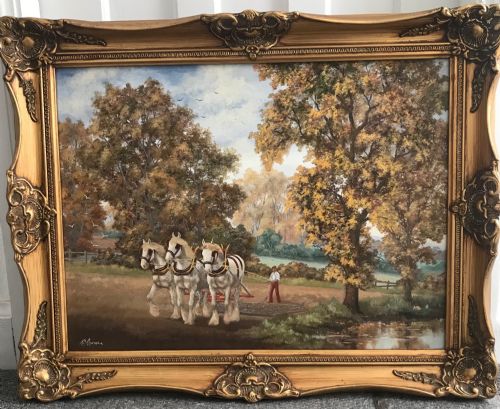
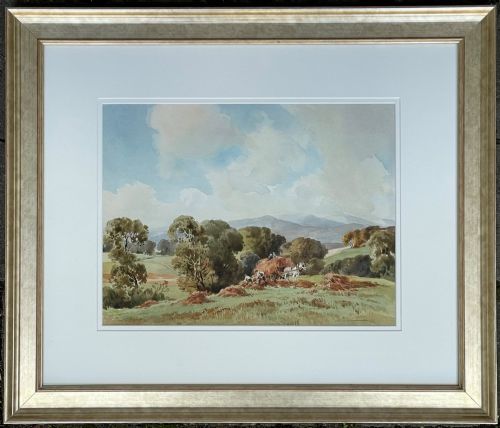
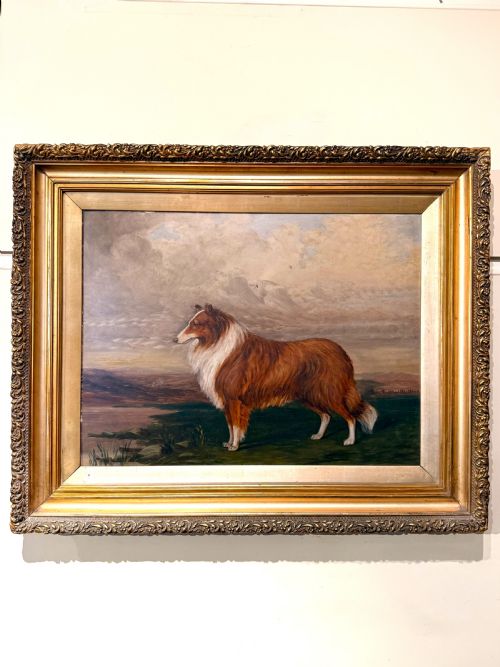
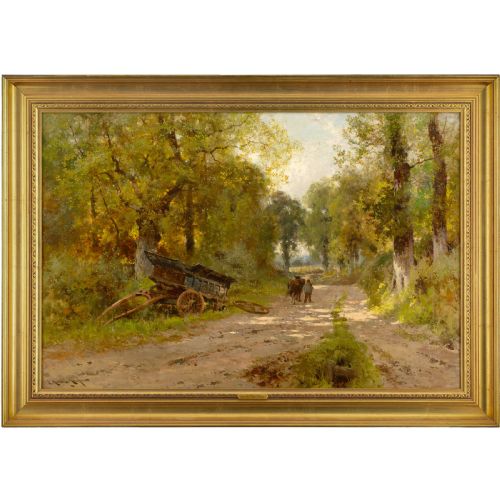
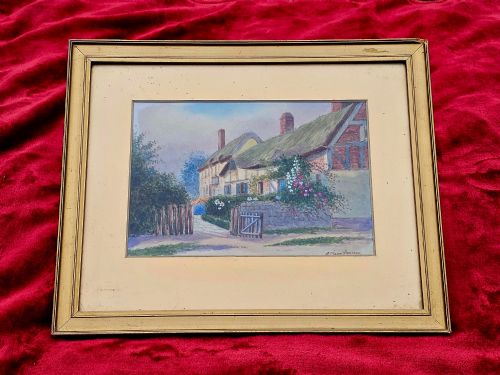
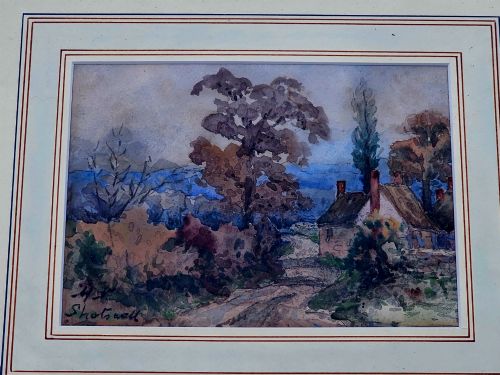
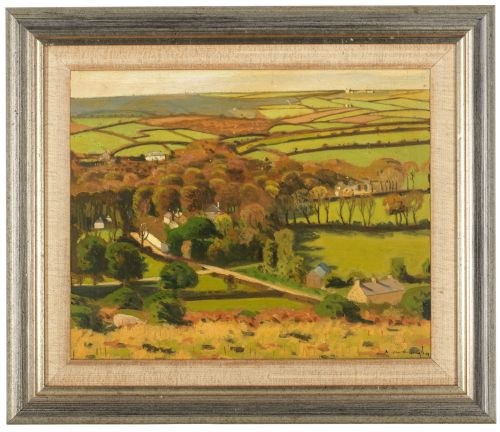
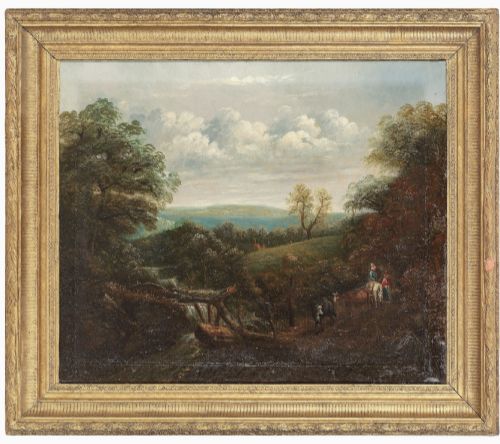
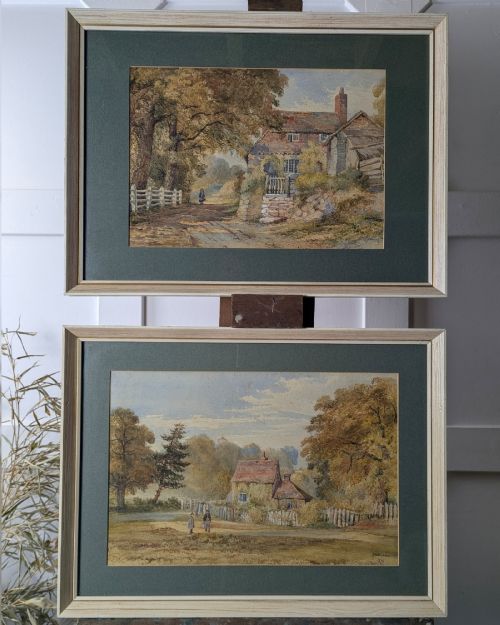
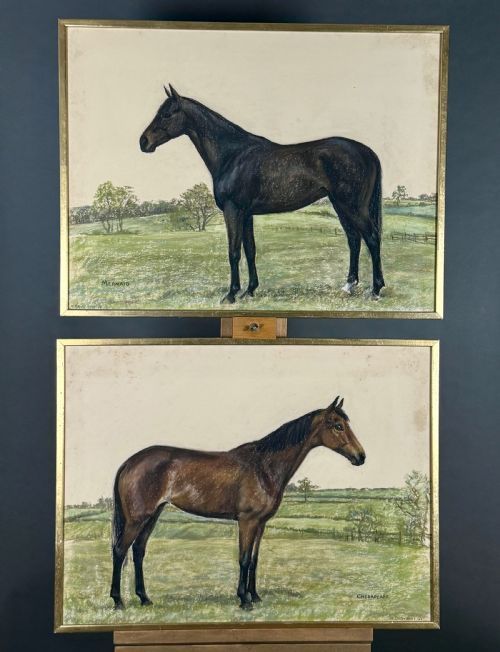
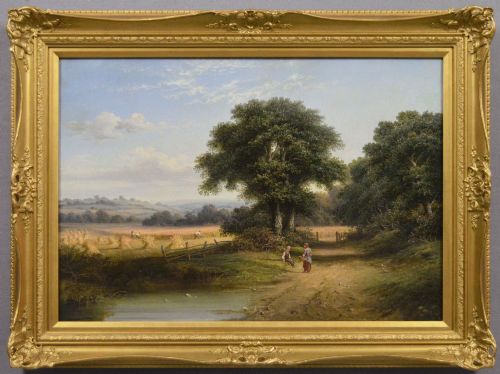
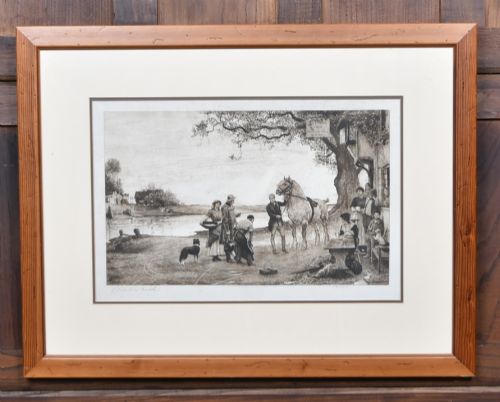
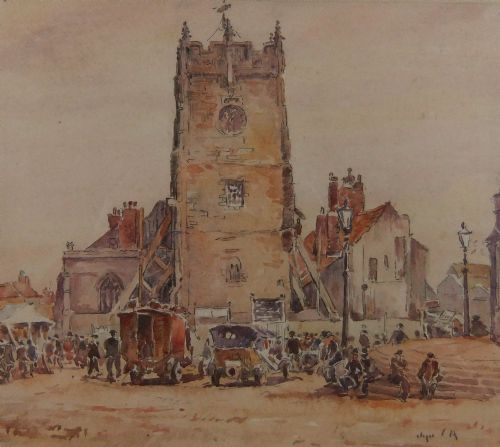
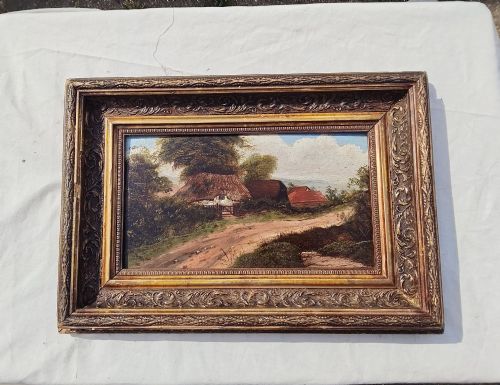
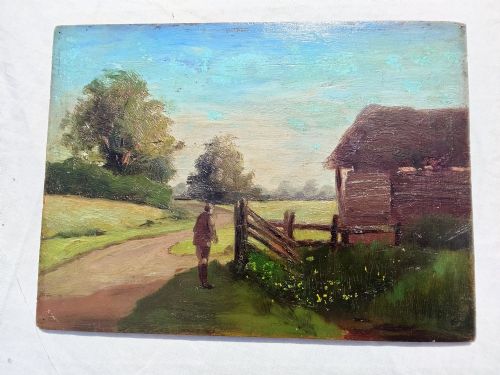
Country landscape wall art comprises historic paintings, watercolours, etchings and pastels depicting rural scenes, farmland, rivers and agricultural life. These works range from provincial naive folk art and English School watercolours to detailed 19th-century realisms.
Buyers meet works spanning the Victorian and Edwardian eras alongside early 20th-century impressionist pieces. Common subjects include harvest fields, horses, sheep flocks, thatched cottages and river valleys.
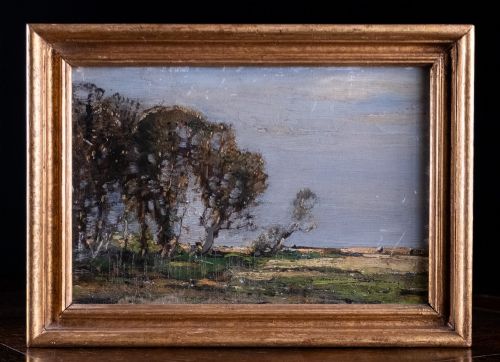
The selection includes framed artworks executed on canvas, wooden board, card, paper and occasionally textile. Many retain period gilt wood or gesso frames that match the age of the art.
How They Were Made
Artists painted primarily with oil on canvas or wooden board, applying pigment to capture natural light in rural settings. Watercolours on paper offered a more fluid medium favoured for lighter atmospheric views.
Draftsmen also utilised pastel on paper and printmaking techniques such as etching for rural subjects. Works were typically mounted behind glass or set within heavy gilt wood and gesso frames.
Several sheep paintings feature unexpected companions, including wild garlic and roaming horses.
What Varies in Quality
Quality rests in the sureness of the draftsmanship and the artist's command of light, tone and composition within the landscape. Masterly handling distinguishes a professional academic oil painting from provincial naive folk art.
Condition of the medium and the retention of the original period frame alter the integrity of the piece. Works showing minimal canvas cracking and stable pigment preservation stand above heavily restored examples.
Percy Lancaster·A. Marie Parsons·Kershaw Schofield·Robert Morson Hughes·John Smith Atherton·Lucy Pratt·Walter Heath Williams·Robert W. Macbeth·Henry Yeen King·Henry Schouten·Johannes de Haas·George Morland
The Country Landscape Wall Art Glossary
- Oil on Canvas
- Pigment mixed with drying oil applied to a stretched woven fabric support. This technique allows rich colour blending and textured brushwork.
- Watercolour Painting
- A method where fine pigment is suspended in a water-soluble binder on paper. It creates transparent washes of colour.
- Gesso
- A plaster-like mixture applied to wooden frames as a smooth base for gilding. It provides a crisp surface for ornamental moulding.
- English School
- A classification for works produced by British artists sharing stylistic traditions. It denotes regional origin rather than a specific academy.
- Etching
- A printmaking process where acid cuts into unprotected parts of a metal plate to hold ink. The inked design is transferred to paper under pressure.
Country Landscape Wall Art: Frequently Asked Questions
How do I hang heavy framed oil paintings safely?
Secure the frame using appropriate wall anchors matched to the weight of the wood and gesso structure. Check that the hanging wire or brackets fixed to the back are sturdy and stable.
Position the artwork away from direct sunlight and fluctuating heat sources to protect the canvas and paint layers over time.
How should I clean antique watercolour paintings?
Keep watercolours behind protective glass and avoid applying any liquid cleaner directly to the paper or painted surface. Dust the frame gently with a dry, soft cloth.
Consult a professional paper conservator if the mount or paper shows staining or foxing spots.
How do I date a 19th-century landscape painting?
Examine the materials visible on the reverse, such as the weave of the canvas, the type of wooden stretcher, and the composition of the board. Handwritten inscriptions or artist signatures often provide specific clues.
Compare the framing style and costume details of any figures depicted with known periods like the Victorian or Edwardian eras.
What is the difference between oil and watercolour?
Oils use slow-drying pigments suspended in oil on canvas or board, allowing thick impasto and deep colour saturation. Watercolours use water-soluble pigments on paper for translucent, delicate effects.
Oils traditionally require protective frames without glass, while watercolours need glazing to prevent moisture damage.
Can I place country art in a modern interior?
Historic landscapes pair well with contemporary spaces by offering natural texture and traditional warmth. The organic subjects of fields, rivers and animals complement neutral modern walls.
Ensure the room humidity remains stable to protect the antique wooden boards, canvases and gilt frames.