


Rural Cottage Oil Painting
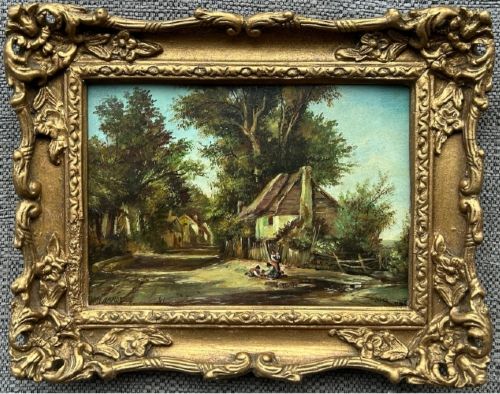
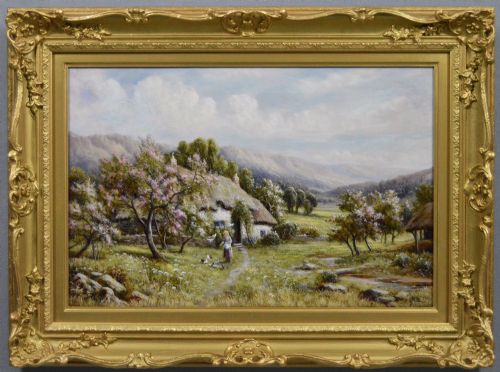
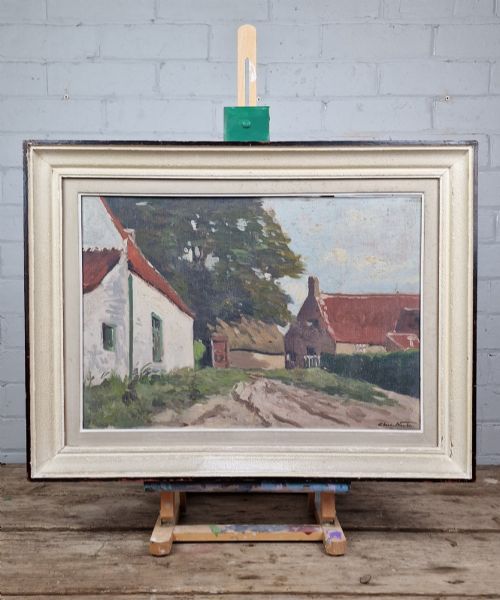
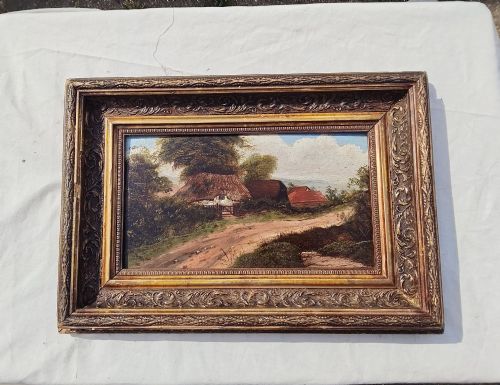
A rural cottage oil painting captures the quiet permanence of the countryside through pigment and canvas, offering a window into traditional pastoral life that collectors prize for its nostalgic charm.
How They Were Made
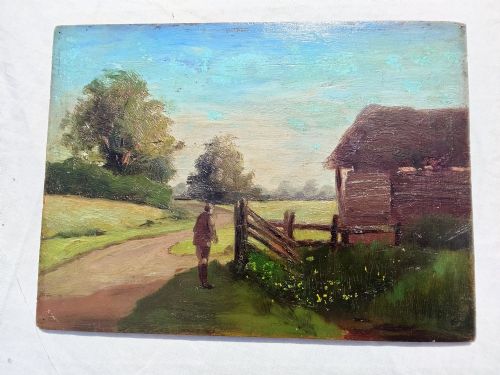
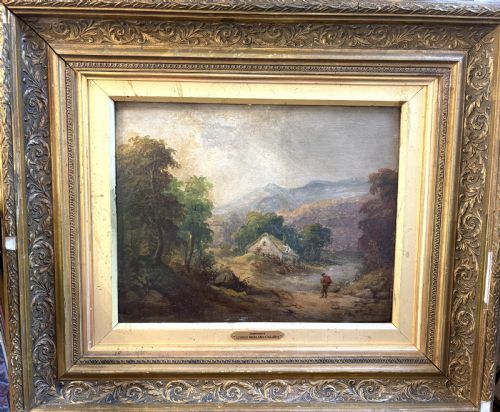
Artists applied oil paint to various supports including stretched canvas, wooden board, card, and panel, often sealing the surface with preparation grounds before working up the composition. Brushwork varies from tight, academic realism to looser, impressionistic dabs that capture shifting light on whitewashed walls and country lanes.
Finished works found their presentation in protective surrounds, with many period examples housed in gilt wood or ornate moulded frames that complement the earthy palettes of greens, browns, and muted ochres characteristic of the genre.
What Varies in Quality
The distinction between standard works and exceptional examples rests upon the confidence of the brushwork and the structural integrity of the composition. Superior pieces demonstrate a sophisticated handling of natural light and atmospheric depth, whereas lesser works rely on repetitive formulae and rigid perspective.
Provenance and attribution also influence standing within the field. Signed works by documented painters from established regional or continental schools carry greater art-historical weight than unsigned productions by anonymous hands.
Charles Houben·George Morland·John Horace Hooper·Reginald Grange Brundrit·Frederick James Knowles·William Greaves·Charles Vickers·Robert Finley McIntyre·Helmut Reuter·Ralph Hedley·John Falconar Slater·Robert Gemmell Hutchinson·Abraham Hulk Junior·Harry Pennell·Ernest Walbourn·Ernest Cox·Herbert Royle·Ernest Higgins Rigg·James William Stamper·James Ward·John B Macdonald·Robert Gallon·George Augustus Williams·Thomas Thomas·James Edward Meadows
The Rural Cottage Oil Painting Glossary
- Oil on Canvas
- Pigments bound in a drying oil, usually linseed, applied to a woven fabric support stretched over a wooden frame. This combination allows for rich colour blending and textured impasto work.
- Oil on Board
- A painting executed on a rigid wooden or composition board rather than flexible fabric. It provides a stable, flat surface favoured by artists working outdoors.
- Gilt Wood
- Timber carved and surfaced with a thin layer of gold leaf or metallic powder. Frames made in this manner frequently accompany nineteenth-century fine art.
- Post-Impressionism
- An art movement extending beyond impressionism that prioritised expressive forms and symbolic colour over optical realism. Practitioners explored structured brushwork while retaining rural subjects.
- British Impressionism
- A stylistic approach adopted by British artists focusing on light, transient effects, and plein-air observation. These works often apply broken colour to domestic pastoral scenes.
Rural Cottage Oil Painting: Frequently Asked Questions
How do I date a rural cottage oil painting?
Dating relies heavily upon costume details of any figures present, architectural styles of the cottages, and the type of framing used. Canvas stamps and stretcher construction also offer reliable clues to the decade of creation.
Signatures, exhibition labels on the reverse, and biographical records of the artist narrow the timeline further. Stylistic markers such as the transition from Victorian realism to Edwardian impressionism help place the work within a specific era.
What is the difference between canvas and board supports?
Canvas supports consist of woven fabric stretched across a wooden frame, offering slight give under pressure and a textured surface for paint. Board supports provide a completely rigid, unyielding base made of wood or compressed material.
Artists often selected boards for smaller plein-air sketches due to their durability during travel. Canvas was typically reserved for larger, more formal studio compositions intended for extended display.
How were these paintings originally displayed?
Period oil paintings were primarily designed for domestic interior display within middle-class and country homes. They hung in parlours, dining rooms, and studies to bring the perceived tranquillity of the countryside indoors.
Frames were chosen to complement the domestic decor of the period, ranging from simple restrained wood mouldings to elaborate gilt creations. The frame acted as a visual threshold between the painted landscape and the room.
Are all cottage paintings by named artists?
Many surviving works are produced by anonymous painters, often categorized under regional designations such as the English School or Scottish School. These artists painted for local markets or as professional amateurs without achieving widespread recognition.
While named artists command stronger art-market interest, unsigned works frequently exhibit comparable technical skill and atmospheric charm. The quality of the brushwork matters more to collectors than the signature alone.