
Framed Country Scene Painting
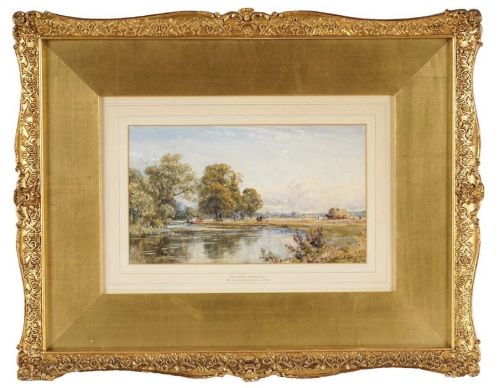
When you search for a framed country scene painting, you find rural watercolours and oils that bring nineteenth and early twentieth-century pastoral life straight onto the wall.
Framed Country Scene Painting
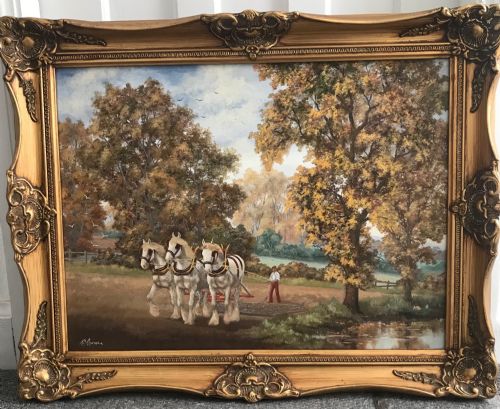
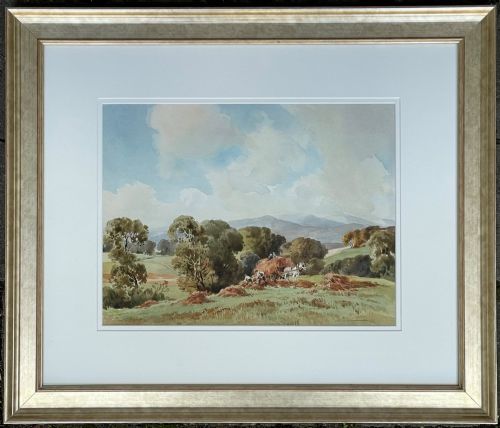
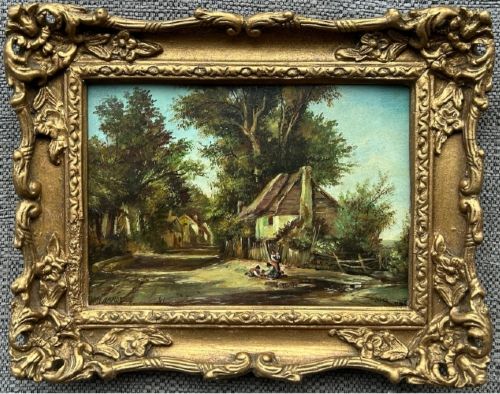
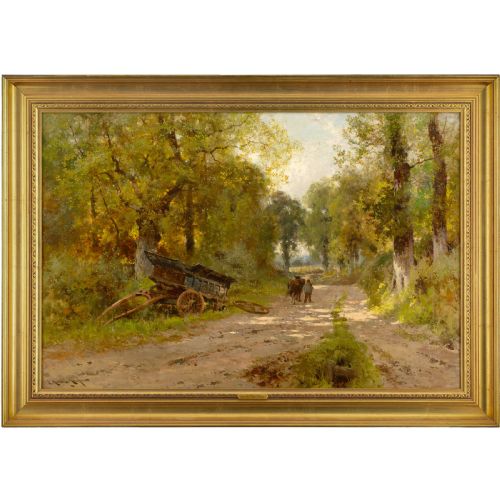
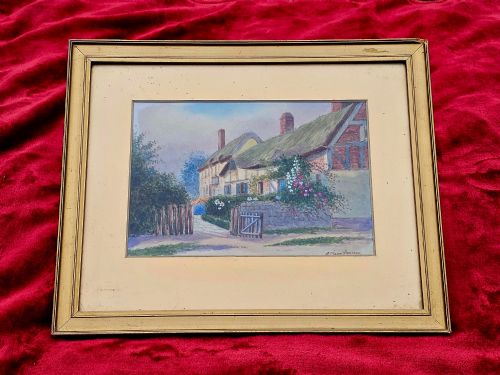
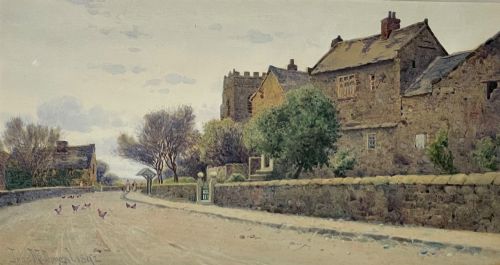
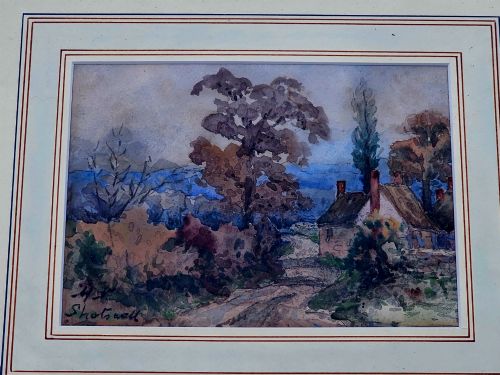
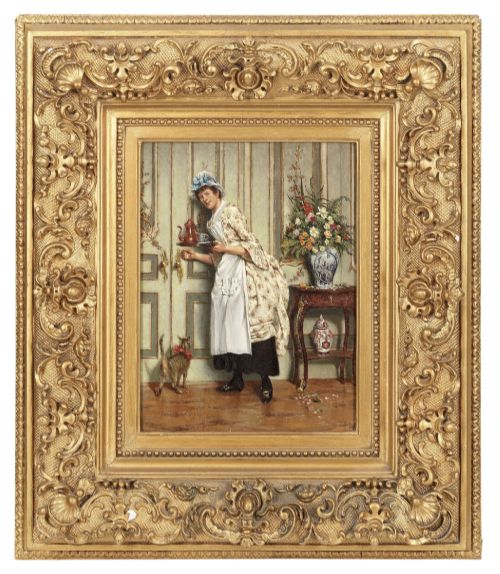
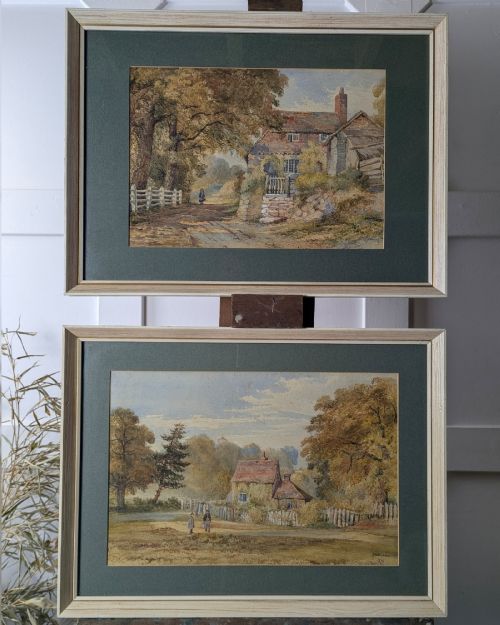
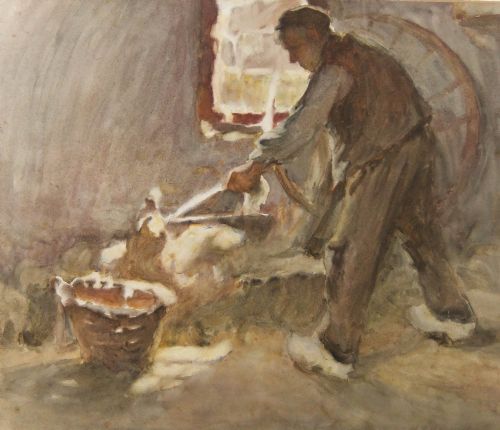
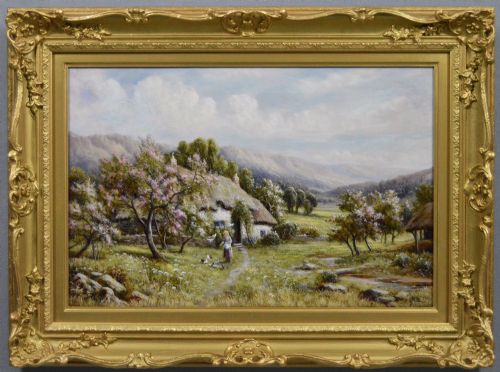
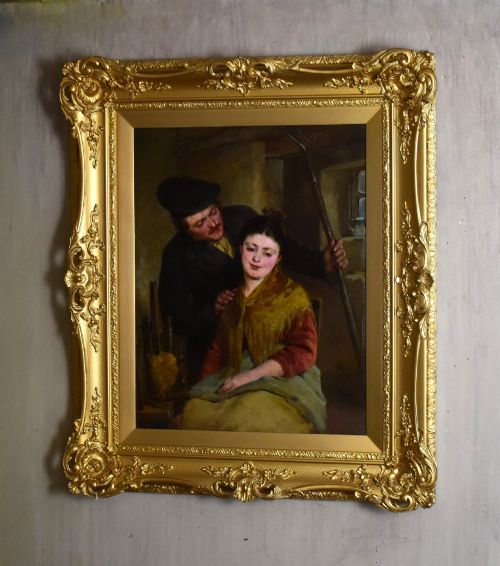
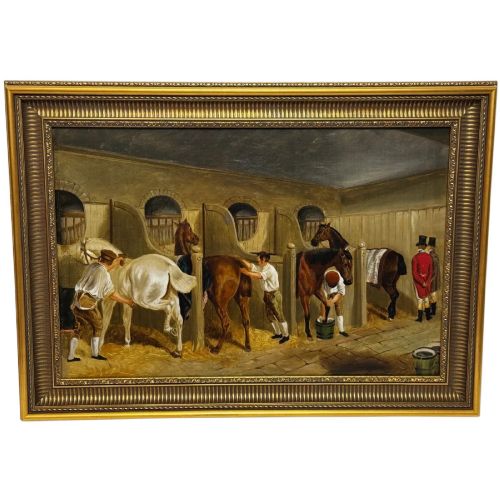
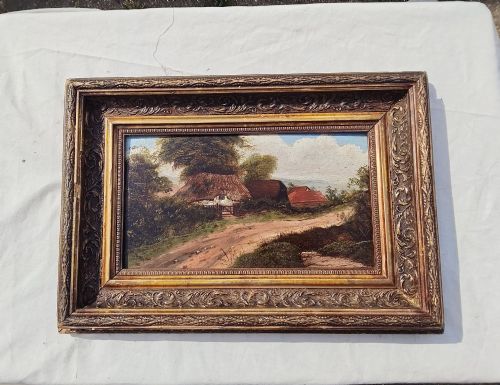
A framed country scene painting captures rural British and European life through pastoral watercolours and oils, depicting everything from harvest landscapes and blacksmiths to farmyard animals and cottage exteriors. The examples met on this page range from Victorian and Edwardian pieces up to mid-twentieth-century works.
Makers recorded in the listings include named artists working in traditional countryside styles, alongside anonymous or British School pieces from the nineteenth century. Subjects frequently include working horses, cattle, shepherds with flocks, and river views.
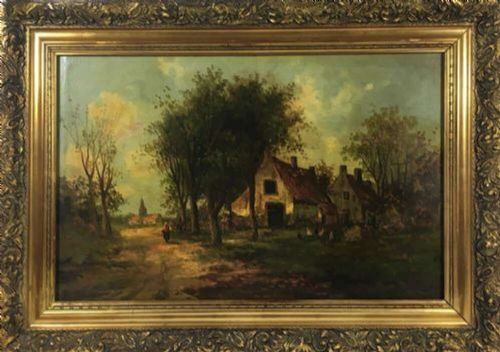
The formats span oil paintings on canvas, panel, board, and card, alongside watercolours on paper, enclosed in period wooden frames often decorated with gesso and gilt.
How they were made
Artists applied oil or watercolour pigments onto surfaces such as canvas, prepared board, wood panels, card, and heavy paper, utilising traditional brushwork to build depth and texture in landscape and genre subjects.
Many works are housed in their original wood frames, frequently enhanced with moulded gesso ornaments and gilt finishes that complement the warm tones of the rural scenes within.
Listings feature works from the eighteenth, nineteenth, and twentieth centuries, using oil, watercolour, wood, and gesso.
What varies in quality
Quality separates through the artist's handling of light, atmosphere, and anatomical proportion in figures and livestock, distinguishing accomplished academic or impressionist works from standard decorative student pieces.
The integrity of the original backing and the preservation of the painted surface, alongside the matching quality of the period giltwood and gesso frame, dictate the overall standing of an individual artwork.
Percy Lancaster·William Howard Hardy·John Horace Hooper·A. Marie Parsons·John McDougal·Stephen Samuel Lewin·Robert A. Nottingham·Henry Silkstone Hopwood·Robert John Hammond·Robert Thorne Waite·Howard Helmick·George Augustus Holmes·Thomas Sidney Cooper·Joseph H Barnes·Raymond Booth·Frederick Walker·Frederick James Kerr·Edgar Hunt·Herbert Royle·Johann Friedrich Voltz·T C Hofland·Henry H Parker·Thomas Walker Bretland·Miles Birkett Foster·Henry Schouten
The Framed Country Scene Painting Glossary
- Oil on canvas
- A painting technique where pigmented oil paint is applied to a woven fabric stretched across a wooden frame. This method allows for rich colour blending and textured brushstrokes.
- Watercolour
- A paint consisting of water-soluble pigments used on paper. It creates luminous, transparent washes often associated with British landscape traditions.
- Giltwood
- Wood that has been coated with a thin layer of gold leaf or gold paint. It frequently frames nineteenth-century oil paintings to add warmth and reflection.
- Gesso
- A plaster-like mixture applied to wood frames to create a smooth surface for moulding decorative reliefs. It supports the application of gilding.
- Genre painting
- The pictorial representation of scenes from everyday life. These works typically feature ordinary people engaged in common activities.
Framed Country Scene Painting: Frequently Asked Questions
What periods do these country paintings cover?
The works seen here span from the eighteenth and nineteenth centuries into the Edwardian era and mid-twentieth century.
Victorian and Edwardian examples appear frequently alongside pieces dated around nineteen-hundred.
Are these paintings supplied in frames?
The listings include framing materials such as wood, giltwood, and gesso alongside the primary canvases and watercolours.
Many pieces retain their period frames, contributing to the historical context of the artwork.
What subjects feature in these scenes?
Common subjects include rural farmyards, cottage exteriors, river landscapes, and working agricultural animals like shire horses and cattle.
Genre scenes depicting figures at rest or labour also recur across the selection.
How do oils and watercolours differ here?
Oils use pigment suspended in drying oils applied to canvas, board, or panel, offering heavy texture and deep colour.
Watercolours utilise water-soluble pigments on paper, producing lighter, translucent compositions.