




Classic Rural Landscape Art
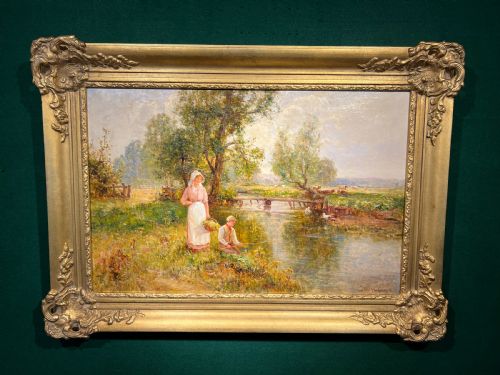
Classic rural landscape art brings the pastoral quiet of the countryside indoors through enduring oil and watercolour scenes.
Classic Rural Landscape Art
Classic rural landscape art comprises oil paintings and watercolour works capturing nineteenth-century and early twentieth-century pastoral life, country scenes, and natural settings. These pieces range from Victorian pastoral works and British Impressionism to Edwardian pastoral scenes and nineteenth-century realism.
Buyers viewing this page will most frequently encounter framed oil paintings on canvas depicting rural subjects such as sheep grazing in fields, river views, village taverns, and harvest times. The selection spans specific periods including the Victorian era, eighteen-sixty, eighteen-ninety, nineteen-hundred, nineteen-ten, and nineteen-forty.
The subjects focus heavily on traditional British countryside life, featuring animals like sheep and geese alongside human figures engaged in boating, harvest, or daily rural activities. Each piece reflects the artistic style of its specific decade, moving from nineteenth-century realism toward British Impressionism.
How these pieces were made
The works rely upon oil paint applied to canvas or watercolour pigment on paper, capturing the varied light and texture of the countryside. Artists built up their compositions using traditional brushwork suited to landscape and genre painting.
Many of these artworks are housed within their original or period frames constructed from wood and finished with gilt or giltwood. These frames provide a complementary architectural border that enhances the depth of the painted scene.
The selection includes genre paintings, animal portraits, and pastoral views created by nineteenth-century realism and impressionist painters.
What varies in quality
Quality in classic rural landscape art depends upon the artist's ability to render light, atmosphere, and natural detail convincingly within the composition. Stronger examples demonstrate confident brushwork and a harmonious palette that brings the pastoral setting to life.
The condition and authenticity of the frame also contribute to the overall integrity of the piece, particularly when original gilt wood surrounds are preserved. Works by recognised regional or period painters typically exhibit superior compositional balance.
William Henry Mander·James L Brooke·Frederick J Knowles·Ernest Walbourn·Alfred Banner·B W Leader·William Stephen Coleman·John Holland Snr·David Bates
The Classic Rural Landscape Art Glossary
- Oil on canvas
- A painting technique utilising pigments suspended in drying oils applied directly to a stretched fabric support. This method allows for rich colour depth and textured impasto work.
- Giltwood frame
- A wooden picture surround coated with a thin layer of gold leaf or metallic gilt powder. These frames often feature ornate moulding characteristic of the Victorian and Edwardian periods.
- British Impressionism
- An artistic movement focusing on everyday subject matter and the transient effects of natural light. Painters working in this style employed looser brushstrokes and outdoor observation.
- Watercolour painting
- An artwork created using water-soluble pigments on paper supports. This medium produces translucent washes and delicate atmospheric effects.
- Genre painting
- The pictorial representation of scenes from everyday life, ordinary people, and domestic or rural activities. These works often include figures engaged in common rural tasks.
Classic Rural Landscape Art: Frequently Asked Questions
What periods do these paintings cover?
The available artworks span the nineteenth century, including Victorian examples, through to early twentieth-century pieces up to nineteen-forty. This covers periods of traditional realism, Victorian pastoral, and British Impressionism.
Each era brings distinct stylistic touches to the depiction of the British countryside, reflecting the changing artistic approaches of the nineteenth and twentieth centuries.
What subjects appear in these landscapes?
Common subjects include pastoral scenes with resting sheep, river views with children boating, village taverns, and harvest time activities. Human figures and rural animals frequently anchor the compositions.
These motifs capture the traditional rhythms of country life before widespread industrialisation changed the rural landscape permanently.
How should I frame and display them?
Many pieces retain their original gilt wood frames, which complement the traditional oil and watercolour mediums. Displaying them away from direct sunlight protects the canvas and pigment from fading.
Ensuring stable indoor humidity levels also helps preserve both the wooden frames and the integrity of the painted canvas over time.
How do I identify a Victorian pastoral work?
Victorian pastoral paintings typically emphasise sentimental or idealized views of rural labour, often featuring livestock, rolling hills, and domestic animals. The palette leans towards natural earthy tones and soft lighting.
Signatures, date inscriptions, and period framing styles further help date and attribute these specific nineteenth-century works.