
Victorian Countryside Art
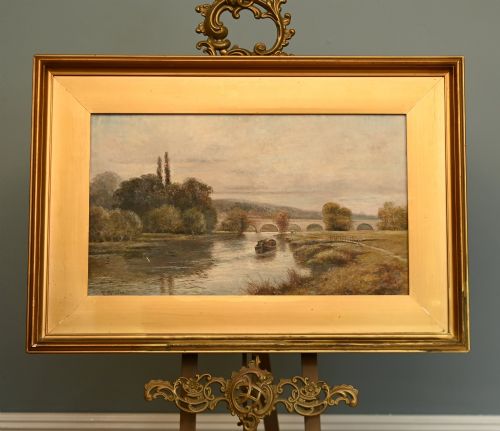
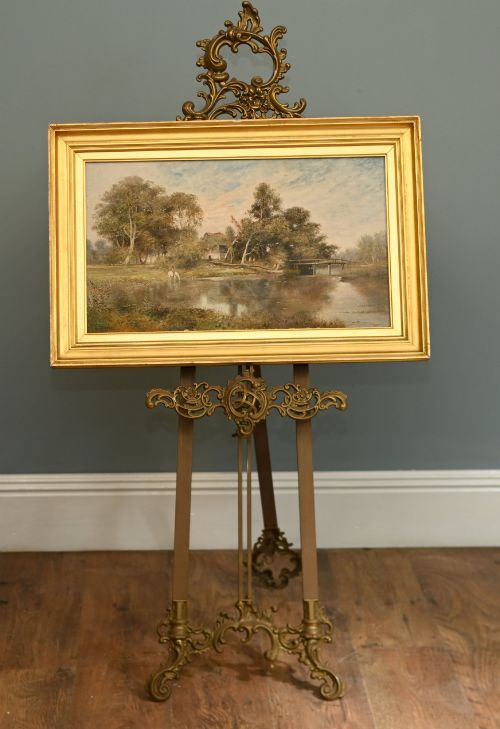
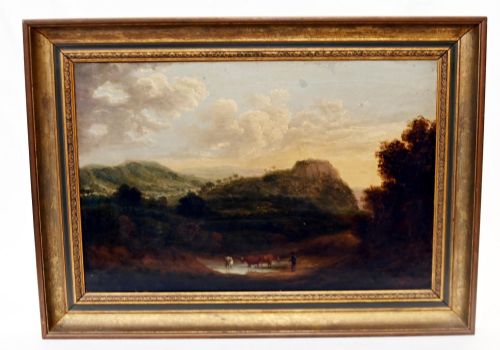
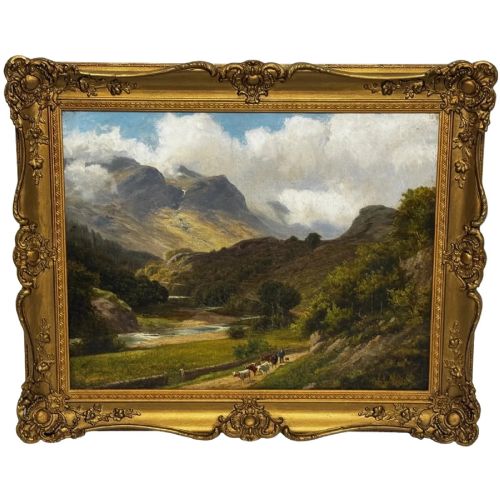
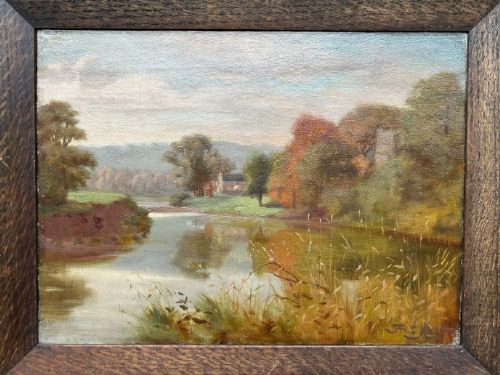
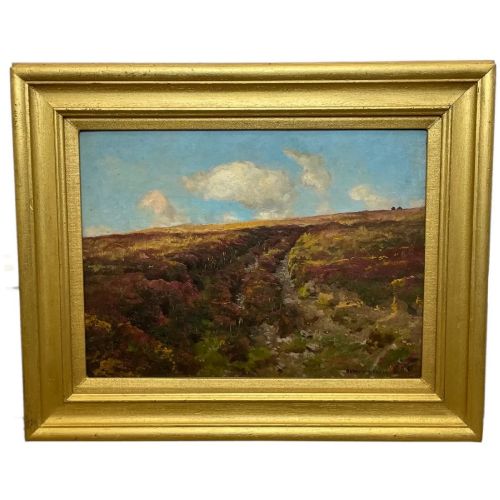
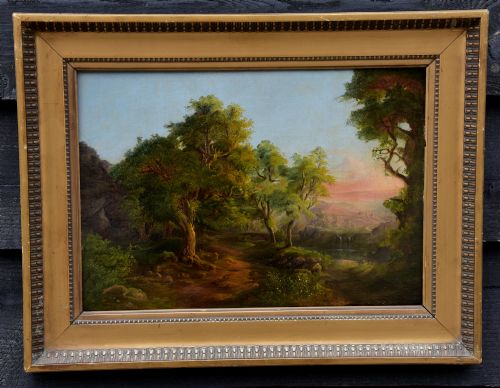
When you search for victorian countryside art, you are looking at pastoral oils and watercolours capturing rural Britain.
Victorian Countryside Art
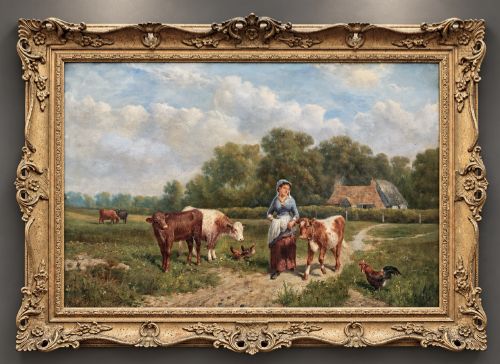
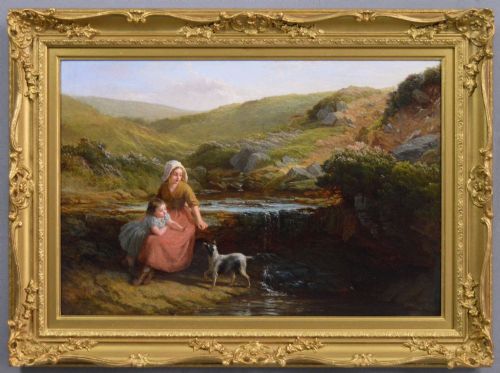
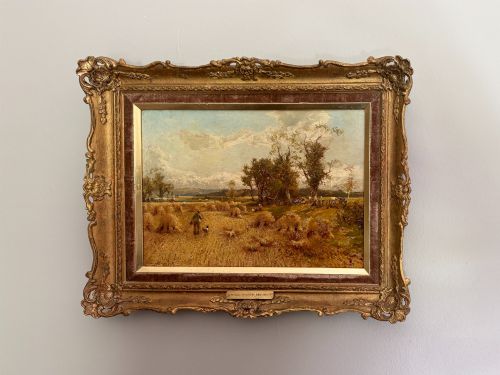
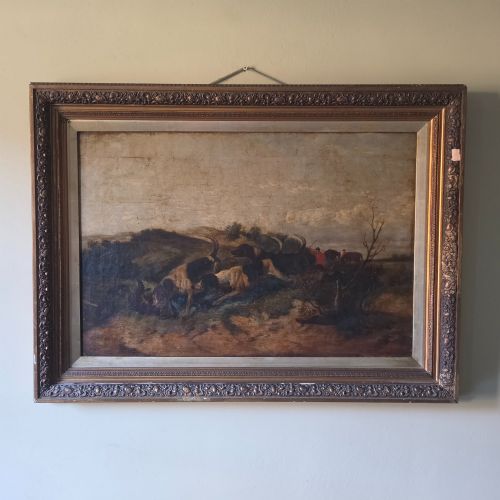
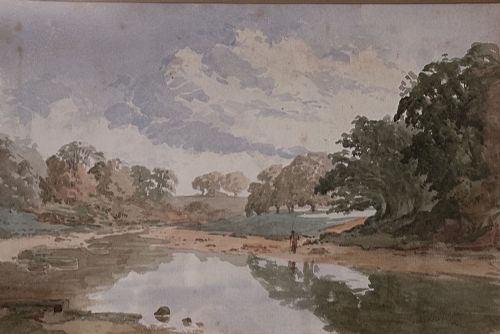
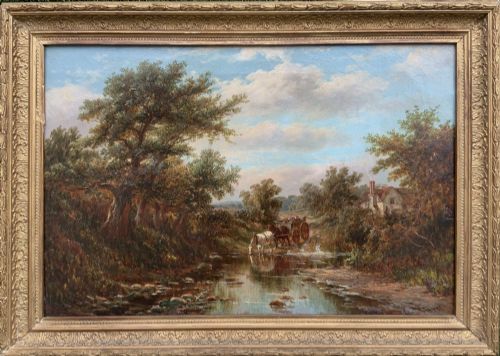
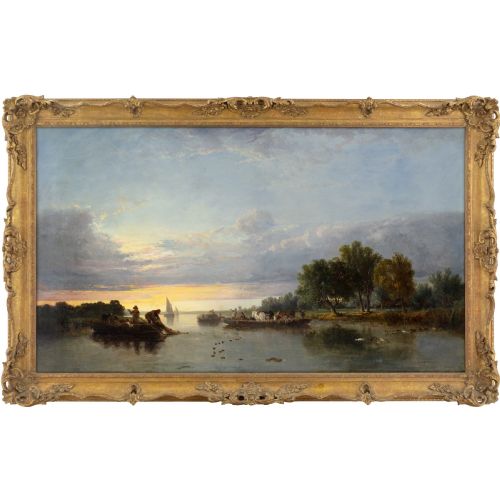
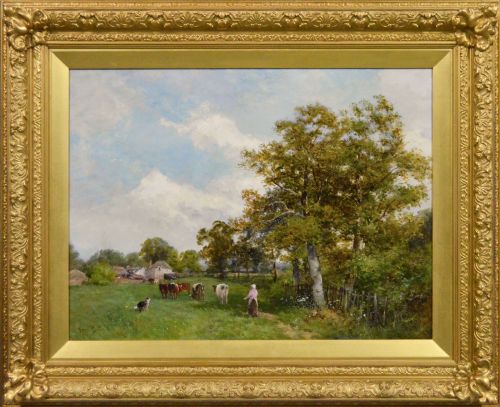
Victorian countryside art comprises paintings created primarily during the nineteenth century, focusing on pastoral scenes, river landscapes, and rural labourers.
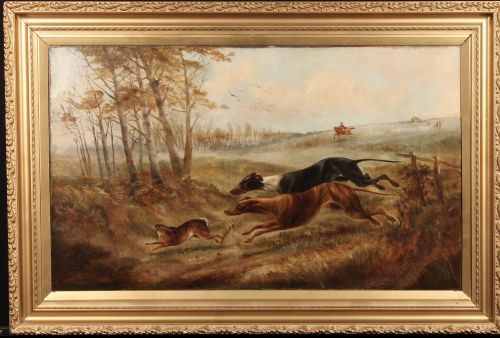
The pieces you meet most often on this page take the form of framed oil paintings on canvas or board, alongside watercolours on paper.
Subjects range from Welsh mountain views and Northumbrian riversides to harvest scenes and farmland populated by figures or livestock.
Materials and Methods
Artists painted primarily with oil paint on stretched canvas or wooden boards, or applied watercolour pigments onto paper.
Canvases were frequently housed in gilded wood or giltwood frames that complemented the tonal depth of the landscape.
Brushwork varies from tight, detailed realism to looser applications influenced by Barbizon and naturalistic movements.
Several sheep make repeat appearances across different Gloucestershire hillsides.
Judging the Work
Quality rests on the confidence of the brushwork and the artist's ability to render light, atmosphere, and spatial depth within the rural setting.
Stronger examples display considered composition, where figures or animals integrate naturally into the topography rather than appearing static.
The preservation of the original paint surface and the suitability of the period frame contribute significantly to the standing of an individual piece.
Richard Sebastian Bond·Frederick Marriott·Arthur Wardle·David Bates·Frederick Walker·Richard Redgrave·John Horace Hooper·Alfred George Morgan·Charles Gregory·William Henry Mander·Arthur Tucker·James William Booth·Alfred Augustus Glendening Jnr·William Sydney Cooper·Thomas Hunn·Sidney Richard Percy·James Orrock·Thomas Spinks·Robert John Hammond·Robert Thorne Waite·Charles Vickers·Henry Bailey·William Mellor·Walter J Watson·John Linnell
The Victorian Countryside Art Glossary
- Oil on canvas
- Pigment suspended in drying oil applied to a woven fabric support. This combination allowed artists to build rich textures and blend colours across the landscape.
- Watercolour
- Water-soluble pigment paint applied to paper. It produces translucent washes of colour well suited to capturing changing weather and skies.
- Giltwood
- Wood carved and coated with a thin layer of gold leaf or gilt. These frames were standard for presenting finished oil paintings.
- Pastoral
- A style of art depicting country life in a rural, idealized manner. These scenes often feature shepherds, cattle, and agricultural workers.
- British School
- A classification used for works produced by artists working in Britain during a specific period. It groups together painters sharing regional stylistic influences.
Victorian Countryside Art: Frequently Asked Questions
What subjects appear in these paintings?
The compositions record rural British life, featuring river valleys, harvesting scenes, woodlands, and mountainous regions in Wales and England.
Animals and human figures frequently populate the foregrounds, depicting daily agricultural labour and travel.
How do oils and watercolours differ?
Oil paintings utilise viscous pigments on canvas or board, allowing for heavy impasto, rich layering, and deep tonal ranges.
Watercolours employ translucent pigments on paper, creating lighter, more luminous effects that suit open skies and river views.
Where should I hang these artworks?
These pieces suit traditional reception rooms, studies, or hallways where natural light complements the earthy tones of the landscape.
Direct sunlight should be avoided to prevent fading on watercolour paper and crazing on oil paint surfaces.
How do I identify the period?
Dating relies on stylistic clues, framing methods, artist signatures, and inscriptions recording locations and dates on the reverse.
Nineteenth-century works often reflect shifts from romanticism towards naturalism and realism in British art.