



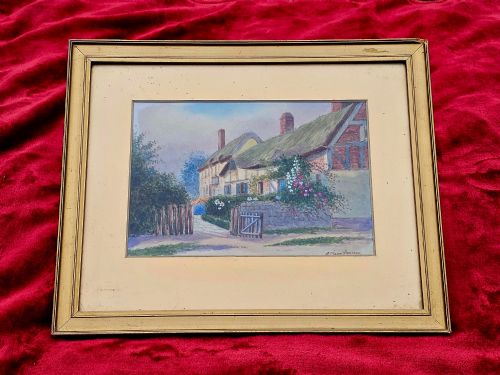
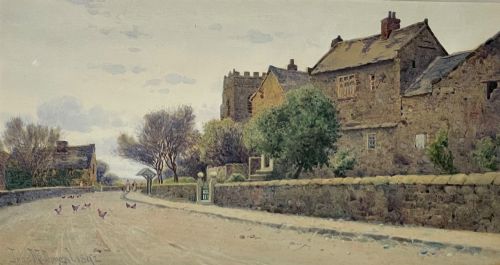
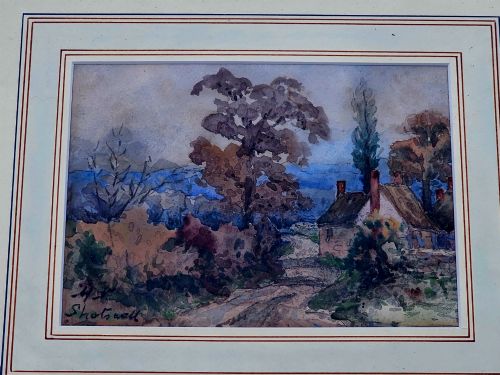
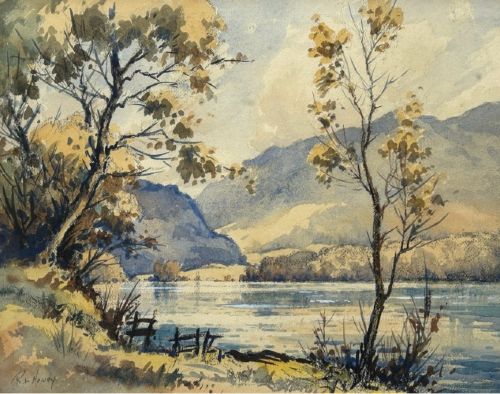
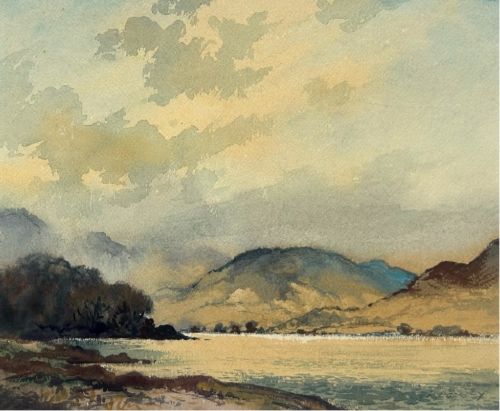
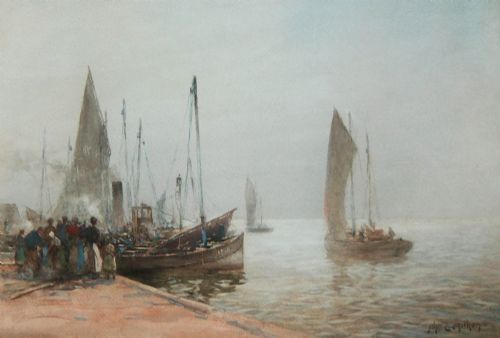
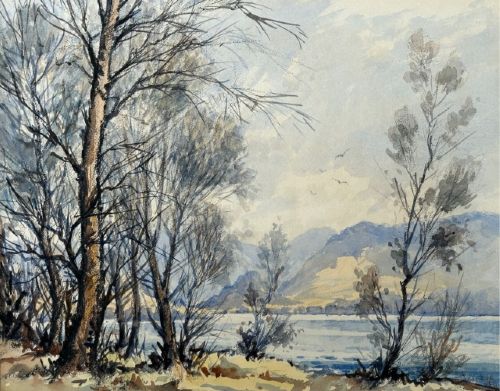
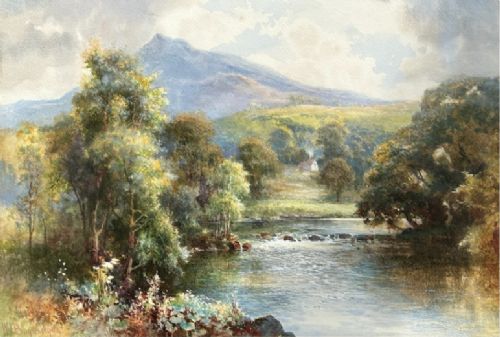
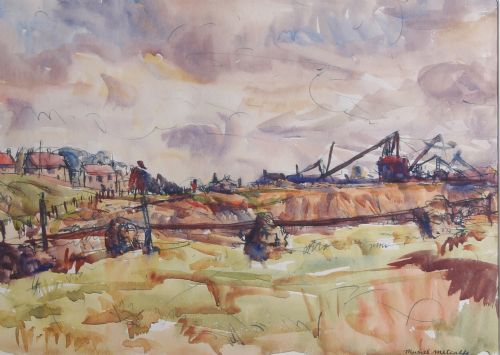
Paper Watercolour Landscape Painting
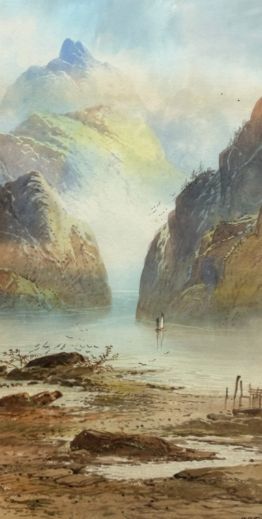
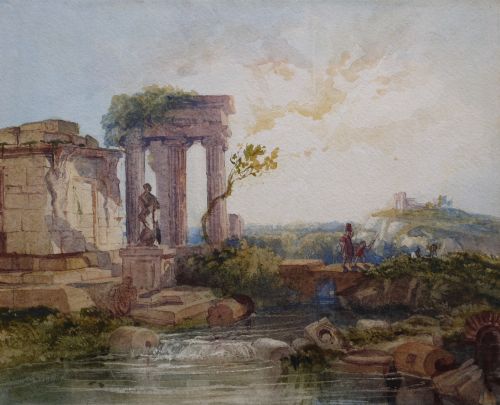
These paper watercolour landscape painting works bring quiet countryside views and coastal scenes straight to your wall with delicate pigment.
Understanding paper watercolour landscape painting
A paper watercolour landscape painting captures scenes of rural life, coastal bays, and village cottages using water-soluble pigments on paper supports. Buyers examining this selection will find works ranging from nineteenth-century village streets to early twentieth-century views of Yorkshire and Devon.
The pieces on this page span the Victorian era, the Edwardian period, and the early twentieth century. Common subjects include English country gardens, coastal harbours, and rolling northern dales rendered by regional artists.
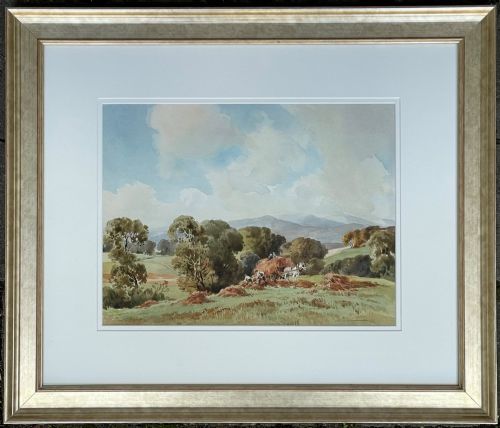
Most examples originate from British hands, capturing local topography with direct observation. These works frequently arrive mounted behind glass within wooden frames that protect the fragile paper surface.
Materials and technique
Artists applied watercolour paint and pigment directly onto paper supports, occasionally utilising specialised surfaces such as buff paper, laid paper with maker watermarks, or embossed drawing paper. These lightweight grounds demanded a swift, confident hand from the painter.
Pigments were thinned with water to create translucent washes that allowed the bright white of the paper beneath to illuminate the sky and water. Painters built up depth through layered washes and fine brushwork for architectural details or foliage.
Retail Price Guide 2026
Typical UK retail prices for paper watercolour landscape painting, calculated from the Sellingantiques database of over a million retail prices indexed since 2003. This retail price guide relies exclusively on Sellingantiques data; no external sources or auction records are used, so the figures do not describe the wider market.
Curious sheep occasionally wander into the background of Yorkshire landscapes, seemingly judging the artist's brushwork.
Assessing quality
Superior works demonstrate a controlled handling of light and atmospheric perspective, capturing distant hills or coastal haze with subtle tonal shifts. Weaker examples often rely on heavy, flat washes that obscure the natural luminosity of the paper.
The strength of the composition and the confidence of the brushwork distinguish ambitious exhibition pieces from modest topographical sketches. Condition also plays a role, as clean paper free from heavy foxing preserves the intended vibrancy of the original pigments.
F A Roylance·Fred Lawson·James Thomas Watts·Robert Hollands Walker·John D Walker·Theresa Sylvester Stannard·David Bates·Alfred Leyman·Julius Schnorr von Carolsfeld·David Cox·Alfred George Webster·Tristan Lacroix
The Paper Watercolour Landscape Painting Glossary
- Watercolour paint
- A medium consisting of colour pigments suspended in a water-soluble vehicle. It produces transparent layers that reflect light through the paper.
- Laid paper
- A type of handmade paper featuring a grid of fine parallel lines left by the wire mould during production. It provides a textured surface for early paintings.
- Grisaille
- A painting executed entirely in shades of grey or neutral monochrome. This technique often served to mimic the effect of stone relief or print illustrations.
- Foxing
- Brown spots or patches caused by chemical reactions in the paper over time. It appears frequently in older works kept in damp conditions.
- Watermark
- A recognizable image or pattern in paper that appears darker when viewed against light. Makers used these marks to identify their mill and quality.
Frequently Asked Questions
Are these paintings original?
Every piece recorded here is an original hand-painted work rather than a modern print or reproduction. Artists applied wet paint directly to paper supports during the nineteenth and early twentieth centuries.
Brush texture and subtle variations in pigment density confirm the hand of the artist. Close inspection often reveals faint pencil underdrawings beneath the watercolour washes.
How do I identify the period?
Examine the paper type, framing materials, and artist signatures against known exhibition records. Victorian and Edwardian works frequently employ specific muted palettes and traditional subject matter.
Costume details in figures or architectural styles depicted in the landscape help narrow down the decade. Handwritten inscriptions on the reverse often supply exact locations and dates.
What is buff paper?
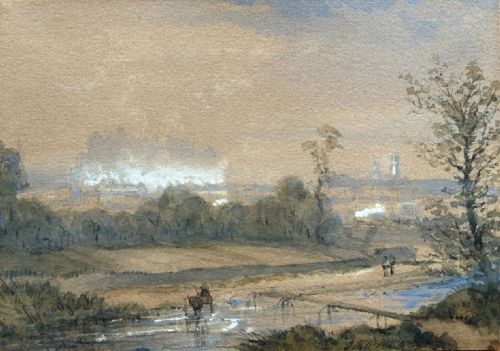
Buff paper is a pale yellowish-brown or tan paper stock used by artists to provide an immediate mid-tone background. Painters utilised the tinted ground to build up highlights with white bodycolour.
This paper type gives landscapes a warm, atmospheric quality without requiring the artist to paint every inch of the sheet. It appears frequently in rural sketches from the Edwardian era.