



Victorian Cottage Scene Painting
A victorian cottage scene painting captures the rustic charm and domestic tranquility of nineteenth-century rural life.
Victorian Cottage Scene Painting
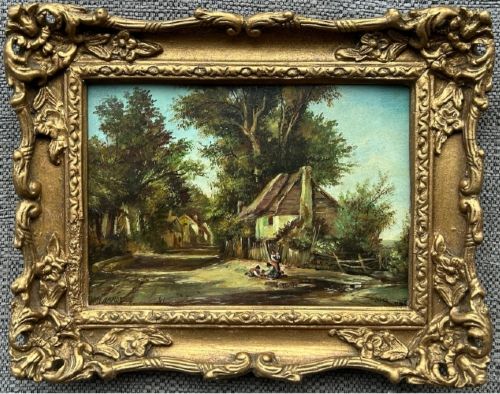
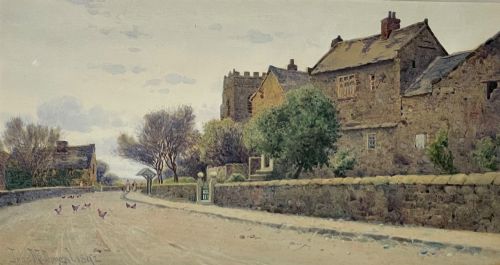
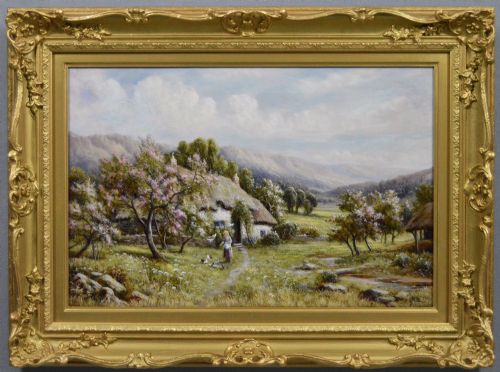
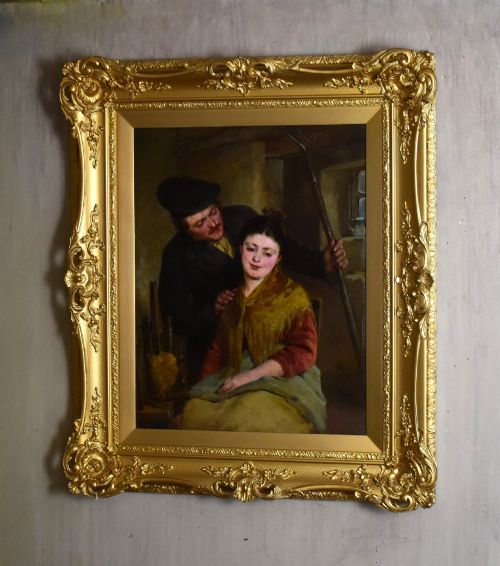
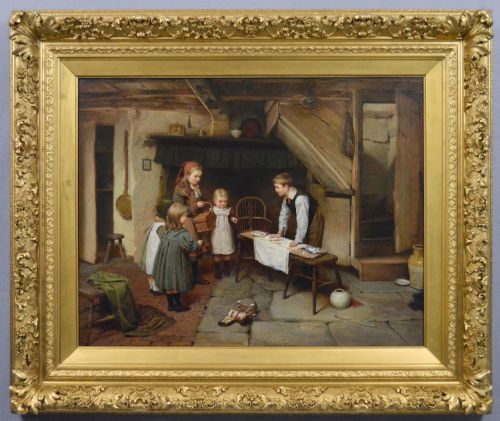
A victorian cottage scene painting depicts domestic rural life, pastoral landscapes, and domestic interiors involving figures near traditional homes. These works reflect a widespread nineteenth-century fascination with the peace and simplicity of the British countryside, often showing families, children, or farm workers.
The selections available here range from detailed watercolour paintings to robust oil paintings on canvas and panel. Many pieces also feature specific regional settings, including Welsh cottages, Scottish crofts, and English villages.
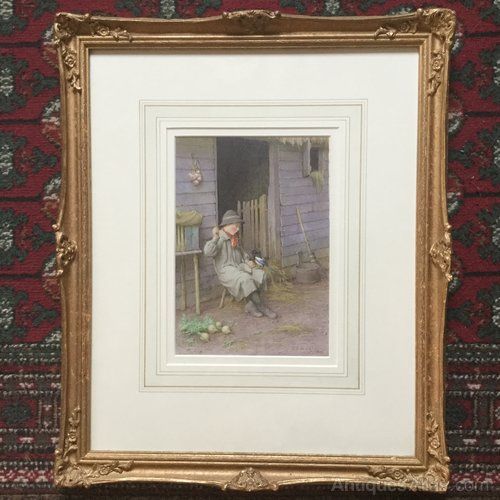
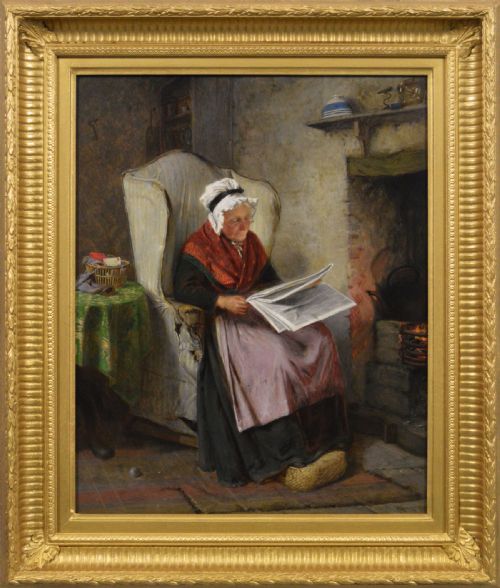
Artists working in this tradition recorded specific architectural details like thatched roofs and leaded glass windows alongside everyday activities such as feeding geese, tending to cattle, or resting by the fireside. Buyers will find both intimate interior genre scenes and expansive rural landscapes framed in period wood and gilt.
Materials and execution
Painters of this period utilised oil paint on prepared canvas or wood panel, as well as watercolour pigments applied to heavy paper. Oil mediums allowed artists to build rich layers of colour and texture, particularly in domestic interiors and clothing.
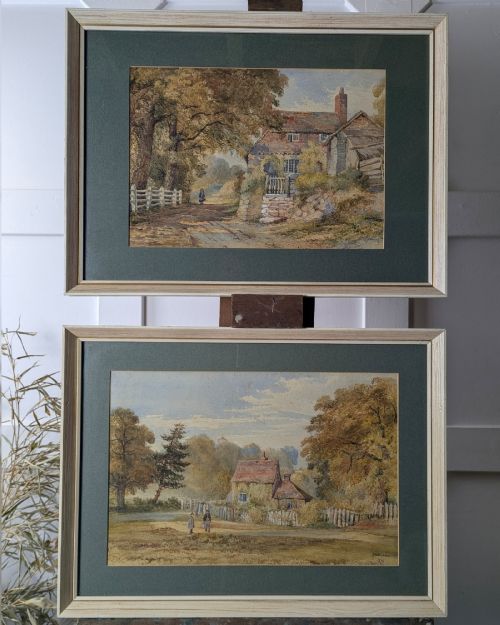
Watercolour works relied on careful washes and fine brushwork to capture the soft light of rural landscapes and village scenes. Many surviving pieces retain their original wooden frames, frequently finished in gilt to complement the composition.
The selection spans from the Victorian era into the Edwardian period, utilising oil paint, watercolour, and glass as primary mediums.
Assessing the work
Quality in these pastoral works rests upon the artist's ability to render light, shadow, and human expression within a natural setting. Superior examples display confident brushwork, careful anatomical proportion in figures and animals, and a balanced composition that draws the eye into the domestic narrative.
The handling of atmospheric perspective in the surrounding landscape and the preservation of the original pigments also distinguish finer pieces. Works by exhibited royal academicians or established regional painters generally demonstrate a higher degree of technical mastery.
William Howard Hardy·John McDougal·Robert A. Nottingham·Robert John Hammond·Howard Helmick·Charles Edward Wilson·Harry Brooker·Alexander Rosell·Haynes King·James Kyd·James Hardy Junior·Frederick James Knowles·George Smith·Charles Vickers·William Henry Knight·Robert Finley McIntyre·Helena Maguire·Harry Sylvester Stannard·Henry Charles Fox·Will Anderson·Robert Hollands Walker·David Woodlock·Henry Spernon Tozer·Harry Pennell·Joseph Kirkpatrick
The Victorian Cottage Scene Painting Glossary
- Genre painting
- Depiction of aspects of everyday life by subjects taken from ordinary life, such as domestic interiors or cottage scenes. These works tell a visual story about the social habits of the period.
- Watercolour
- Painting method in which the paints are made of pigments suspended in a water-soluble vehicle. This technique creates translucent washes of colour particularly favoured for English rural landscapes.
- Oil on panel
- A painting executed on a wooden board rather than stretched canvas. This rigid support provides a stable and smooth surface for fine detail work.
- Gilt wood
- Wood that has been treated with a gold leaf or gold-coloured finish. Frames of this type were designed to enhance the visual depth of the artwork.
Victorian Cottage Scene Painting: Frequently Asked Questions
What subjects appear in these paintings?
These artworks typically show rural cottages, farming landscapes, and domestic scenes involving families, children, and farm animals. Common activities depicted include spinning, feeding livestock, and resting by the fire.
Many compositions focus on specific regional architecture, such as thatched roofs and country inns, capturing the daily rhythms of nineteenth-century village life.
How do I care for an antique watercolour?
Watercolours are sensitive to direct sunlight, which can cause the pigments to fade over time. Display them away from strong light sources and maintain stable indoor humidity levels.
Ensure the framing uses acid-free mount boards to prevent the paper from discolouring or developing age spots over the decades.
What is the difference between oil and watercolour?
Oil paintings utilise pigments suspended in drying oils applied to canvas or wood panels, allowing for heavy texture and rich colour layering. Watercolours use water-soluble pigments on paper, producing a luminous and translucent effect.
Oils are generally more robust and traditionally housed in heavier gilt frames, while watercolours require glass protection.
Where were these rural scenes painted?
Artists travelled across the British countryside to record picturesque locations in regions such as Wales, Scotland, and various English counties. Specific settings include the Wirral, the New Forest, and rural Somerset.
These locations provided the traditional vernacular architecture and pastoral settings favoured by nineteenth-century genre painters.