
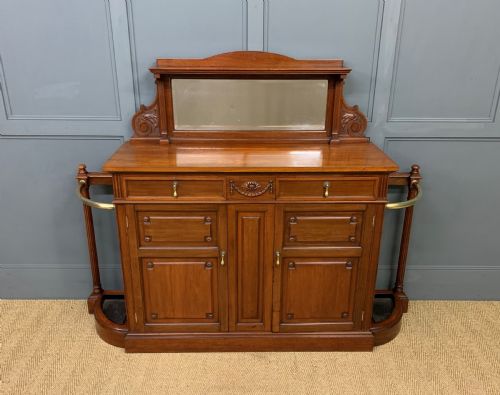
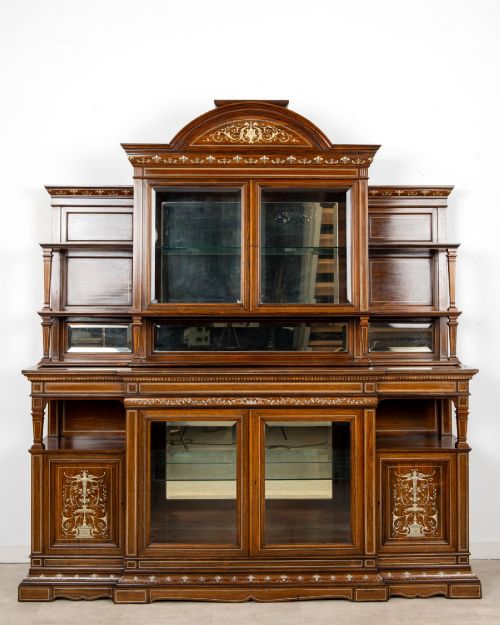
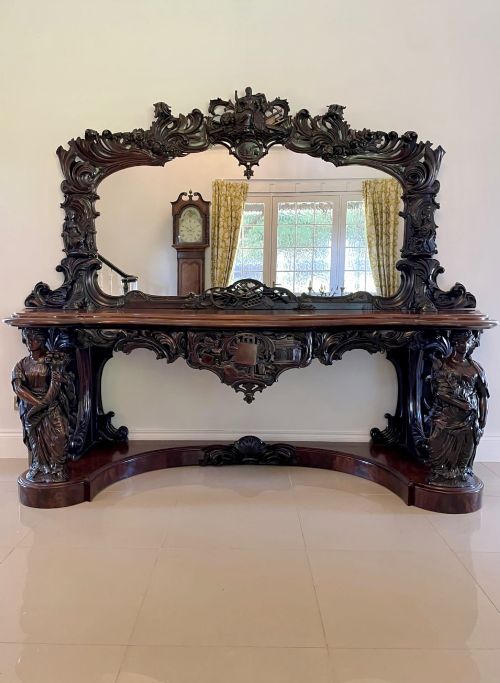
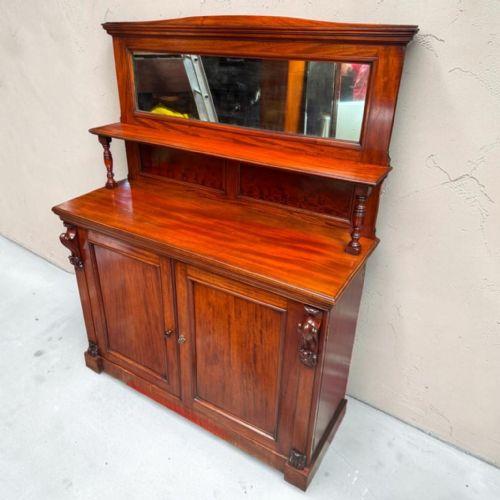

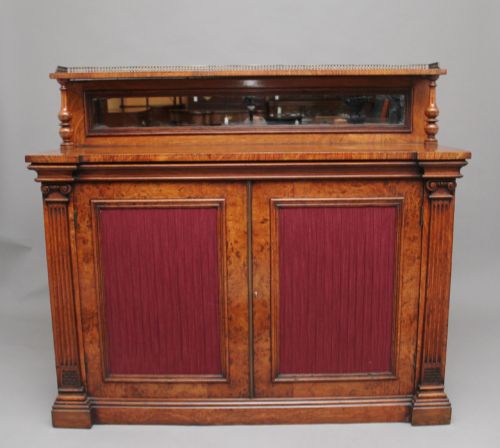

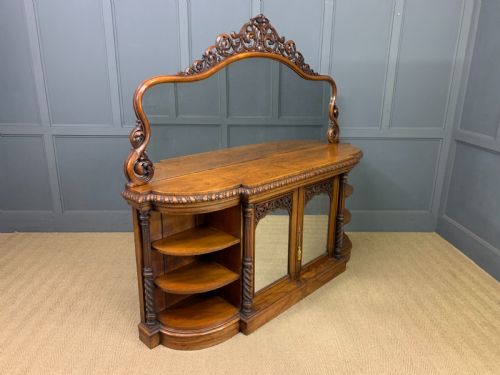
Victorian Mirror Back Credenza
These substantial victorian mirror back credenza examples bring depth and reflection to a room, offering both display space and grand presence.
What They Are
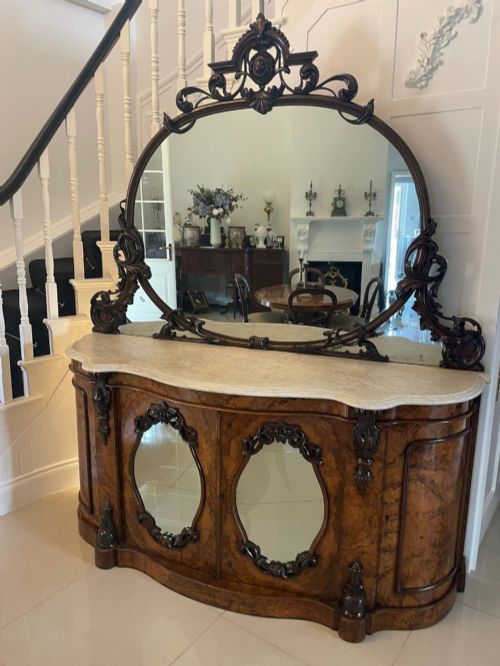
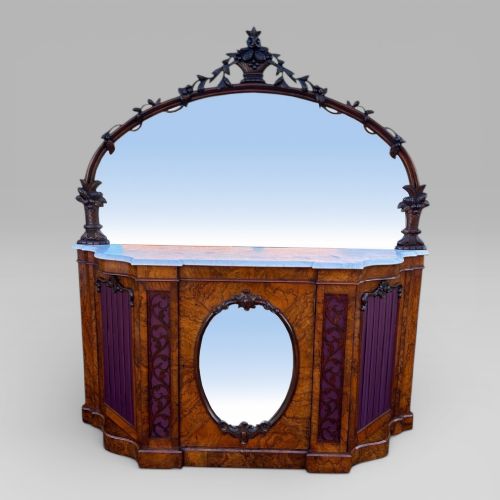
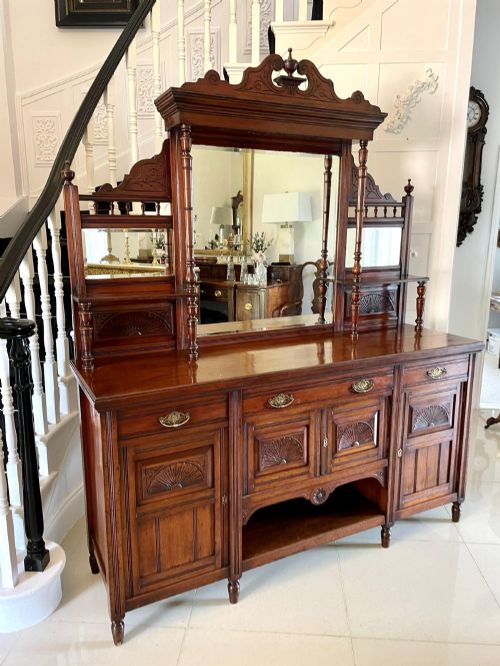
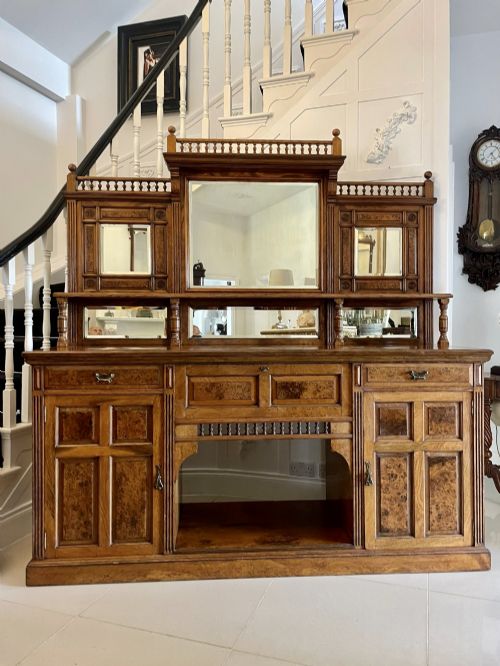
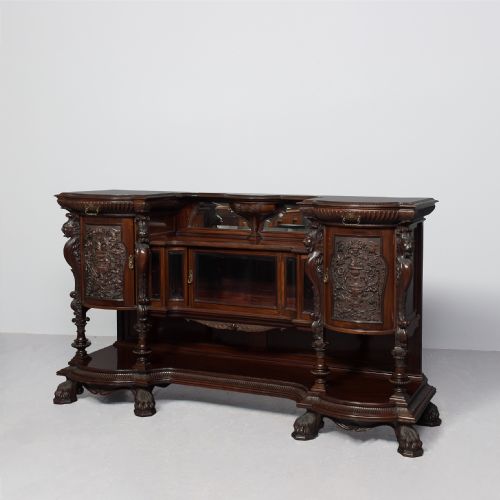
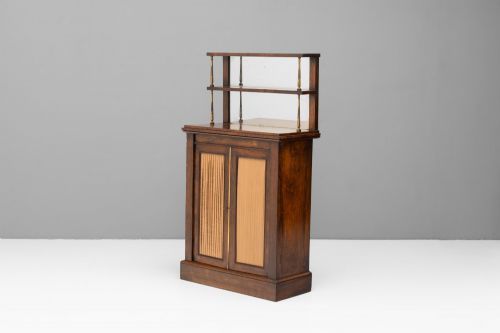
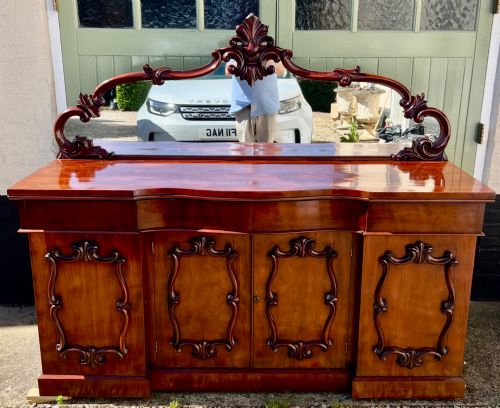
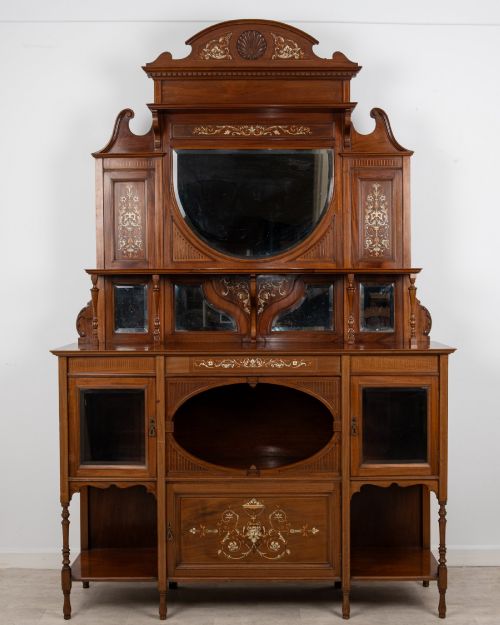
A victorian mirror back credenza combines a low-slung cabinet base with an integrated superstructure holding a plate glass mirror, creating a striking focal point for a principal reception room. Most pieces found here date from the nineteenth century, spanning early Victorian serpentine shapes through to late Victorian and Gothic Revival variations.
The form frequently incorporates display cabinets, sideboards, and chiffoniers alongside the core credenza design. Makers such as Shoolbred and Co also contributed related hallway and storage cabinetry within the same decorative vocabulary.
How They Were Made
Cabinetmakers built these pieces using substantial timbers including walnut, burr walnut, pollard oak, and mahogany. Surfaces were frequently enhanced with intricate inlaid marquetry and specimen wood details to accentuate the natural grain of the wood.
Structural and decorative enrichment relied on cast iron, brass, and ormolu mounts, paired with shaped sheet glass for the central mirror backs. Carved wooden elements, such as acorns and leaves, added relief to the robust mahogany and walnut carcasses.
Retail Price Guide 2026
Typical UK retail prices for victorian mirror back credenza, calculated from the Sellingantiques database of over a million retail prices indexed since 2003. This retail price guide relies exclusively on Sellingantiques data; no external sources or auction records are used, so the figures do not describe the wider market.
Early Victorian makers carved tiny wooden acorns and oak leaves onto credenza frames, adding secret forest details for guests to discover.
What Varies in Quality
The distinction between standard production and top-tier examples rests upon the selection of timber and the ambition of the carving. Finely figured burr walnut and rich pollard oak paired with heavy ormolu mounts elevate a piece significantly above simpler veneered alternatives.
Execution of inlaid marquetry and the clarity of the mirror glass differentiate workshop outputs. Pieces displaying fully developed Gothic Revival architectural details or intricate serpentine shaping represent the upper echelon of surviving stock.
Shoolbred and Co
The Victorian Mirror Back Credenza Glossary
- Credenza
- A low cabinet or sideboard, typically featuring central doors flanked by curved glass display sections. This form sits low to the floor and often supports a mirrored superstructure.
- Burr Walnut
- A highly prized wood veneer taken from the warted growths on walnut trees. It yields complex, swirling grain patterns favored for high-status Victorian furniture fronts.
- Ormolu
- Gilded bronze or brass applied as decorative mounts and feet on fine cabinetry. It provides metallic contrast against dark woods like walnut and mahogany.
- Gothic Revival
- An architectural and decorative style popular in the nineteenth century. It draws inspiration from medieval forms, featuring pointed arches, tracery, and robust carved details.
- Serpentine
- A furniture front or surface curved with a convex centre flanked by concave ends. This undulating shape requires advanced woodworking skill to execute cleanly.
Frequently Asked Questions
Where did people put a credenza?
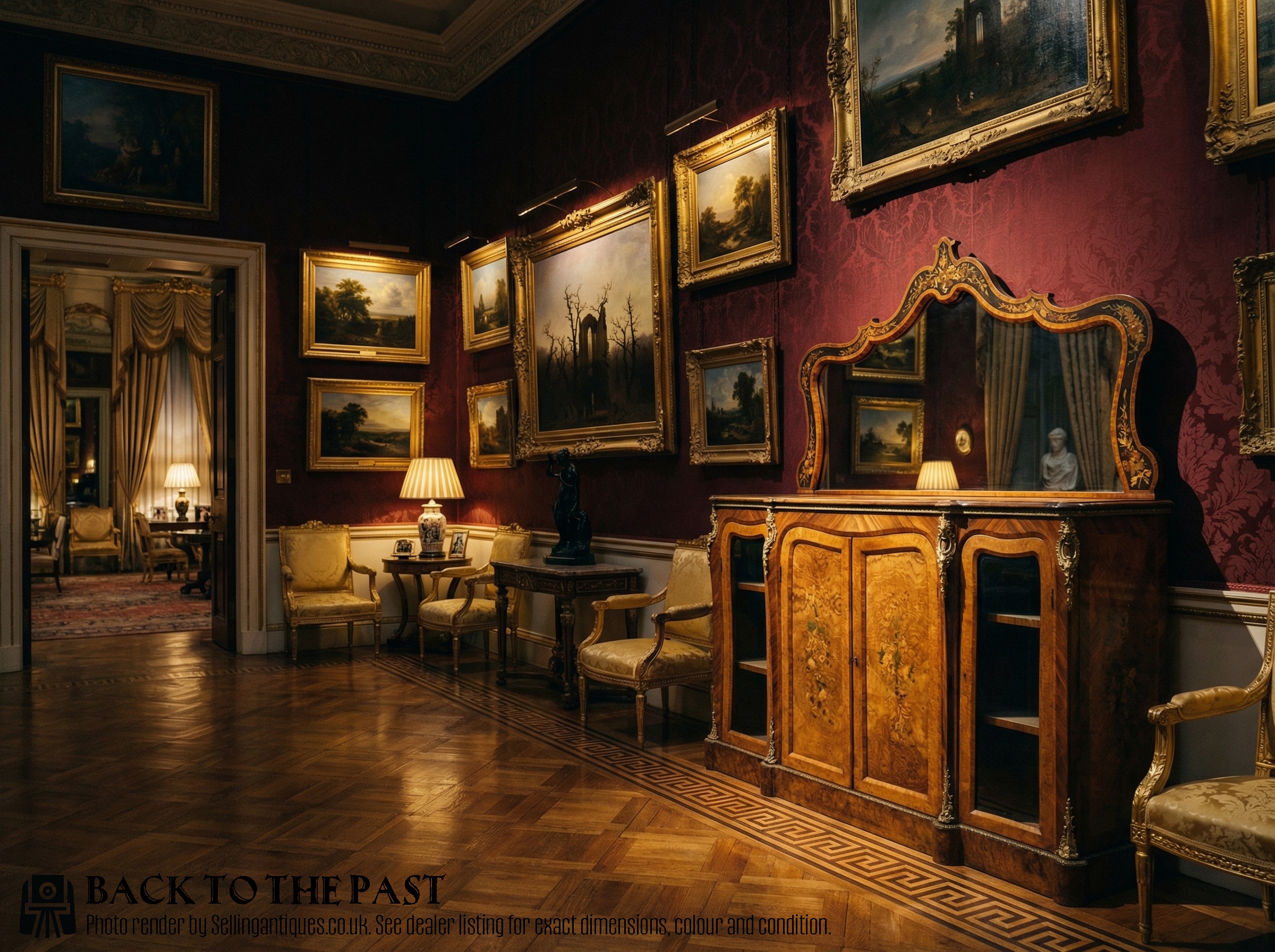
These large cabinets typically stood against the main wall of a Victorian dining room or formal drawing room. They served both as serving surfaces and as display areas for porcelain and silver.
The integrated mirror reflected candlelight and natural window light, brightening darker nineteenth century interiors while adding a sense of expanded room depth.
How do I identify a Gothic Revival piece?
Gothic Revival examples display architectural motifs borrowed from medieval buildings rather than classical or rococo styles. Look for pointed arches, heavy structural mouldings, and robust carved elements.
Woods such as pollard oak frequently appear in these more austere, architectural designs alongside traditional walnut.
What is burr walnut?
Burr walnut is a decorative wood veneer harvested from the knotty burls of walnut trees. It produces intricate, swirling patterns that cabinetmakers used on the primary display surfaces of high-end furniture.
This material is a primary indicator of quality among nineteenth-century credenzas and sideboards.
How do I care for polished walnut furniture?
Keep these pieces away from direct sunlight and steady heat sources to prevent the burr walnut veneer from drying and lifting. Dust gently with a dry, soft cloth and avoid modern aerosol polishes.
Wax can be applied sparingly to maintain the finish and protect the timber grain over time.