
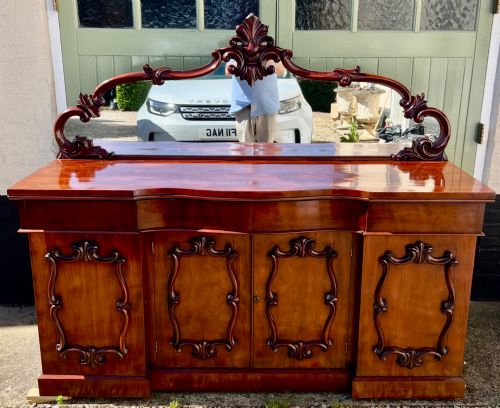

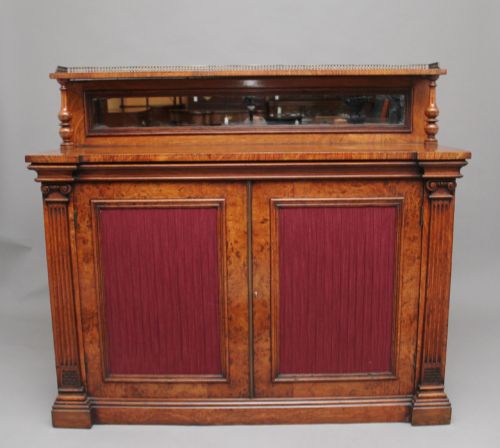


Victorian Mirror Back Buffet
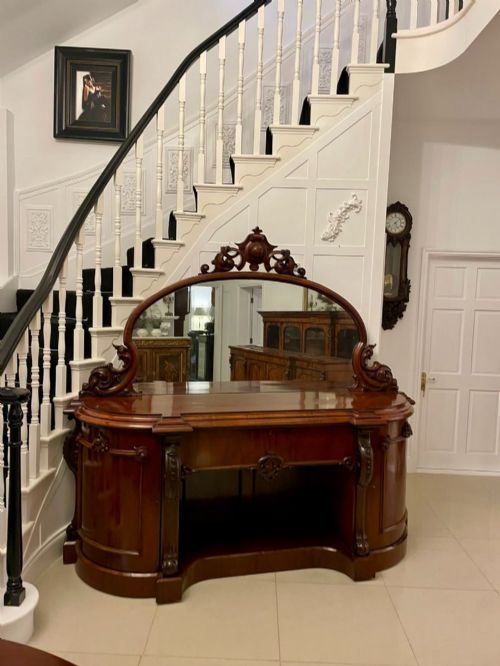
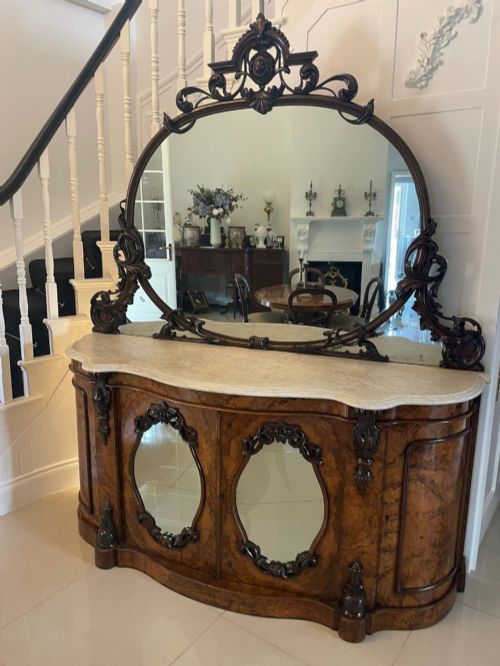
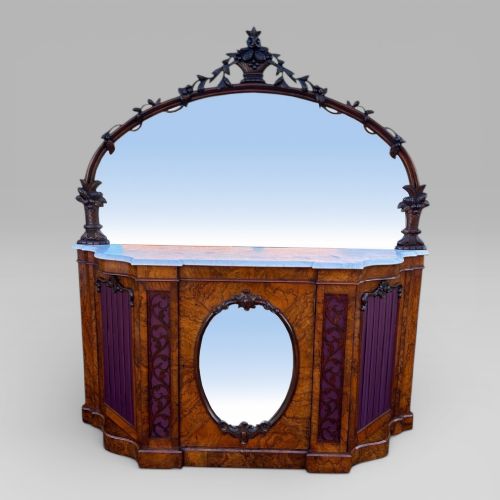
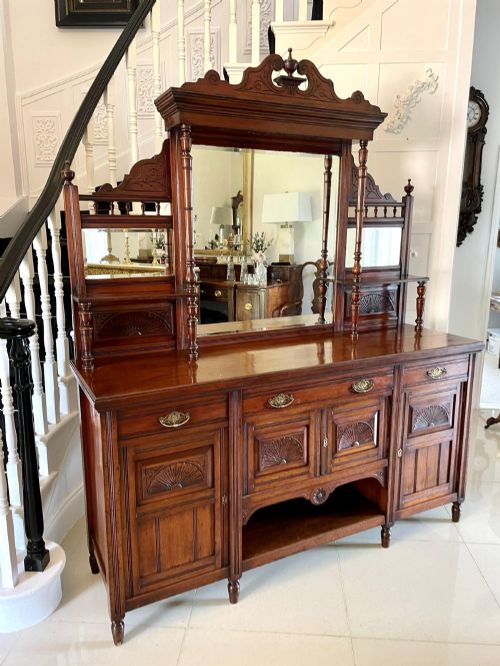
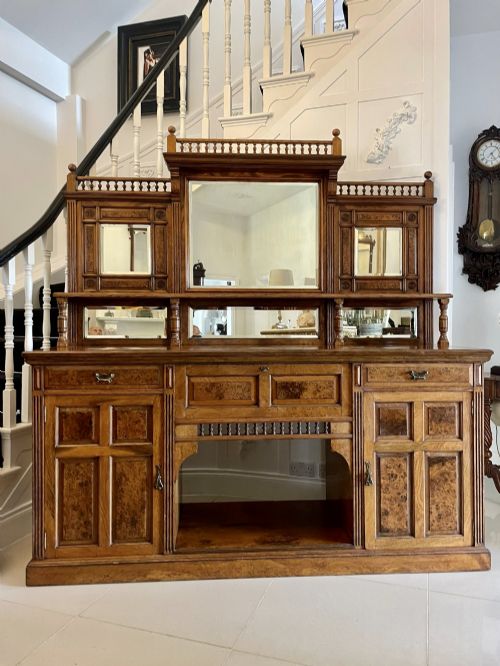
A victorian mirror back buffet combines deep storage with an integrated glass display, giving a dining room or parlour substantial presence.
Victorian Mirror Back Buffet
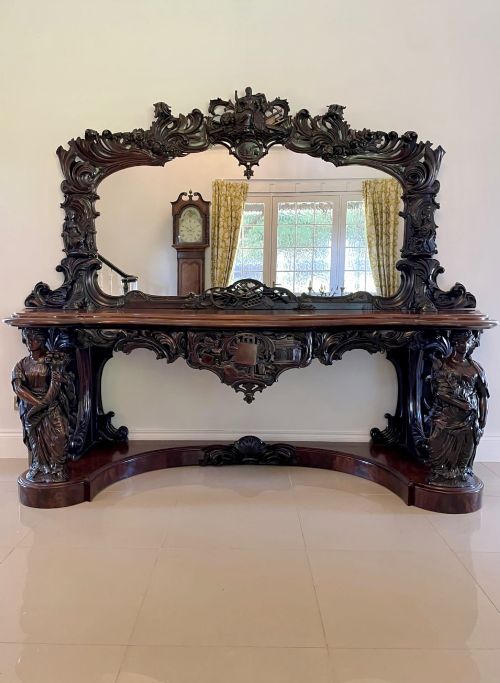
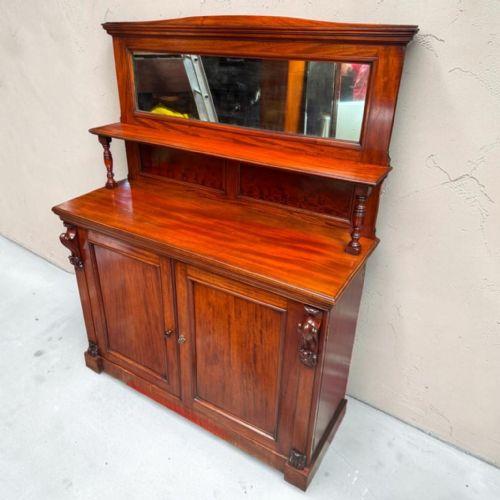
When you search for a victorian mirror back buffet, you encounter large dining room storage pieces that pair a substantial timber base with an upright wooden frame holding a glass plate. Most examples on this page belong to the nineteenth century, often appearing under related headings such as sideboards, credenzas and chiffoniers.
The base typically houses cupboards and drawers for dining silver and linen, whilst the superstructure mounts a mirror to reflect light and room interiors. Common timber choices include mahogany, walnut, burr walnut and pollard oak, sometimes finished with marble tops or marquetry inlay.
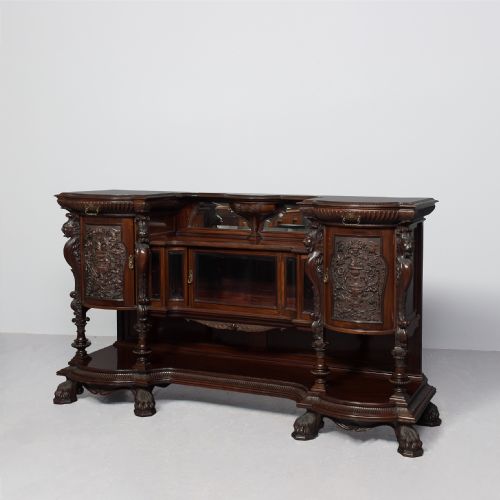
Stylistic variations range from simple rectilinear mahogany forms to heavily carved Renaissance Revival, Gothic Revival and Arts and Crafts interpretations. The mirror frames themselves take arched, shaped or pedimented forms, frequently decorated with scrollwork or foliage carvings.
How They Were Made
Cabinetmakers utilised solid timbers and selected veneers such as burr walnut, pollard oak and flame mahogany over secondary woods, applying hand-cut dovetails to drawer construction. Carved ornamentation, from simple linear mouldings to elaborate Green Man motifs and scrolling foliage, was worked directly into the solid timber components by hand.
Silvered glass plates, often bevelled at the edges, were set securely into rebated wooden frames above the main sideboard body. Marble inserts were sometimes fitted to the upper surface of the base to provide a durable, decorative counter.
Listings feature oak, mahogany, walnut, burr walnut, pollard oak and marble materials across Victorian, Edwardian and Arts and Crafts styles.
What Varies in Quality
The distinction between standard domestic pieces and exhibition examples lies in the selection of timbers and the depth of carving. Highly figured veneers like pollard oak and burr walnut, matched across multiple doors and drawers, denote superior workshop output.
Structural harmony also defines quality, where the proportion of the mirror superstructure complements the weight of the pedestal base without appearing heavy-handed. Integrated details such as marquetry inlay, finely turned columns and original brass hardware elevate the status of a piece.
T Simpson and Son·Shapland and Petter
The Victorian Mirror Back Buffet Glossary
- Credenza
- A sideboard or cabinet, frequently associated with Victorian drawing rooms, used for displaying porcelain and serving food. These items often incorporate mirrored superstructures and fine marquetry.
- Chiffonier
- A low sideboard or small cabinet equipped with shelves or a mirror superstructure. It offers compact storage compared to larger dining room pedestals.
- Marquetry
- Decorative veneer patterns formed by fitting together small pieces of different coloured wood, ivory or metal. Craftsmen applied this technique to drawer fronts and cupboard doors.
- Pedestal Base
- A heavy cabinet foundation featuring cupboards or drawers flanking a central recess. This form provides the structural support for the towering mirror back.
Victorian Mirror Back Buffet: Frequently Asked Questions
What rooms suit a victorian mirror back buffet?
These substantial pieces fit naturally into high-ceilinged dining rooms, large hallways or spacious sitting rooms where their height and width can anchor the space.
The reflective glass helps brighten darker corners by bouncing natural light around the room, whilst the lower cupboards offer practical storage for tableware or linens.
How do I care for the timber and glass?
Maintain the wood surfaces by applying appropriate beeswax polishes sparingly and avoiding direct sunlight, which can fade figured veneers like burr walnut and mahogany over time.
Clean the mirror plate with a soft cloth and mild glass cleaner, taking care to prevent liquid from seeping behind the silvered backing or into the surrounding wooden frame.
How are different revival styles distinguished?
Renaissance Revival pieces display heavy carvings, architectural mouldings and classical motifs, whereas Gothic Revival examples utilise pointed arches and medieval tracery.
Arts and Crafts pieces generally feature simpler, honest construction with exposed joinery and minimal ornamentation, reflecting a shift away from mass-produced factory decoration.
Are the mirror backs detachable?
Most mirror superstructures are separate elements secured to the base with heavy screws or bolts, designed to facilitate transport through doorways.
Disassembly requires careful handling to support the heavy glass plate and ensure the delicate wooden uprights do not sustain strain during relocation.