


Flemish Revival Sideboard
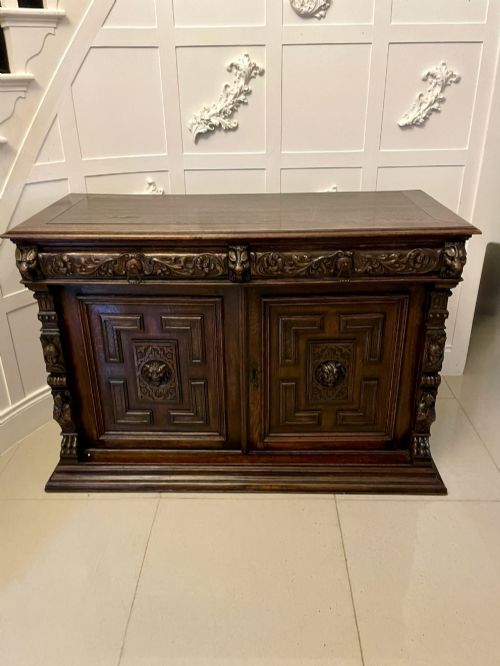
A flemish revival sideboard brings heavy architectural presence and deep relief carving into a dining room.

Flemish Revival Sideboard
When a buyer enters flemish revival sideboard into the search bar, they are looking at robust nineteenth-century dining furniture designed to anchor a formal interior. These pieces emerge primarily from the Victorian era and the 1880s, drawing heavily on continental Renaissance motifs.
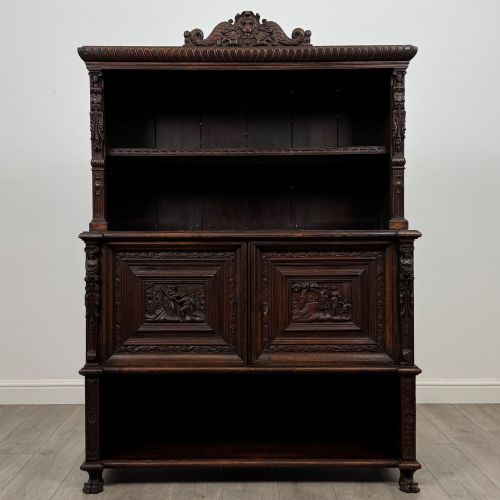
The version most commonly met on this page is a carved oak sideboard or buffet cabinet, often featuring a mirror back, heavy cornices, and sculptural elements like lion masks. Alongside standalone buffets, the listings include related cupboards, cabinets on stand, and complete dining suites.
Makers and workshops of this period combined functional storage with dense ornamentation, producing tall cupboards and lower server units alike. These sideboards reflect a nineteenth-century fascination with seventeenth-century Flemish design, reinterpreted through contemporary Victorian cabinet-making.
How they were made
Carvers shaped these sideboards predominantly from solid oak, utilising its dense grain to support deep, three-dimensional relief work without splitting. Secondary elements incorporate walnut, alongside structural iron and brass hardware that secured heavy doors and drawers.
Craftsmen applied extensive hand-carving techniques to panels, friezes, and pillars, bringing figures, foliage, and heraldic motifs into sharp relief. Glass panels and mirrored backs were integrated into upper sections, requiring precision rebate work within the heavy timber frames.
Oak is the dominant timber across these sideboards, supported by occasional walnut cabinets and iron, brass, and glass elements.
What varies in quality
The distinction between ordinary production and superior work lies in the depth and execution of the carving. Finely rendered figures and crisp undercutting separate expressive pieces from mechanical, shallow ornamentation.
Structural integrity and timber selection further divide the range, as heavier oak sideboards required meticulous joinery to support large mirror backs and cornices without sagging over time.
The Flemish Revival Sideboard Glossary
- Flemish Renaissance Revival
- A nineteenth-century design movement that reinterprets sixteenth and seventeenth-century Flemish artistic styles. It relies on architectural massing and high-relief carving.
- Mirror Back
- An upright wooden frame fitted with a glass mirror attached to the rear of a sideboard. This component reflects light and displays ornamental crests.
- Cabinet on Stand
- A tall enclosed storage compartment elevated on an open table base or joined legs. This form lifts the main body of the furniture off the floor.
- Buffet
- A low sideboard or serving table used for food and tableware. These pieces often incorporate cupboards and drawers beneath a flat top.
- Lion Mask
- A carved sculptural representation of a lion's face used as an ornamental boss or handle mount. It is a recurring decorative motif in Flemish revival pieces.
Flemish Revival Sideboard: Frequently Asked Questions
What is a flemish revival sideboard?
A flemish revival sideboard is a nineteenth-century storage piece built from solid oak and decorated with deep relief carvings. These large items served as the centrepiece for formal dining rooms.
They combine practical cupboards and drawers with decorative elements inspired by older continental styles, such as architectural cornices and figural carvings.
How were these sideboards used?
These sideboards functioned primarily as storage and display units in Victorian dining spaces. The lower cupboards held heavy crockery, silverware, and linens.
The upper surfaces and mirror backs provided a stage to display decorative serving dishes, glassware, and ornaments during formal meals.
How do I date a flemish revival piece?
Dating relies on examining the construction methods, timber choice, and prevailing revival styles recorded in the nineteenth century. Most pieces on this page cluster around the 1880s and the broader Victorian period.
Hardware styles, mirror bevelling, and the integration of machine-cut versus hand-finished joints help narrow the decade of manufacture.
Will a flemish revival sideboard fit a modern home?
These sideboards are substantial pieces of furniture that require significant wall space and a high ceiling to sit comfortably in a room. Their heavy proportions and dark oak tones demand an interior that can handle visual weight.
Measuring ceiling clearance is essential, particularly for versions with tall mirror backs and heavy projecting cornices.