



Oak Mirror Back Cabinet
An oak mirror back cabinet brings together functional storage and deep reflective glass, offering a substantial centrepiece for a dining room or hall.
Oak Mirror Back Cabinet
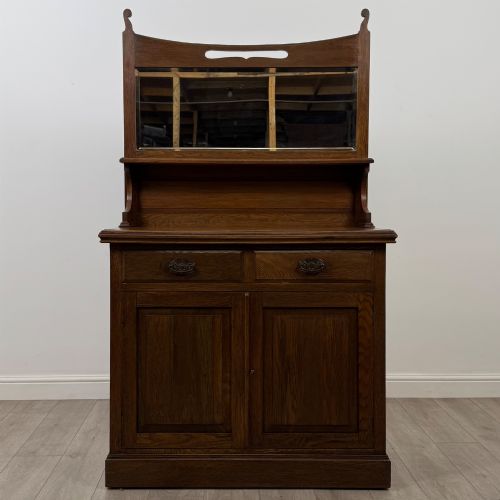
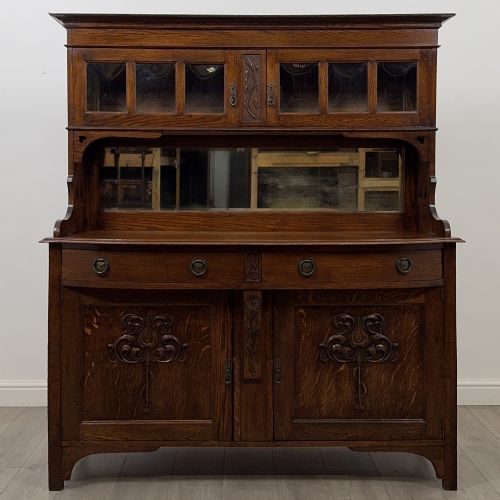
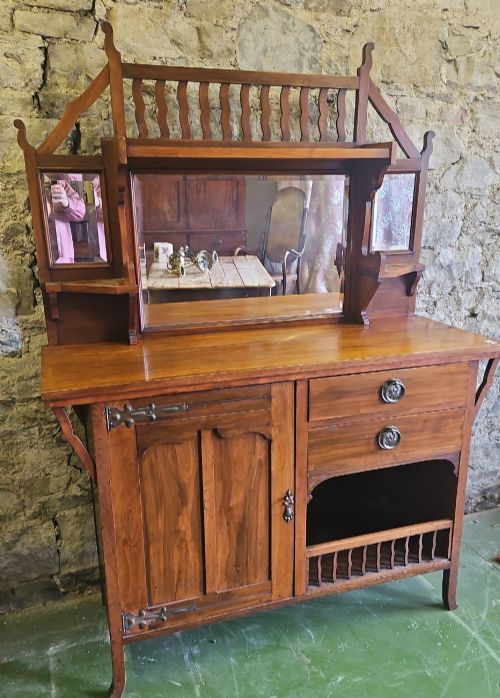
When you search for an oak mirror back cabinet, you encounter a robust lineage of dining furniture primarily spanning the Victorian and Edwardian eras. These pieces function as sideboards, buffets, and side cabinets, combining timber bases with fitted mirror glass tops.
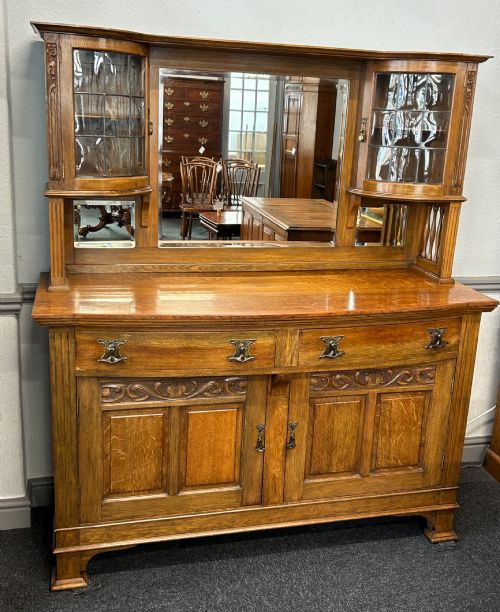
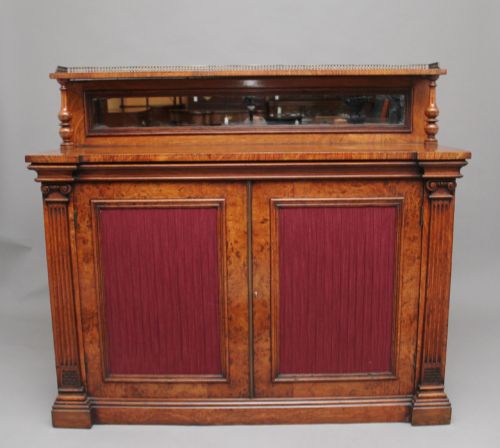
The prevailing form on this page is the mirror-backed sideboard, often incorporating carved details, cupboards, and display surfaces. Examples range from compact side cabinets to large nineteenth-century sideboards featuring elaborate architectural framing.
Makers and designers of these cabinets drew upon diverse aesthetic movements, producing pieces in Arts and Crafts, Art Nouveau, and Gothic Revival styles. This stylistic variety ensures that each cabinet offers a distinct regional or workshop interpretation of standard domestic forms.
Materials and construction methods
Construction relies heavily on solid oak and pollard oak, sometimes paired with secondary timbers like pine and accented with brass hardware and iron fixtures. Timber surfaces frequently display marquetry stringing, specimen wood inlay, and carved ornamentation.
The mirror glass is set securely into wooden frames above the main sideboard body, often held by carved pediments and decorative brackets. Joinery methods of the period utilise traditional framing and panel techniques to support the considerable weight of the stone, timber, and glass components.
The listings span from 1860 through the Edwardian period to the 1930s, utilising oak, pollard oak, brass, iron, and mirror glass.
Distinctions in craftsmanship
Quality reveals itself in the depth and precision of the woodwork, particularly where carving, marquetry, and pollard oak veneers are employed. Superior examples demonstrate careful selection of timber grain and harmonious integration between the lower cabinet and the upper mirror frame.
The weight and clarity of the mirror glass, alongside the robustness of the brass and iron fittings, differentiate standard utility items from exceptional workshop productions. Finer cabinets maintain structural integrity across large sideboards while exhibiting refined proportions and balanced stylistic detailing.
T Simpson and Son
The Oak Mirror Back Cabinet Glossary
- Pollard oak
- A decorative timber derived from trees that were cut back to encourage a dense cluster of branches, producing a heavily figured grain. This wood was selected for prominent panels on high-status cabinets.
- Mirror back
- An upright wooden frame containing a glass mirror attached to the rear of a sideboard or credenza. This feature reflects light and displays dining silver placed on the surface below.
- Gothic Revival
- An architectural and decorative style drawing on medieval forms, featuring pointed arches, tracery, and heavy carving. Cabinets in this style often display solemn, monumental proportions.
- Tantalus
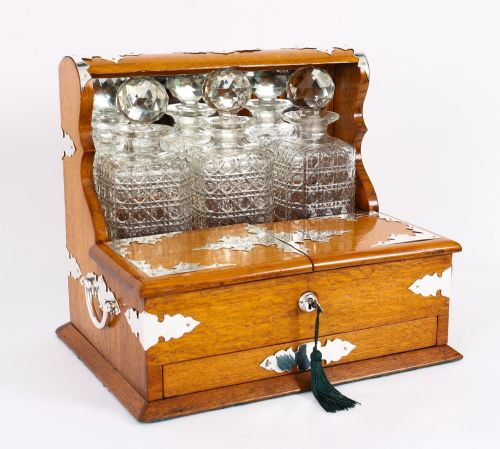
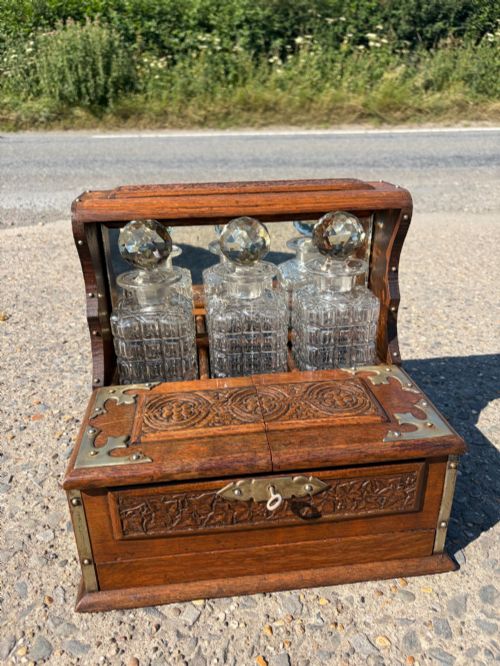
- A locking wooden stand holding decanters to prevent unauthorized access to the contents while displaying them through a metal bar. These drinks cabinets occasionally form part of larger compendiums.
- Marquetry stringing
- Inlaid lines of contrasting wood veneer embedded into the primary oak surface to create geometric borders. This decorative technique highlights the edges of drawers and cabinet doors.
Oak Mirror Back Cabinet: Frequently Asked Questions
What rooms suit an oak mirror back cabinet?
These cabinets traditionally serve dining rooms and large hallways where their surface area and reflective glass can fill a prominent wall.
Their substantial storage capacity makes them practical for holding tableware, linens, or glassware while adding architectural presence to an interior.
How do I distinguish Victorian from Edwardian pieces?
Victorian cabinets often display heavier carving, darker finishes, and more elaborate Renaissance or Gothic Revival detailing.
Edwardian examples tend to show lighter oak tones, simpler geometric lines, and influences from the Arts and Crafts or Art Nouveau movements.
What is the function of the mirror on these cabinets?
The mirror increases perceived light within a room and provides a decorative backdrop for ceramic or silver items displayed on the sideboard top.
Historically, it also served to brighten dining spaces lit by candles or early gas lighting.
Are all these cabinets large sideboards?
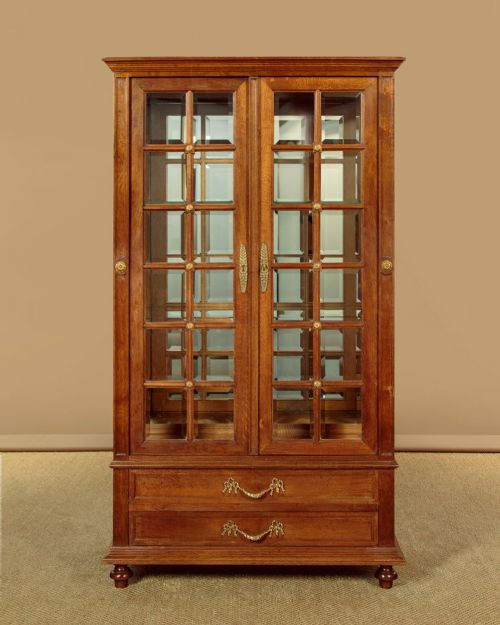
While the majority are substantial sideboards and buffets, the selection includes smaller side cabinets and specialised items like tantalus drinks compendiums.
Dimensions vary considerably from compact Edwardian examples to monumental nineteenth-century pieces.