




Victorian Heavy Oak Sideboard
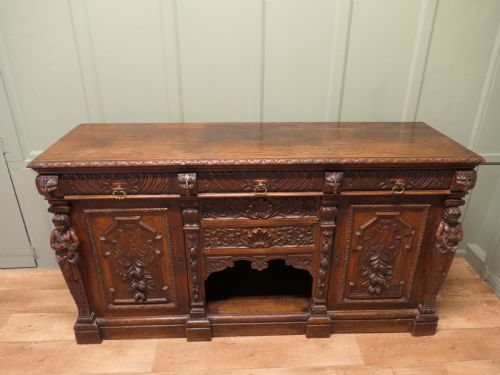
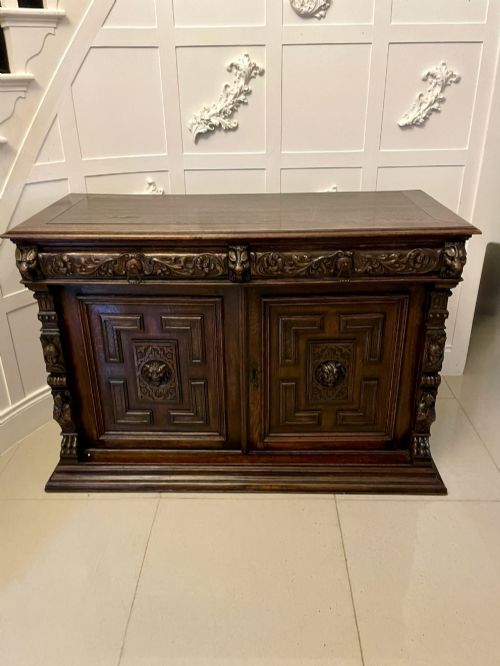
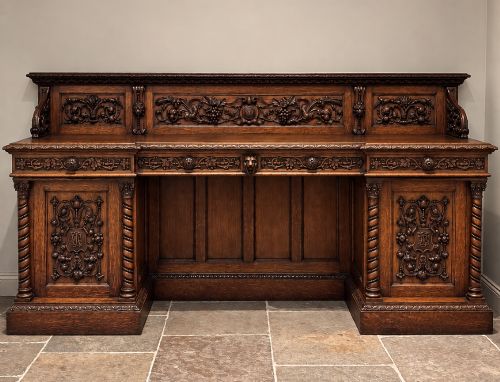
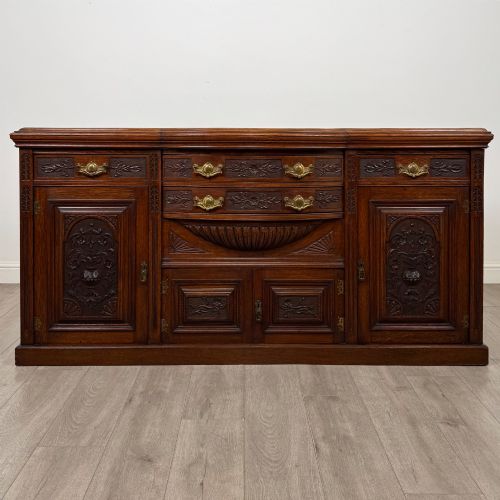
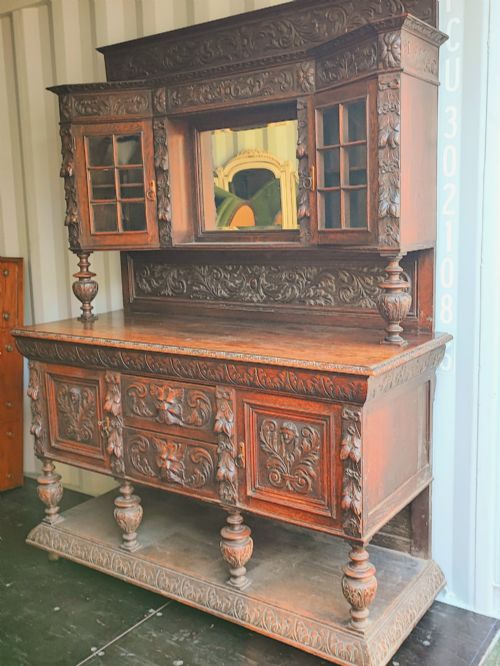
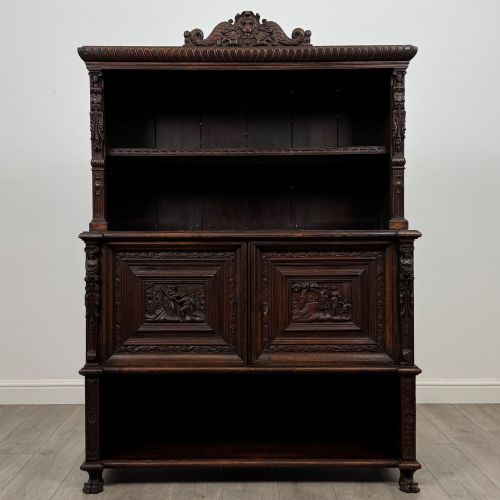
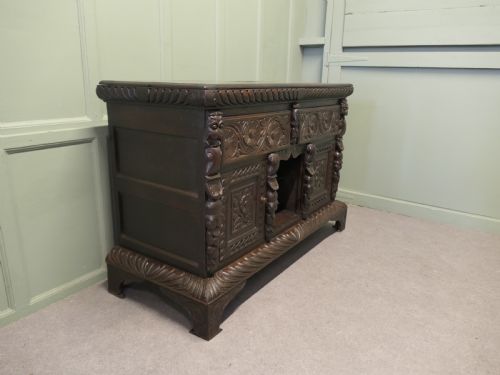
A victorian heavy oak sideboard anchors a dining room with substantial timber, carved detail and considerable presence.
Victorian Heavy Oak Sideboard
A victorian heavy oak sideboard is a substantial dining room furnishing designed for storage and display, appearing frequently across this selection with carved surfaces and grand proportions. These pieces range from server tables and buffet cabinets to large mirrored cupboards dating primarily through the nineteenth century.
How they were made
Construction relies heavily on solid oak and pollard oak timber, selected for durability and pronounced grain patterns, frequently enhanced with brass or iron hardware. Workshops employed deep relief carving techniques to render architectural mouldings, foliage, and figural details directly into the wood.
Secondary elements include bevelled glass and mirror plates fitted into tall backboards, joining timber frames through traditional joinery methods suited to massive furniture.
Design influences span Renaissance Revival, Gothic Revival, and Jacobean Revival aesthetics.
What varies in quality
Quality rests upon the crispness and depth of the hand carving, distinguishing deeply articulated relief work from softer, mechanical execution. The choice of timber also dictates standard, favouring richly figured pollard oak or dense golden oak over plain boards.
Proportion and structural integration separate grand architectural examples from simpler utility cupboards, particularly where mirror frames, carved crests, and heavy panel doors align harmoniously.
The Victorian Heavy Oak Sideboard Glossary
- Sideboard
- A dining room piece intended for serving food and storing tableware. These forms typically feature a combination of drawers and cupboards.
- Renaissance Revival
- A nineteenth-century design movement drawing inspiration from sixteenth-century European architecture. Pieces display heavy symmetry, columns, and classical ornamentation.
- Gothic Revival
- A style emulating medieval building traditions through pointed arches, tracery, and dark timber. Such details appear frequently on nineteenth-century ecclesiastical-leaning furniture.
- Pollard Oak
- Timber taken from trees that were cut back to promote a dense branch system, producing a highly figured and speckled grain. Cabinet makers utilised this for decorative veneer panels.
- Green Man
- A sculptural motif depicting a human face entwined with foliage or vines. It represents rebirth and appears commonly in nineteenth-century wood carving.
Victorian Heavy Oak Sideboard: Frequently Asked Questions
Where should a heavy sideboard go?
These massive pieces require a dining room or spacious hallway with sufficient wall space to support their grand height and depth.
Ensure the floor structure bears significant weight before positioning such dense timber furniture.
How do I clean oak furniture?
Dust the carved surfaces regularly with a soft, dry cloth to prevent grit settling into deep recesses of the wood.
Avoid modern liquid silicones and instead apply a traditional beeswax sparingly to nourish the antique finish.
What is a green man carving?
The green man motif shows a face surrounded by leaves and branches, symbolising the cycle of spring and nature.
Victorian carvers utilised this ancient symbol extensively on heavy oak cupboard doors and drawer fronts.
How do I date these sideboards?
Dating relies on examining construction methods, timber selection, and stylistic revival cues such as Gothic or Renaissance motifs.
Nineteenth-century examples often combine machine-sawn internal components with hand-carved exterior decoration.
Do mirror backs come off?
Many grand sideboards feature tall mirrored upper sections attached with screws and brackets to the main base.
Careful dismantling helps with transport, though original fixings must be kept secure for reassembly.