


Victorian Metal Plant Holders
Victorian metal plant holders bring nineteenth-century botanical display indoors, offering heavy brass and copper vessels shaped to house potted ferns and palms.
Victorian Metal Plant Holders
Victorian metal plant holders encompass nineteenth-century jardinieres, cachepots, and plant stands designed to hold greenery in domestic interiors. The pieces on this page span from the mid-nineteenth century into the Edwardian era, featuring works in brass, copper, and wrought iron.
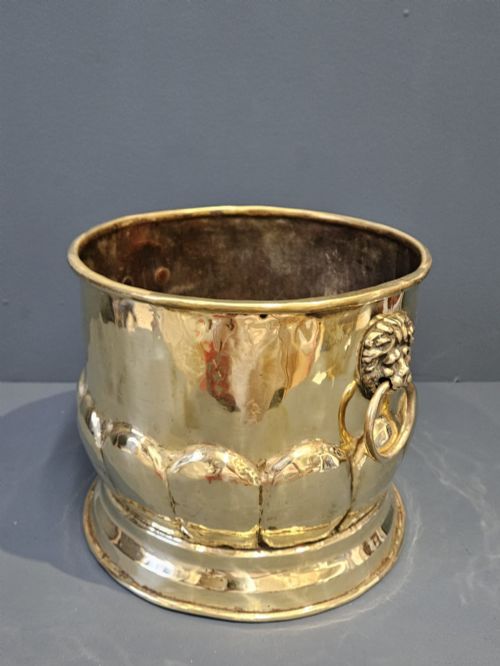
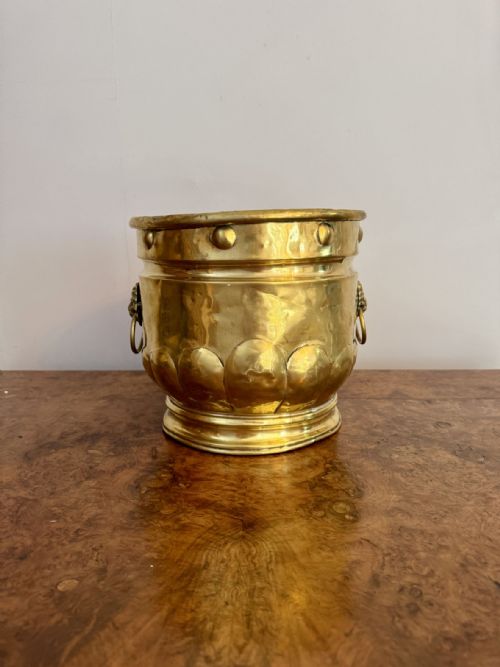
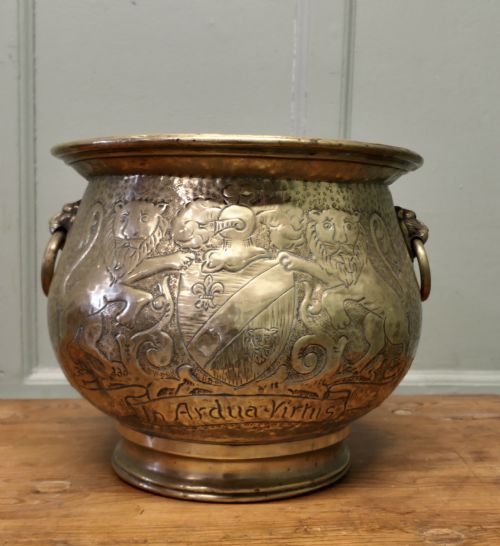
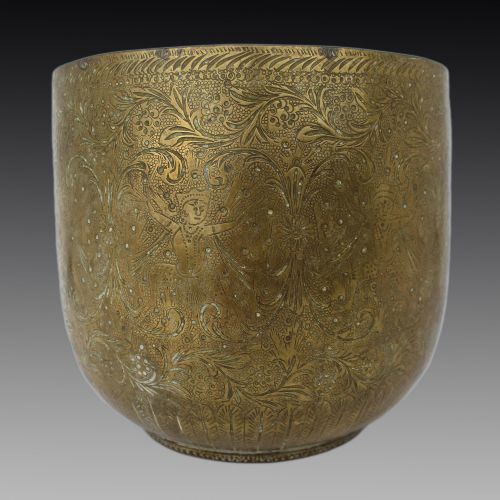
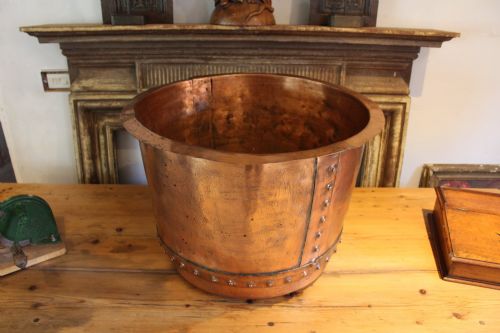
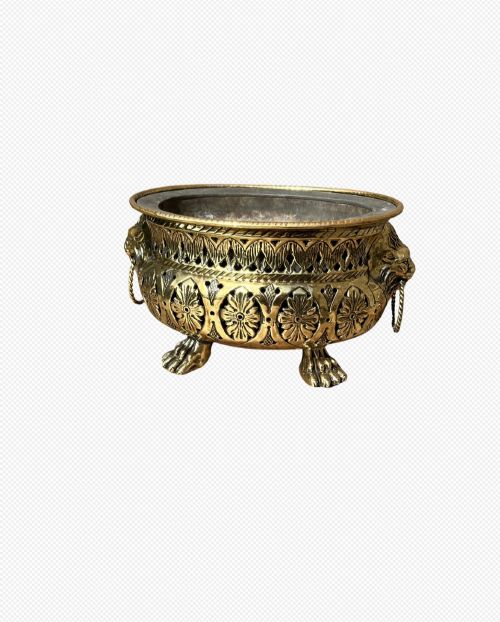
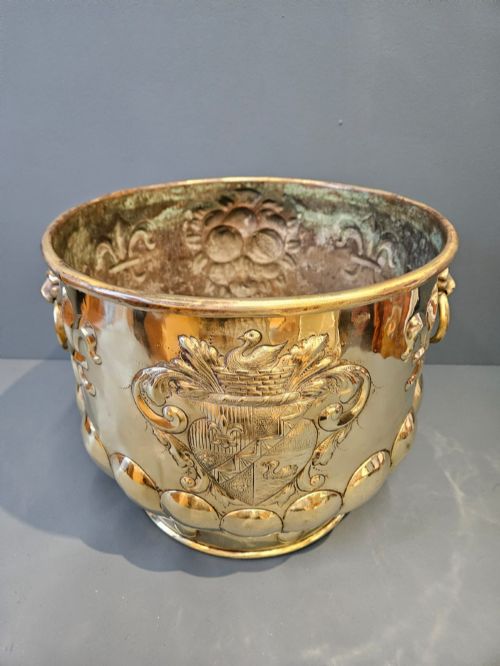
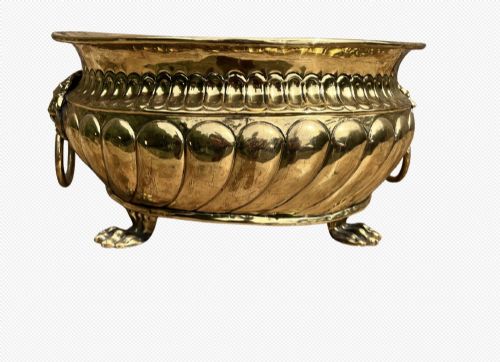
The most common forms you will encounter are cylindrical or oval brass and copper vessels, often fitted with lion mask handles or decorative crests. These range from heavy cast items to pierced and hammered designs intended to sit upon tables or dedicated stands.
Materials and construction
Makers utilised sheet and cast metals, predominantly brass and copper, shaped through hammering, pressing, and piercing. Decorative details such as shields, crests, and animal heads were applied or formed in relief using repoussé techniques.
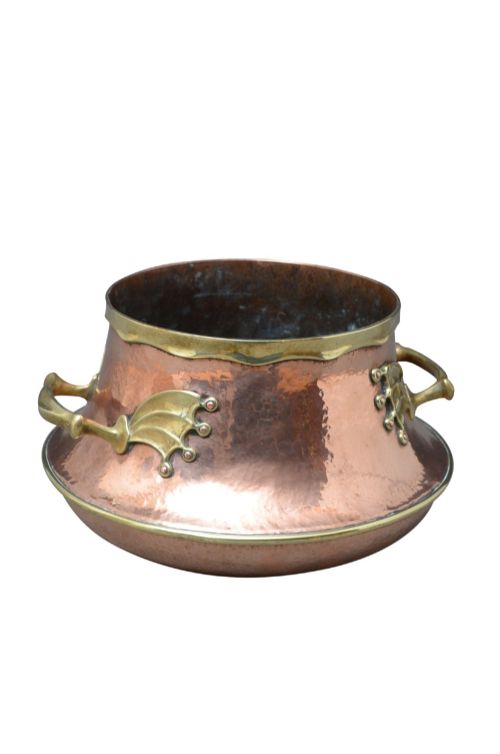
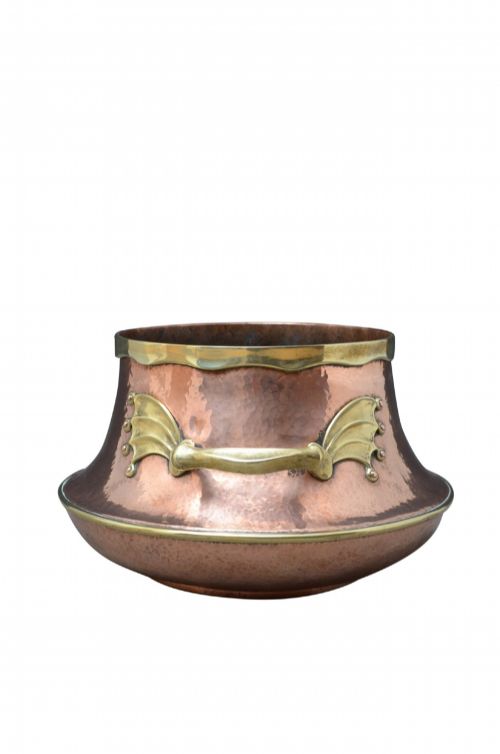
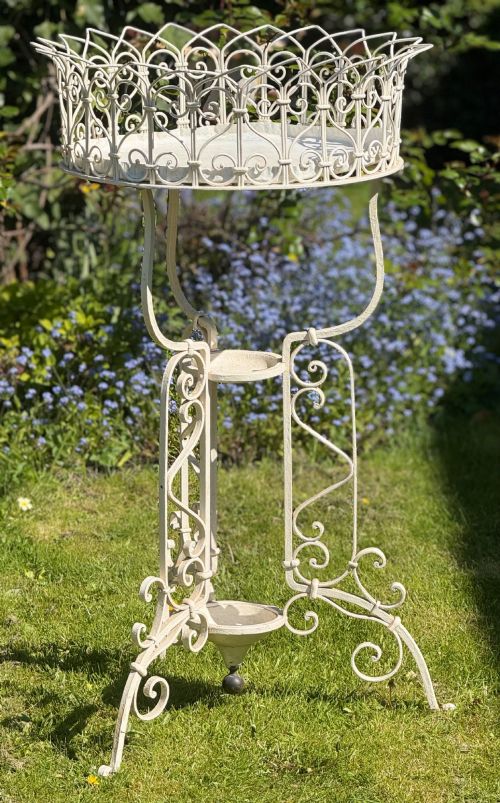
Wrought iron and wirework provide structural support for conservatory stands and tiered plant holders. Combinations of materials, such as copper bodies paired with iron frames, appear across Arts and Crafts examples.
Judging quality and craftsmanship
Quality rests in the weight of the metal and the crispness of the hand-worked details. Heavy gauge brass and deep, precise repoussé work distinguish superior vessels from lighter, mass-produced stamped items.
The integrity of construction, from securely mounted handles to the neatness of riveted or joined seams, separates standard utilitarian pots from finer decorative pieces made for nineteenth-century reception rooms.
The Victorian Metal Plant Holders Glossary
- Jardiniere
- An ornamental pot or stand for holding plants or flowers. These vessels were usually placed on tables or floors within nineteenth-century living spaces.
- Cachepot
- A decorative outer pot designed to conceal a plain flowerpot inside. They protect furniture surfaces from water drainage.
- Repoussé
- A metalworking technique where the metal is hammered from the reverse side to form a raised design in relief. This method defines many brass and copper planters.
- Wirework
- Metal strands bent and joined to form open frames or tiered stands. This technique allowed for light, airy structures suited to conservatories.
Victorian Metal Plant Holders: Frequently Asked Questions
What is a jardiniere?
A jardiniere is a decorative container designed to hold potted plants indoors. In nineteenth-century homes, they provided a formal way to display ferns and flowering plants.
Unlike standard flowerpots, jardinieres were meant to be seen in reception rooms and hallways, often resting on tables or dedicated stands.
How do I clean antique brass?
Antique brass is best maintained with gentle dusting and minimal interference to preserve its historic surface. Avoid harsh chemical cleaners that strip away age.
Allowing the metal to retain its natural tone maintains the character expected on nineteenth-century vessels.
Where were these placed?
These holders sat in nineteenth-century drawing rooms, parlours, and glasshouses. Large examples stood directly on the floor or on iron lantern stands.
Smaller vessels rested on tables, sideboards, or windowsills where greenery softened architectural interiors.
How do I spot an Edwardian piece?
Edwardian plant holders often incorporate lighter wirework and simpler forms suited to early twentieth-century conservatories. They frequently feature country house aesthetics.
They sit alongside heavier Victorian brass and copper vessels dating from the late nineteenth century.