
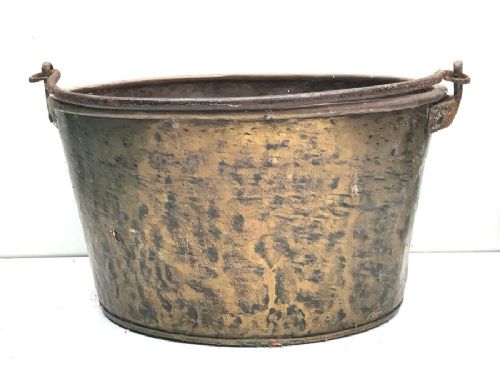
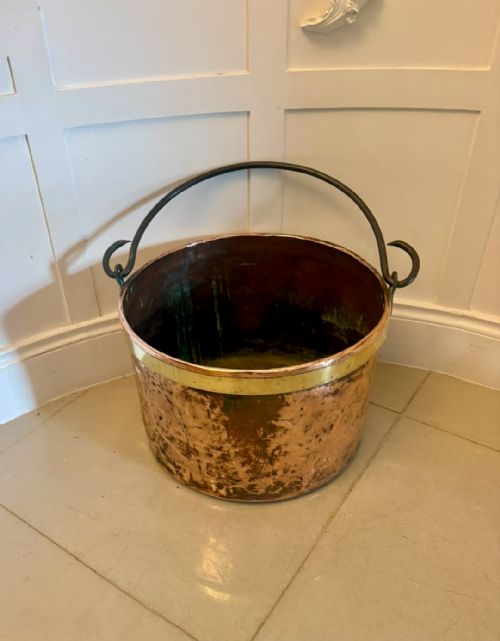
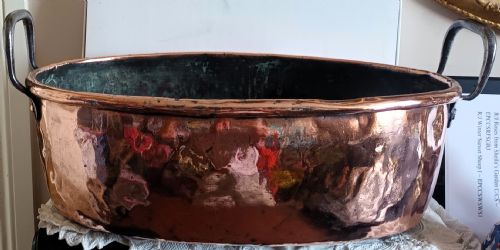
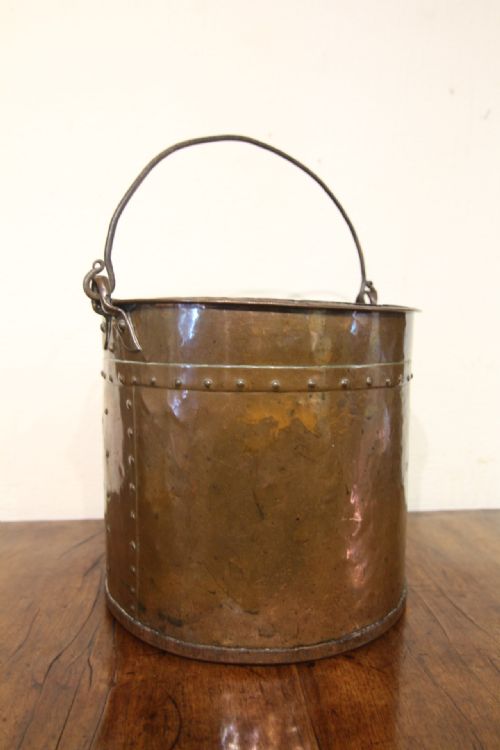


Copper Wrought Iron Planters
These copper wrought iron planters and associated vessels bring honest metalwork into modern rooms, combining practical utility with centuries of warmth.
Copper Wrought Iron Planters
When you search for copper wrought iron planters, you are looking at sturdy vessels originally fashioned for domestic tasks like holding coal, logs, or water, which now find a second life housing greenery. The selection spans the eighteenth century through to the early twentieth century, taking in Georgian, Victorian, Arts and Crafts, and Art Nouveau styles.
You are most likely to meet utilitarian forms adapted over time, including heavy cauldrons, log buckets, and pots on stands alongside dedicated plant holders. Many examples originate from English and French country traditions, where robust construction mattered more than delicate ornament.
The objects balance the bright warmth of hammered copper with the dark strength of iron, creating a pleasing contrast in texture. Whether you encounter a riveted bucket with a swing handle or a pot on a wrought iron stand, each piece displays the marks of heavy domestic use.
How they were made
Makers formed the body of each vessel from heavy sheet copper, joining the seams with visible rivets or overlapping joints to withstand daily wear. Wrought iron provided the structural support, forming sturdy swing handles, tripod stands, and carrying loops.
Craftsmen shaped the metal by hand, beating copper sheets over anvils to achieve round bowls, deep pans, and tapered buckets. Iron components were heated in a forge and hammered into shape, securing the softer copper with rings, brackets, and bands.
Some nineteenth-century dairy pans now serving as plant holders once spent their days quietly settling cream in farmhouse larders.
What varies in quality
Quality rests in the thickness of the metal and the integrity of the construction rather than pristine surfaces. Heavier copper gauges and substantial ironwork indicate utilitarian objects built to endure generations of fireside or kitchen service.
The skill of the handwork distinguishes ordinary utility wares from pieces with artistic ambition, particularly in the flowing lines of Arts and Crafts stands or Art Nouveau coal buckets. Well-balanced proportions and secure riveting demonstrate superior workshop practice.
The Copper Wrought Iron Planters Glossary
- Cauldron
- A large round pot or kettle, usually with a curved base and a swing handle for suspension or carrying over a hearth. These deep vessels provide generous volume for soil and roots.
- Jardiniere
- An ornamental pot or stand for holding flowers or plants, often displayed prominently in nineteenth-century interiors. They combine decorative metalwork with functional waterproof liners.
- Wrought iron
- Iron that has been heated and hammered into shape by hand, characterised by a fibrous texture and high durability. It provides rigid support for softer copper bowls.
- Riveted
- Joined together using metal pins hammered flat at the ends to secure overlapping sheets. This technique ensures strong, visible seams on heavy utilitarian vessels.
- Swing handle
- A curved metal handle attached to opposite sides of a bucket or pot, allowing it to pivot freely. They make heavy, laden vessels easier to lift and transport.
Copper Wrought Iron Planters: Frequently Asked Questions
Can I plant directly into these metal vessels?
Most historic copper and iron pots lack drainage holes because they were originally made for coal, water, or cooking. Placing a potted plant with its own saucer inside protects the antique metal from moisture and soil acidity.
Using a plastic or terracotta liner also makes it easier to remove plants for watering without disturbing the exterior vessel.
How do I clean old copper safely?
Gentle washing with warm soapy water removes surface dirt without stripping the historic character. Harsh chemical polishes remove the dark oxidation and mellow tones that collectors value.
Allowing the metal to retain its natural patina preserves the visual history of the piece.
Where should I place a heavy iron and copper planter?
These robust vessels suit hearths, hallways, and large living spaces where their substantial weight and dark metalwork balance other furniture. Placing them on wooden floors requires protective pads to prevent scratching.
Conservatories and garden rooms also provide natural settings that complement the utilitarian origins of the objects.
How can I tell a Georgian piece from a later one?
Georgian vessels typically show simpler construction with heavy hand-hammered seams and basic iron handles intended strictly for utility. Later Arts and Crafts and Art Nouveau examples often feature more deliberate decorative styling, integrated stands, and refined surface textures.
Looking closely at the riveting and handle attachments helps reveal the manufacturing period.