






Wrought Iron Plant Stand
A wrought iron plant stand brings structural poise and botanical utility to a garden room, conservatory, or terrace.
Wrought Iron Plant Stand
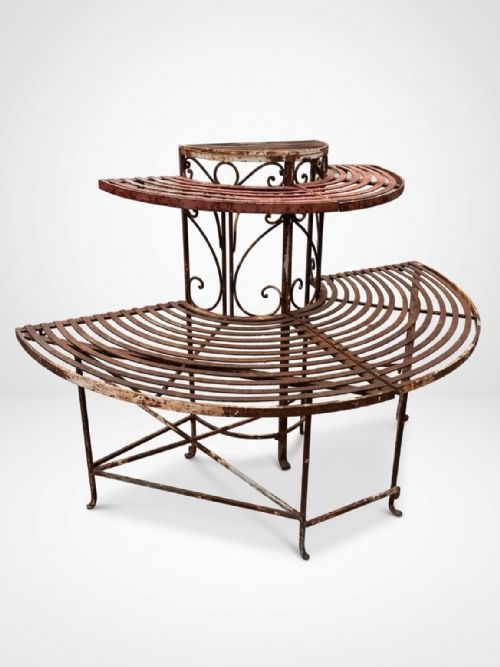
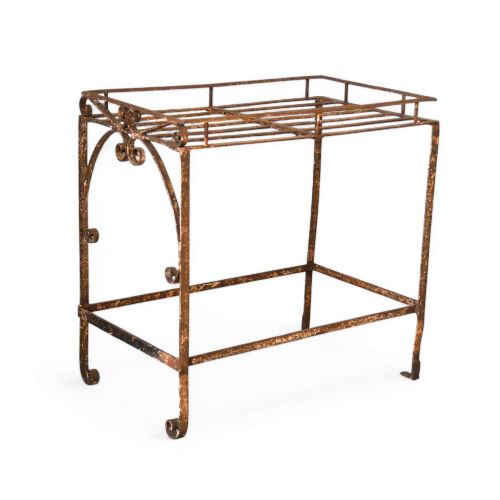
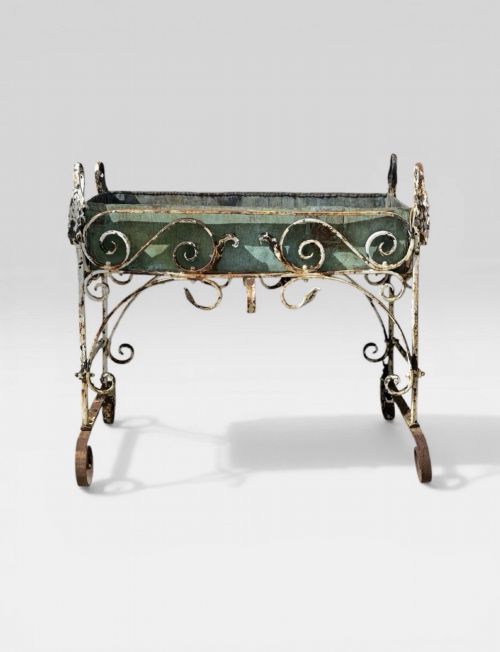
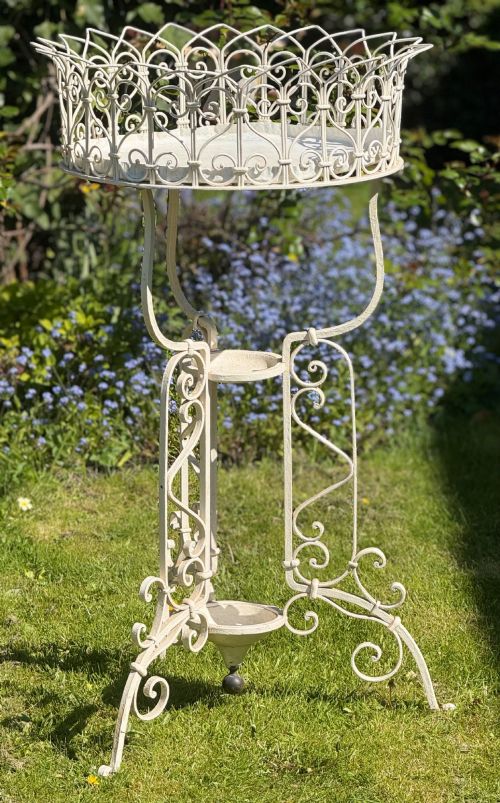
A wrought iron plant stand is a utilitarian structure designed to elevate greenery, featuring in forms such as graduated multi-tiered shelves, jardinieres, and bakers racks. These pieces emerge predominantly from the nineteenth and early twentieth centuries, spanning Victorian, Edwardian, and French country aesthetics.
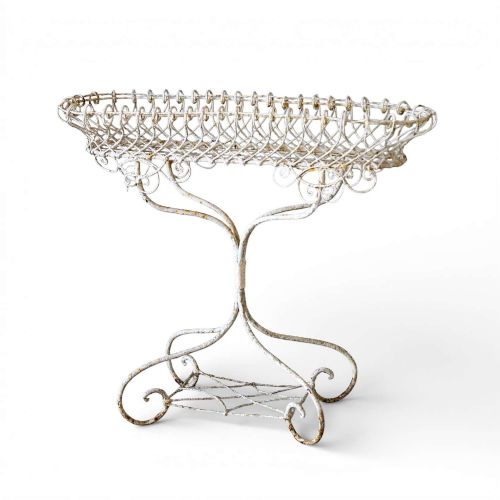
The version most commonly encountered on this page is the nineteenth-century scrollwork or slatted plant stand, often fashioned with circular baskets or semi-circular graduated tiers. They were built for conservatories, orangeries, and garden patios to display potted flora at varying heights.
Beyond traditional plant stands, the selection incorporates related forms like copper and wrought iron plant holders, wirework tiered planters, and lantern stands. Their architectural silhouettes derive from estate workshops and continental makers seeking to combine metalwork strength with decorative garden utility.
How they were made
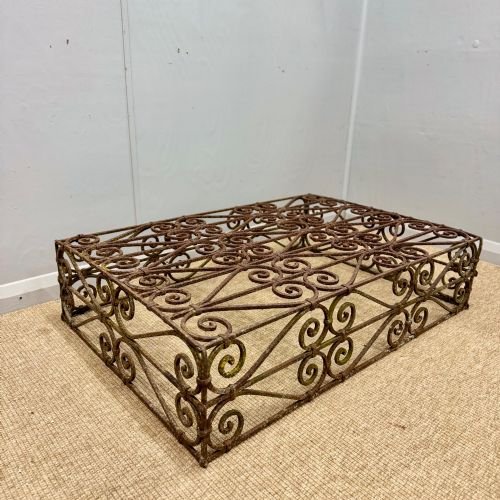
Makers utilised forged and wrought iron to construct the primary load-bearing frames, bending bars into scrollwork, lattice baskets, and structural supports by hand. Rivets and straps fastened the components together before protective or decorative layers of paint were applied.
Many examples integrate supplementary materials such as zinc, copper, brass, and wirework for baskets, trays, or decorative vessels. Cast iron frequently appears in heavier bases and urns, while weathered stone sometimes provides grounding weight to garden compositions.
Wrought Iron Plant Stand Retail Price Guide 2026
Typical asking prices for wrought iron plant stand among the pieces listed under this phrase on Sellingantiques today, from the lower quarter to the upper quarter. They describe what is for sale here now, not the wider market.
Several stands double happily as bread racks, proving that nineteenth-century bakers and ferns had remarkably similar tastes in interior architecture.
What varies in quality
The distinction between standard utility items and superior examples lies in the finesse of the forging and the complexity of the scrollwork. Estate-made or bespoke pieces display hand-hammered details and considered proportions that distinguish them from mass-produced garden furniture.
Integrity of construction and surface patination dictate desirability, where original painted finishes or honest weathering take precedence over unsympathetic modern restorations. The cleverness of folding mechanisms or the complexity of multi-tiered graduated shelving also elevates certain forms above basic stands.
The Wrought Iron Plant Stand Glossary
- Jardiniere
- An ornamental pot or stand for plants and flowers. These often feature decorative ironwork or fitted zinc liners.
- Wirework
- A technique of twisting and weaving metal wire into light, geometric plant stands and baskets. It was particularly popular during the Victorian period for conservatory use.
- Scrollwork
- Ornamental work formed in graceful, spiral scrolls. This detail defines the decorative aesthetic of nineteenth-century plant stands.
- Bakers rack
- A tall, open shelving unit originally used for cooling bread that now serves as a plant display stand. They often incorporate slatted iron shelves.
Wrought Iron Plant Stand: Frequently Asked Questions
Where should I place a wrought iron plant stand?
These stands suit conservatories, garden rooms, and sheltered patios where their open metal frames can support pots and trailing foliage.
Indoors, they anchor a corner of a living space or kitchen, offering vertical dimension for house plants and herbs.
Can I leave my plant stand outside all year?
While wrought iron is robust, prolonged exposure to winter moisture accelerates corrosion and degrades painted surfaces.
Protected outdoor spots or indoor conservatory settings help preserve the integrity of the iron and any vintage paint.
How do I identify a nineteenth-century stand?
Look for hand-forged elements, riveted rather than welded joints, and traditional patination on the iron surfaces.
Design motifs such as formal scrollwork or specific slatted tier arrangements typically point toward Victorian or Edwardian manufacture.
What is the difference between a plant stand and a jardiniere?
A plant stand is primarily an open frame or multi-tiered structure designed to elevate multiple potted plants.
A jardiniere usually refers to a specific stand or decorative container built to house a single prominent plant or floral arrangement.