


White Metal Plant Stand
These white metal plant stand pieces bring architectural greenery indoors and out, offering sturdy wirework and iron tiers designed to hold botanical displays.
White Metal Plant Stand
When you search for a white metal plant stand, you encounter functional garden and conservatory furniture designed to elevate pots and urns. The examples here span from the Georgian and Victorian eras through to the twentieth century, incorporating styles from French Country to Edwardian.
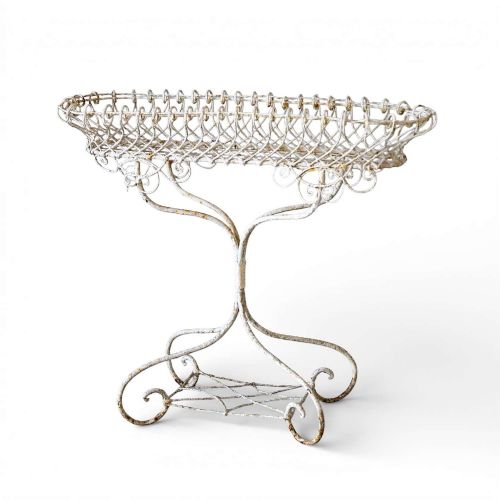
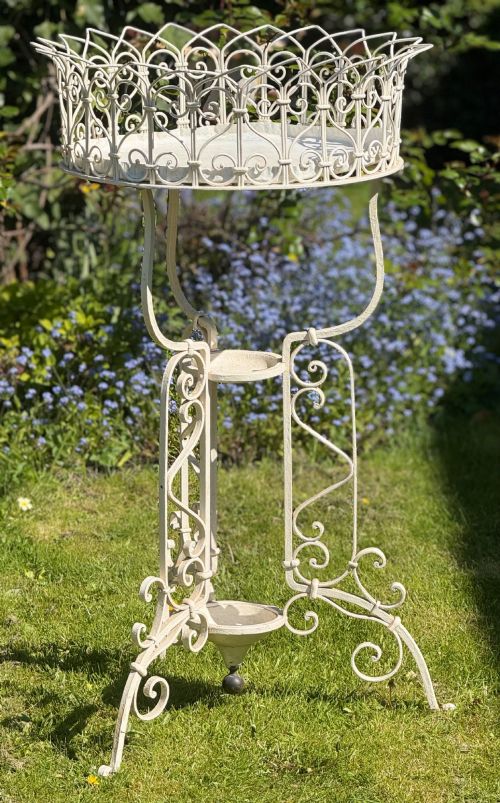
You are most likely to meet pieces constructed from wrought iron, wirework, and cast iron, often finished in white paint. These range from simple round three-tier stands to intricate lattice basket tops and garden urns.
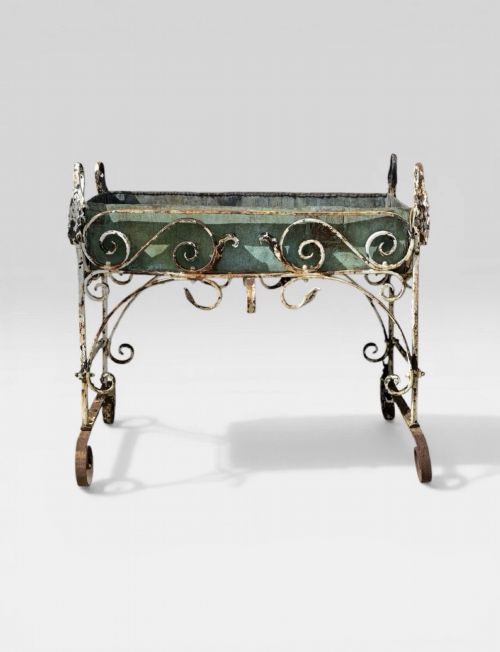
Objects on this page also include jardinieres, pedestal tables, and garden planters that double as plant displays. Their origins stretch across English country houses and French chateaux, reflecting varied utilitarian and decorative domestic uses.
How they were made
Makers utilised durable metals such as wrought iron and cast iron, shaping them through forging and casting to build load-bearing frames for heavy pots. Wirework construction was also common, bending and weaving wire into tiered planters and decorative baskets.
Surfaces were frequently finished with white paint to protect the metal from moisture and to brighten conservatory or garden settings. Brass and onyx combinations appear alongside zinc and strapp work in later twentieth-century pedestal tables.
One cheerful Victorian tier once held pots of ivy so enthusiastically that the metal scrolls are permanently hugged by old root stains.
What varies in quality
The distinction between ordinary and superior pieces rests on the complexity of the scrollwork and the precision of the assembly. Finer wirework and strapp work demand greater manual skill from the maker, resulting in balanced tiers and secure joints.
The integrity of the material also dictates value, with heavy cast iron and well-preserved wrought iron holding up better over generations. Original painted surfaces or patinated finishes show authenticity that heavy modern restoration obscures.
The White Metal Plant Stand Glossary
- Wirework
- Metal strands bent and joined to form open, lightweight baskets and stands. This technique allowed Victorian makers to build tiered plant holders that drained easily.
- Jardinere
- An ornamental pot or stand designed to hold plants or flowers. These items often sat in conservatories or drawing rooms during the nineteenth century.
- Wrought iron
- Iron that has been heated and hammered into shape by hand. It provides the strong, pliable skeleton for many antique garden stands.
- Strapp work
- Flat metal strips riveted or joined in geometric patterns. This technique creates a sturdy structural surface on tables and plant supports.
- Pedestal table
- A standalone column or pillar supporting a small flat top. In plant displays, it elevates a single specimen pot.
White Metal Plant Stand: Frequently Asked Questions
Where did people keep these plant stands?
These stands were typically housed in nineteenth-century conservatories, garden rooms, and sheltered outdoor patios. They allowed homeowners to display potted flora at varying heights to catch the light.
In grander settings, similar iron and wirework pieces adorned French chateaux and English country houses. They functioned as both practical garden furniture and decorative architectural accents.
How do I date a wirework plant stand?
Dating relies on observing construction methods, material thickness, and stylistic cues from periods like the Victorian or Edwardian eras. Earlier pieces from the Georgian period often display heavier hand-forged elements and simpler, robust wire gauges.
Later Victorian and Edwardian examples lean towards intricate tiered wirework and elaborate scroll designs. Examining the paint layers and oxidation can also offer clues regarding age.
Can these antique stands stay outside?
Many of these pieces were originally built for outdoor garden use, utilising durable cast iron and painted wrought iron. However, prolonged exposure to modern weather can accelerate corrosion on antique wirework.
Using them in sheltered conservatories, or monitoring them closely on a patio, helps preserve the historic metal and painted finishes. Regular gentle maintenance prevents moisture damage.
What is the difference between a jardiniere and a plant stand?
A jardiniere typically refers to the decorative vessel or container itself, often shaped like an urn or basket to hold soil and plants. A plant stand is the supporting structure or tiered table designed to elevate those pots.
In historical listings, the two terms frequently overlap because many pieces integrated the container directly into the stand framework.