






Painted Iron Garden Planter
A painted iron garden planter brings structural form and enduring weight to outdoor spaces, anchoring borders with classical dignity and weathered charm.
Painted Iron Garden Planter
A painted iron garden planter encompasses heavy campagnas, column pedestals, and scrolling wirework stands designed to hold flora in domestic grounds. When you search for a painted iron garden planter, you encounter robust Victorian vessels alongside refined Regency forms, each created to weather the elements while retaining distinct decorative character.
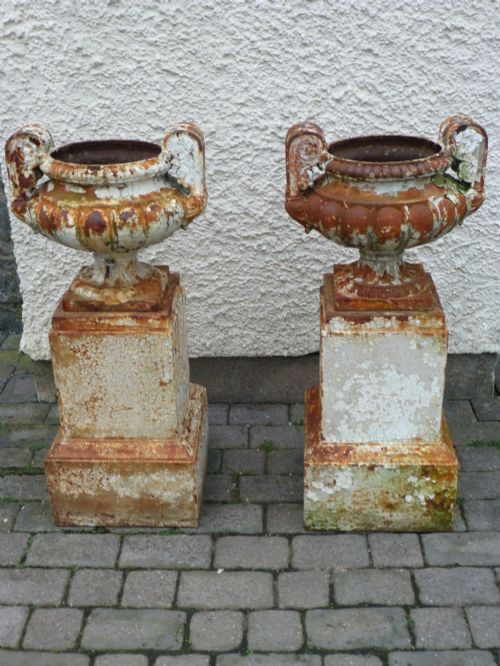
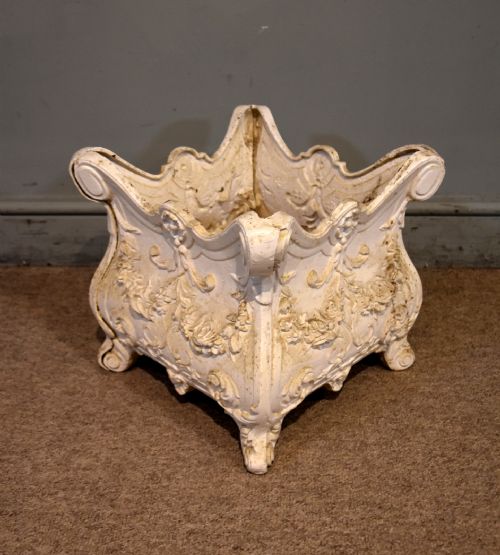
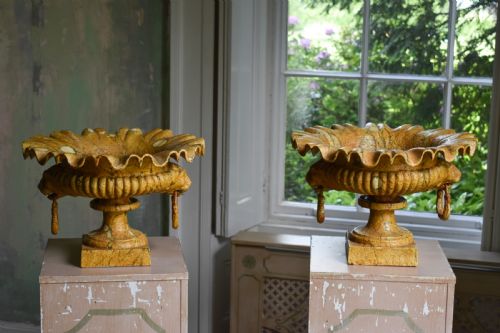
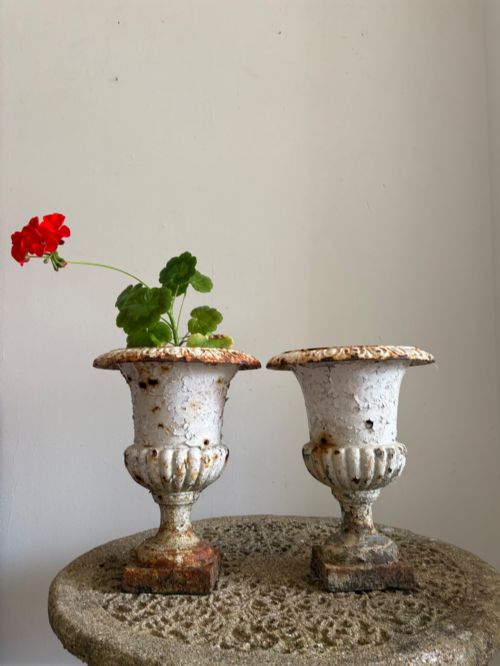
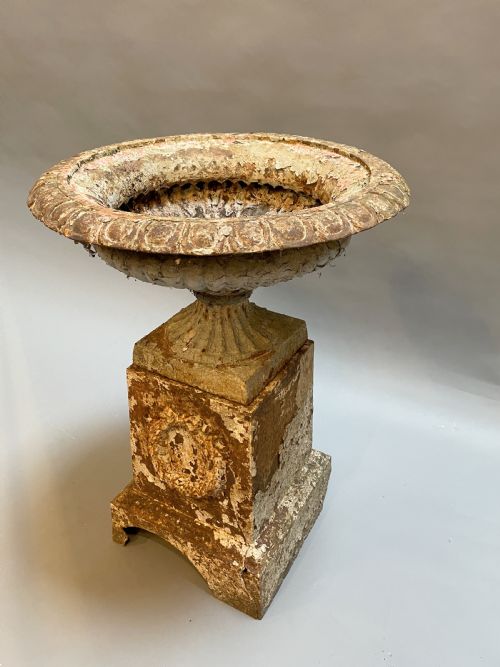
The versions most frequently met on this page include nineteenth-century cast iron urns, often bearing original distressed paint or classic acanthus leaf motifs. French and English examples dominate the selection, appearing either as single statement jardinieres or matched pairs raised on stone plinths.
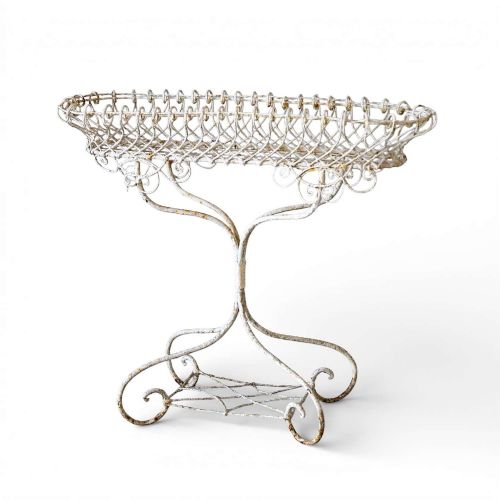
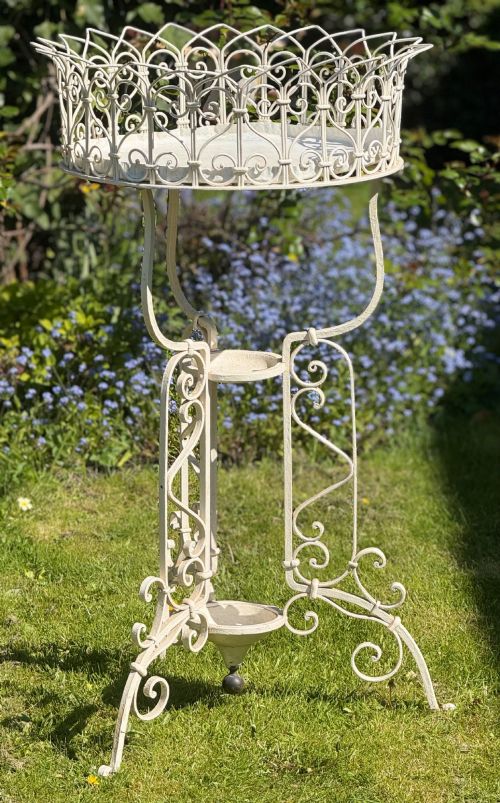
Beyond traditional urns, the category extends to tiered wirework stands and strapwork baskets from the Georgian and Victorian eras. These lighter wrought formations contrast with heavy cast bodies, offering varied silhouettes for conservatories, lawns, and terrace settings.
Materials and construction methods
Foundries shaped these pieces primarily through traditional sand-casting techniques, pouring molten metal into moulds to achieve crisp classical details like gadrooning and foliage. Cast iron provided the structural rigidity needed for monumental campagna urns and figurative garden statuary.
Wrought iron and sheet metal offered an alternative method, employing manual forging, rolling, and wire-drawing to build lattice baskets and tiered plant stands. Artisans bent and riveted iron wire to create airy, interconnected structures capable of supporting climbing plants and potted specimens.
Among the stately urns and formal stands, an unexpected fairground ride boat occasionally surfaces to bring nautical fun to the garden.
Distinctions in quality and execution
Quality rests in the crispness of the foundry work and the depth of classical relief moulding. Superior pieces display sharply defined acanthus leaves, clean casting seams, and well-proportioned pedestals that reflect skilled pattern-making.
The integrity of the original material and the character of historic surface treatments further define the standing of a piece. Examples retaining genuine early paint layers possess a depth of texture that mechanical stripping or modern repainting obscures.
Falkirk Carron foundry·Coalbrookdale
The Painted Iron Garden Planter Glossary
- Campagna urn
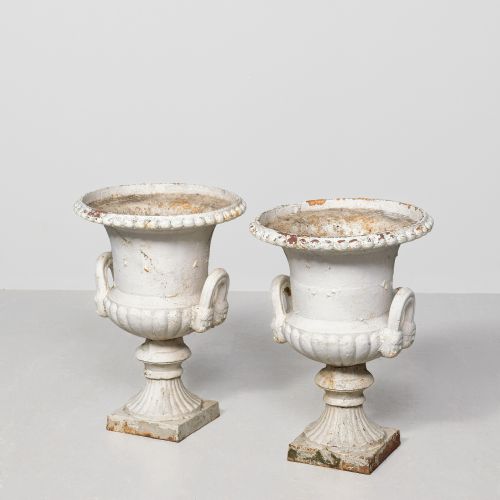
- A bell-shaped garden vessel with a flared rim, frequently mounted on a square plinth. This classical form became a staple of nineteenth-century garden design.
- Gadrooning
- A decorative carved or cast motif consisting of convex curves or flutes in a parallel series. It often encircles the bowl of an urn.
- Jardiniere
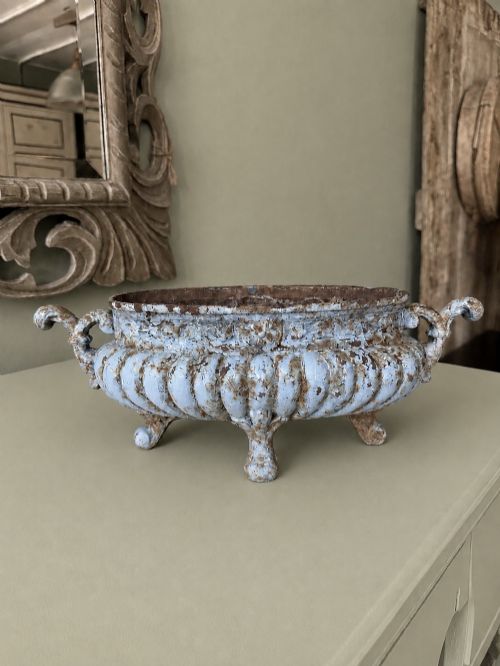
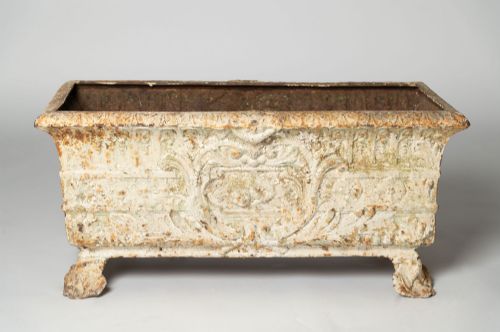
- An ornamental receptacle designed to hold growing plants or flowers. These items appear in both heavy cast iron and delicate wirework.
- Wrought iron
- Iron that has been heated and hammered into shape by hand, resulting in a fibrous structure. This material allows for slender scrollwork and structural lattice baskets.
Painted Iron Garden Planter: Frequently Asked Questions
Can iron planters stay outside in winter?
Cast and wrought iron vessels withstand outdoor conditions robustly due to their heavy metal construction. Original painted surfaces provide an initial barrier against moisture, though prolonged freezing can affect trapped dampness within soil.
Gardeners typically elevate these planters slightly off stone flags to prevent water retention beneath the base. Regular monitoring of drainage holes ensures that winter rain escapes freely without putting pressure on the metal walls.
How do I identify a Victorian urn?
Victorian examples frequently display heavy cast iron walls decorated with classical motifs such as acanthus leaves or gadrooned rims. They often weigh substantially and may feature manufacturer stamps or registration marks from nineteenth-century foundries.
Proportions tend to be neoclassical in ambition, mirroring the revival styles popular during the period. The presence of authentic aged paint layers further confirms the historical age of the casting.
What is the difference between cast and wrought iron?
Cast iron is poured into moulds while molten, creating thick, rigid forms with detailed decorative relief. Wrought iron is heated and hammered into shape by hand, producing flexible, slender structures like wirework and scroll baskets.
Urns and pedestals rely on the mass of cast iron for their monumental presence. Plant stands and lattice jardinieres utilise wrought iron for delicate linear frameworks.
How should I clean a painted iron urn?
Gentle brushing removes loose surface dirt and garden debris without disturbing aged paint layers. Avoid harsh chemical strippers or abrasive pads that might damage historic patination.
If the piece requires moisture, use a soft sponge with mild soap and rinse thoroughly. Allow the metal to dry completely to preserve the existing finish.