


19th Century Garden Jardiniere
A 19th century garden jardiniere brings sculptural plant display to terraces and lawns through heavy metal and terracotta vessels.
19th Century Garden Jardiniere
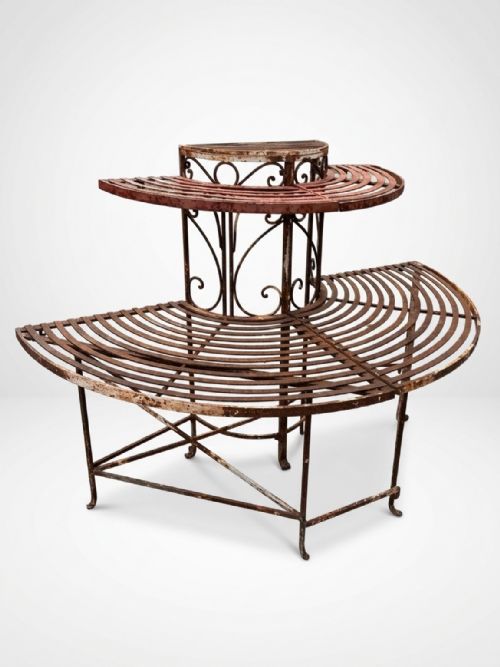
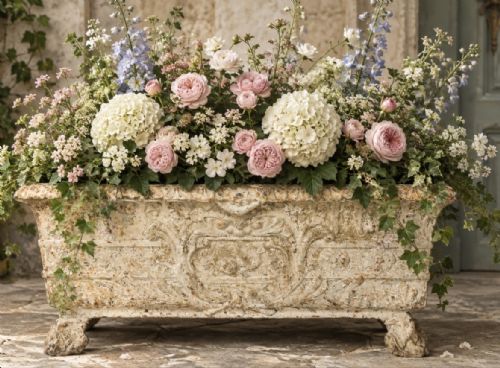
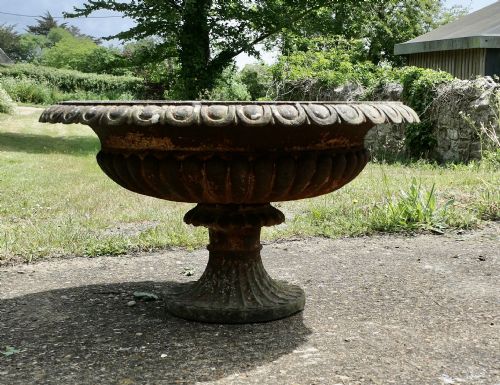
A 19th century garden jardiniere serves as a decorative vessel for plants, positioned prominently in outdoor spaces. These pieces take the form of urns, baskets, and footed planters designed to hold potted greenery.
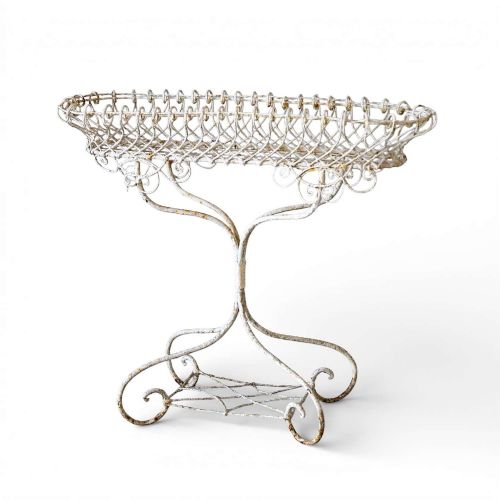
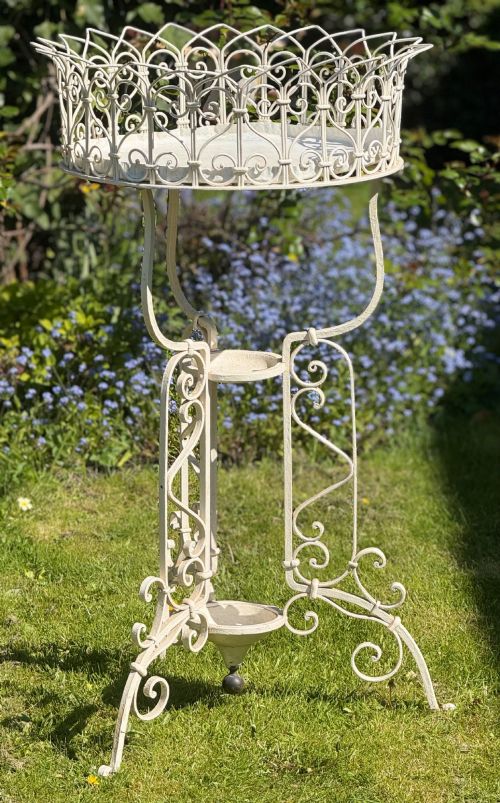
The selections available here lean heavily into Victorian tastes, featuring French provincial examples alongside English manufactory output. Buyers encounter robust structural forms ranging from classical urns to ornate wirework baskets.
Objects catalogued under this phrase display distinct historical character, shaped by periods spanning the Victorian era through the late 1800s. They function as both structural garden focal points and practical containers for flora.
Materials and Construction
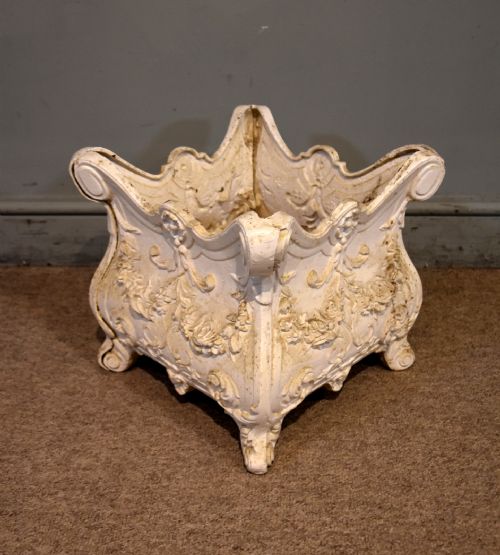
Foundry production dominates the material record, utilising cast iron and wrought iron shaped into robust structural frames and decorative scrollwork. These metal vessels often feature painted surfaces that have weathered decades of exposure.
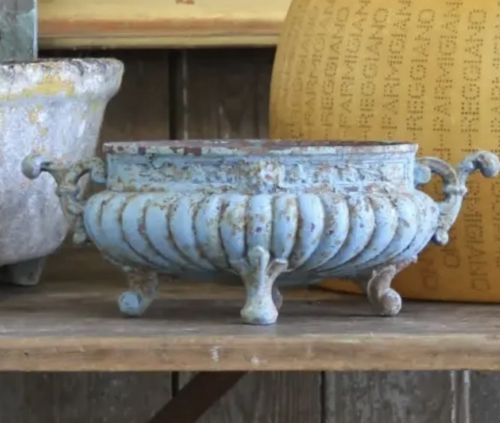
Pottery and earthenware provide an alternative medium, seen in terracotta urns and naturalistic clay vessels moulded by hand or wheel. Lead and wirework complete the material spectrum, offering lighter structural wire baskets or heavy cast metal forms with claw feet.
Several heavy iron planters resolutely stand upon tiny, determined animal claw feet.
Judging Quality and Distinction
Quality rests in the crispness of the casting and the integrity of the material, distinguishing standard utilitarian pots from ornamental foundry masterpieces. Pieces associated with notable foundries like Coalbrookdale demonstrate superior detail in their ornamentation and scrollwork.
Proportion and surface patination dictate the desirability of each piece, with natural weathering enhancing the textured finish of iron and terracotta. The presence of specific maker attributions or complex architectural elements elevates the standing of an individual planter.
Coalbrookdale
The 19th Century Garden Jardiniere Glossary
- Jardiniere
- An ornamental pot or stand for holding plants or flowers. This term typically denotes a more decorative vessel than a standard utility plant pot.
- Terracotta
- Fired unglazed clay of a brownish-red colour utilised for garden vessels. This porous material absorbs moisture and develops a distinct weathered surface over time.
- Wirework
- Metal strands bent and welded into open basket structures for holding plants. This technique creates lighter garden vessels with intricate geometric or scroll patterns.
- Neoclassical
- A style drawing inspiration from classical antiquity, frequently applied to urns and planters. This aesthetic employs formal symmetry and ancient architectural motifs.
- Naturalistic
- A design approach imitating organic forms such as branches, leaves, or animal claws. This style gained particular popularity during the Victorian period for garden ornamentation.
19th Century Garden Jardiniere: Frequently Asked Questions
What plants suit a metal jardiniere?
Potted arrangements and trailing foliage fit securely inside these vessels, allowing the container's decorative exterior to remain visible.
Gardeners frequently place inner pots inside the main structure to simplify watering and protect the historical metal or clay surfaces.
Are these planters frost resistant?
Cast iron and lead handle outdoor winter conditions reliably, though trapped water can occasionally pose risks during hard freezes.
Terracotta and earthenware pieces require more careful observation during freezing weather to prevent cracking from expanding soil and moisture.
How do I clean a cast iron planter?
Gentle brushing removes loose dirt and debris without damaging the accumulated layers of historical paint and protective weathering.
Harsh chemical strippers should be avoided to preserve the authentic patination acquired over centuries of outdoor exposure.
Where should I position a jardiniere?
Terraces, pathways, and formal lawns provide stable ground for heavy iron urns and terracotta planters to anchor outdoor sightlines.
Placing these vessels on stone plinths or directly on gravel protects the base from constant dampness and enhances their architectural presence.