


Vintage Conservatory Plant Stand
These vintage conservatory plant stands bring greenery indoors with architectural ironwork and wirework designed to elevate pots in style.
Vintage Conservatory Plant Stand
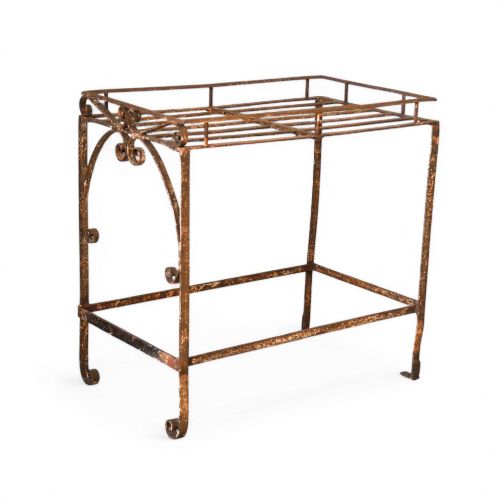
A vintage conservatory plant stand is a functional piece designed to hold garden pots, urns, and jardinieres within a home or glasshouse. When searching for a vintage conservatory plant stand, buyers encounter forms ranging from floor-standing wirework tiers to heavy iron garden racks.
The pieces listed on this page span several periods, including Victorian, Edwardian, and Georgian eras, alongside French Country and Art Nouveau styles. The most frequently met examples utilise wrought iron, wirework, and painted finishes to display greenery.
How they were made
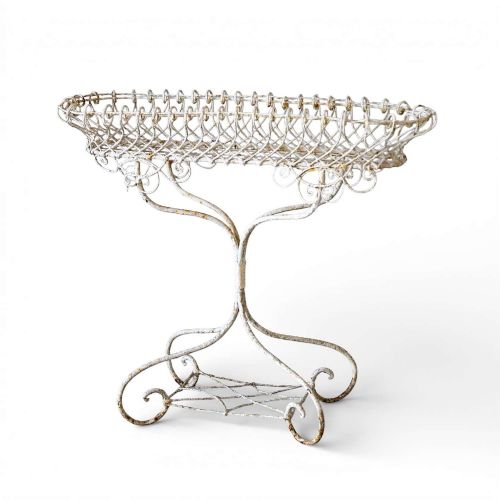
Makers constructed these stands primarily from wrought iron, wirework, and riveted slatted iron, often applying white paint or gilding for a finished appearance. Techniques involved shaping wire into intricate scrollwork and lattice baskets to support heavy pots.
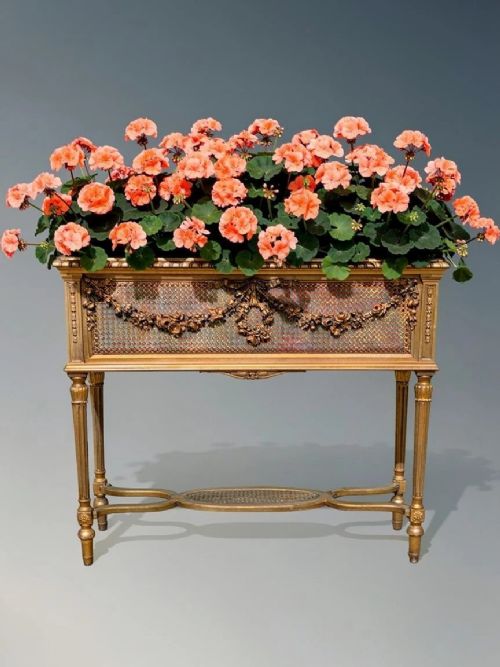
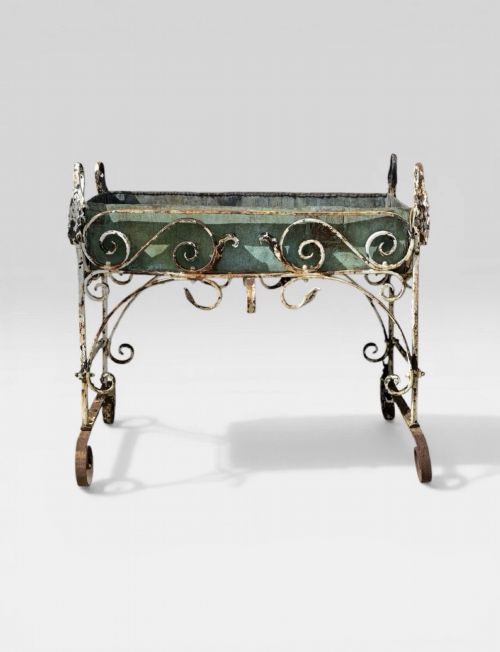
Some examples incorporate zinc liners, cane accents, or carved giltwood, reflecting the diverse material combinations utilised across the nineteenth and early twentieth centuries.
The listings span the Victorian, Edwardian, and Georgian periods, featuring materials such as wrought iron, wirework, zinc, and giltwood.
What varies in quality
Quality in these stands depends upon the complexity of the wirework and the robustness of the iron construction. Estate-made pieces with attractive decorative details and sophisticated scrollwork distinguish themselves from simpler utility racks.
The integrity of the original painted surface or the preservation of delicate lattice baskets significantly impacts the character and desirability of each stand.
The Vintage Conservatory Plant Stand Glossary
- Wirework
- Metal strands bent and welded into open structures. This technique allowed makers to create lightweight yet sturdy plant stands and tiered jardinieres.
- Jardinieres
- Ornamental pots or stands designed to hold growing plants. They often feature decorative lattice baskets or metal urn shapes.
- Giltwood
- Timber treated with gold leaf or a gilt finish. This material appears on more decorative planters from the period.
- Wrought iron
- Iron beaten or bent into shape by hand while hot. It forms the durable structural framework for many garden racks and pot stands.
Vintage Conservatory Plant Stand: Frequently Asked Questions
Where did people put these plant stands?
These stands sat inside nineteenth-century glasshouses, orangeries, and domestic conservatories to elevate potted plants off damp stone floors.
Owners also placed them on patios and in country house gardens during warmer months.
How do I identify a Victorian plant stand?
Victorian examples frequently utilise heavy wrought iron or intricate wirework with scroll details. They often take the form of tiered planters or pot stands with white painted surfaces.
Makers of this era focused on combining structural strength with decorative botanical display.
Can I use these stands outdoors now?
Many iron and wirework stands suit outdoor garden use, provided they are monitored for weather exposure. Painted and zinc-lined versions handle outdoor conditions well.
Delicate giltwood or cane pieces are best kept indoors to preserve their materials.
What is the difference between a jardiniere and a plant stand?
A jardiniere typically refers to the ornamental container itself, such as an urn or basket designed to hold a pot. A plant stand is the supporting rack or table that elevates that container.
Many antique pieces combine both functions into a single integrated unit.