
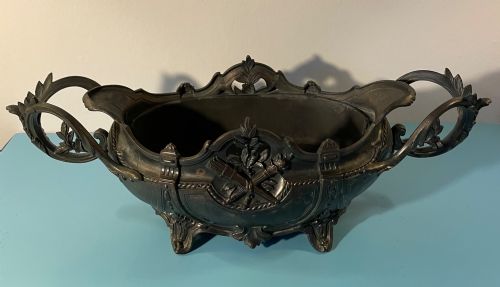


Late Victorian Jardinieres
Late victorian jardinieres bring decorative greenery indoors through crafted vessels of ceramic, metal, and carved wood.
Late Victorian Jardinieres
Late victorian jardinieres are plant holders designed to display indoor foliage within domestic interiors. When exploring late victorian jardinieres, buyers encounter various forms including planters, pedestals, and plant stands dating from the late nineteenth century and around nineteen hundred.
The selections span distinct cultural and aesthetic traditions from the period. Pieces range from French planters and Chinese hardwood stands to Anglo-Indian brass vessels and British art pottery.
Makers and manufacturers of the era utilised diverse materials to house plants in parlours and drawing rooms. Examples include glazed earthenware, porcelain, carved walnut, brass, copper, and wrought iron.
How they were made
Metals such as brass and copper were hand-engraved or pressed into shape, frequently paired with wrought iron for structural plant holders. Earthenware and porcelain bodies received specialised treatments including lustre glazes.
Woodworkers carved dense materials like walnut, satinwood, hardwood, and padouk to form sturdy stands and jardiniere bodies. Joinery and carving techniques defined the construction of pedestals and plant tables.
Listings feature items from the 1880s, 1890s, and around 1900, spanning the late victorian period and early twentieth century.
What varies in quality
The standard of carving in wooden stands and the intricacy of metal engraving separate simpler vessels from ambitious works. Finer examples display deliberate attention to detail in surface ornament and structural joinery.
Glazing techniques and porcelain modelling diverge across ceramic pieces. Superior pottery incorporates complex lustre finishes or finely detailed figural elements rather than plain surfaces.
Burmantofts Art Pottery·Royal Worcester·James Hadley·Clement Massier
The Late Victorian Jardinieres Glossary
- Jardiniere
- An ornamental pot or stand designed to hold a plant or flower arrangement. These vessels sit independently or atop matching pedestals.
- Padouk
- A heavy tropical hardwood valued for its dense grain and deep reddish colour. Carvers utilised this timber for substantial oriental plant stands.
- Lustre glaze
- A type of ceramic glaze containing metallic oxides that produce an iridescent sheen. Potteries applied this technique to catch the light on earthenware surfaces.
- Spelter
- An alloy of zinc used as a substitute for bronze in decorative figures and mounts. Manufacturers cast this metal during the nineteenth century for ornamental bases.
- Ebonised
- Wood treated with a dark stain or finish to resemble ebony. Cabinetmakers applied this process to highlight form over natural grain.
Late Victorian Jardinieres: Frequently Asked Questions
How were late victorian jardinieres used?
These vessels housed potted plants to bring living greenery directly into nineteenth-century parlours and drawing rooms. They protected interior surfaces from water while serving as decorative furniture.
Larger versions stood upon matching pedestals or floor stands, whereas smaller planters rested on tables. Households utilised them to display ferns, palms, and flowering plants during social gatherings.
What materials are common?
Metals form a significant portion of the available pieces, specifically pressed and hand-engraved brass or copper. Artisans also worked with wrought iron for supportive frames and stands.
Ceramics and porcelain appear frequently through art pottery and glazed earthenware. Woodworkers contributed carved walnut, satinwood, hardwood, and padouk for stands and planter bodies.
How do I distinguish art pottery from standard earthenware?
Art pottery pieces typically display distinctive studio signatures, specialised glaze treatments, and individual sculptural modelling. They reflect the creative output of specific potteries rather than mass production.
Standard earthenware vessels focus on utilitarian planting with simpler surface decoration. Examining the glaze quality and base markings reveals the intended tier of manufacture.
Can these plant stands support modern houseplants?
Most historic stands and pedestals were built to carry substantial weight from traditional ceramic pots filled with soil. Their structural design handles typical indoor plant loads securely.
Buyers should inspect the interior of metal liners for watertight integrity before placing live plants inside. Protective saucers inside the jardiniere prevent moisture from damaging historic wood or metal.